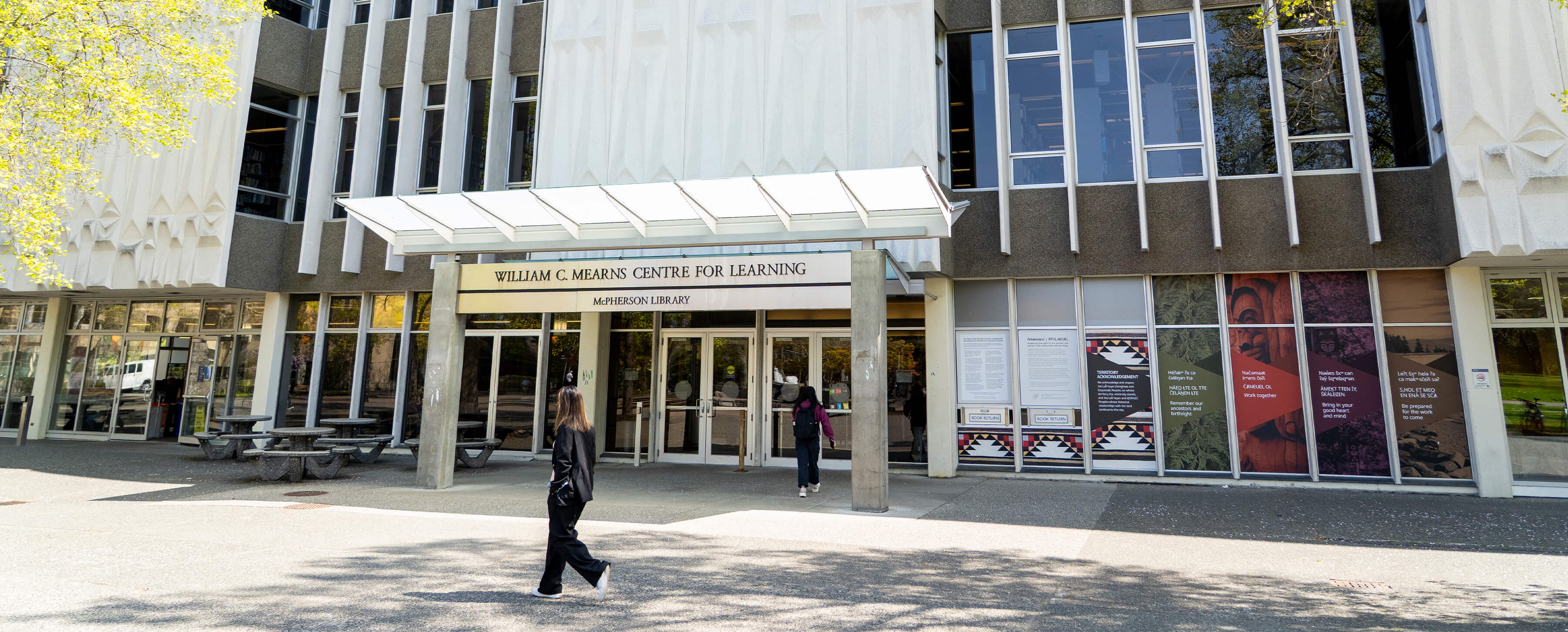
The University of Victoria’s (UVic) Mearns Centre for Learning–McPherson Library has been named one of the top 15 libraries in North America for innovation in library design by the American Library Association (ALA). The redesign reflects UVic Libraries’ dedication to creating a welcoming “third place”—a physical space that encourages inclusivity, warmth, and community for all patrons—through its commitment to reconciliation, decolonization and upholding Indigenous values.
As the busiest building on campus, the library’s transformation brings UVic’s commitment to reconciliation to the forefront of daily student life. The redesign was a strategic and symbolic step to align the physical space with the library’s values of accessibility, collaboration and respect for Indigenous knowledge systems.
“We wanted to provide a more welcoming experience to people entering the space, improve the visibility and functionality of our service and work areas, and allow for more collaboration between students and staff,” says Karen Munro, associate university librarian, engagement and learning. “We also wanted the space to reflect the importance of placemaking and reconciliation at UVic.”
New decolonized library spaces
Planning for the renovations began post-pandemic as UVic transitioned back to on-campus learning and enrollment continued to grow. It soon became clear that the existing service desk layout, with multiple imposing desks and enclosed staff offices, did not reflect the inclusive and equitable environment that UVic Libraries strives to foster. Library staff proposed a redesign that would embody UVic’s goals of decolonization by featuring Indigenous art, rethinking spatial relationships, and creating an environment conducive to knowledge exchange and cultural representation.
Our first goal was to improve the quality of student space within the library and to make better use of the natural light that we have, and to use it for the benefit of students. Then the second thing was to reflect on our responsibilities as an institution when we’re living in Lək̓ʷəŋín̓əŋ territories. We wanted to ensure that Indigenous art was featured prominently in the new design. But art, in this regard, isn’t just about putting stuff up on the wall. It’s talking about a series of relationships that exist within the land, that we intended to affirm, inform and recognize.”
—Ry Moran, associate university librarian–reconciliation
Vancouver-based architectural firm Jensen Chernoff Thompson led the redesign and began renovations at the end of 2021. One of the most transformative changes was the removal of obstructive service desks, which were replaced by a single, centralized Ask Us desk. Circular motifs aligning with Indigenous teachings and principles of reciprocity, interconnectedness and the cycles of life, were integrated throughout the renovation.
The new circular service desk enhances visibility, creates clearer sightlines and increases accessibility to staff support. This update also frees up substantial space on the first floor, allowing for the creation of a bright and open student lounge designed for study, reflection and community connection.
Building partnerships across disciplines
To the right of the library entrance, the ten principles of reconciliation are printed alongside a pledge by the University of Victoria to respect the rights of Indigenous Peoples and all living things.
The new lounge area also creates opportunities to deeply embody UVic’s commitments. Through a collaboration with Moran, PhD geography student Leah Fulton and anthropology professor Brian Thom, the space now features a large-scale map of the Salish Sea—an installation that honours the peoples, lands and waters of this area and invites patrons to engage and better situate themselves within broader coast Salish territory and treaty (and non-treaty) relationships.
The map includes a QR code leading to an interactive website that provides more information, including a Lək̓ʷəŋín̓əŋ translation of the čeqʷəŋín (Douglas) Treaty. This prominent display in the student lounge area supports local placemaking and helps students to explore the complex relationships of Indigenous and settler people through treaty regions.
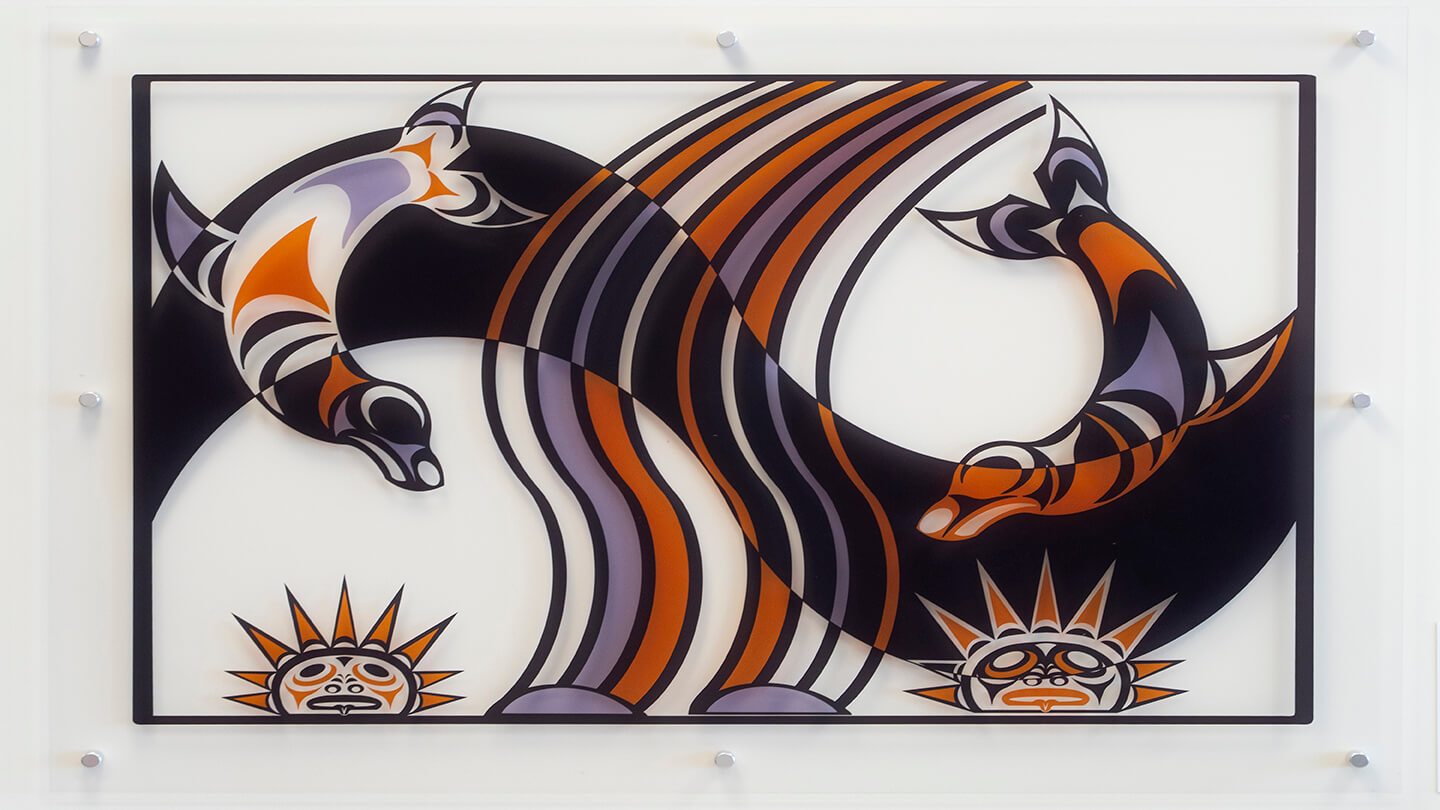
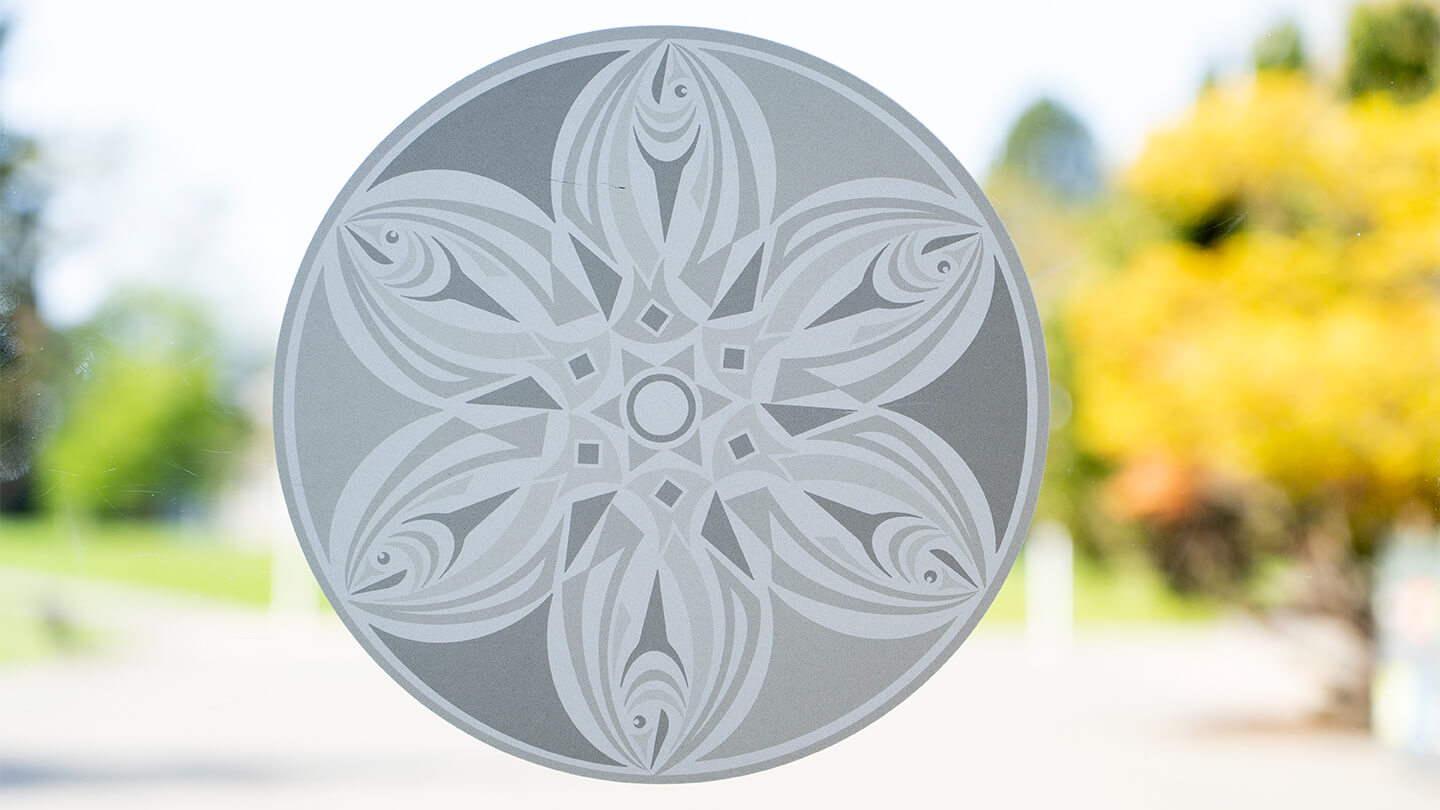
Geena Powa Haiyupus, a local two-spirit Indigenous artist who has roots in the Penelakut Nation, and Hesquiaht and Tla-o-qui-aht First Nations, was chosen to create artwork for the renovation. Her artwork is displayed on glass panels and walls throughout the interior and exterior of the Mearns–McPherson library. Haiyupus’ art depicts important elements of the natural world of the Coast Salish people, including whale, salmon, urchin, kelp, red herring and seals.
As you walk into the library, you see the halibut motif printed on the doors. Halibut are a fish that start swimming upright, and then they transform and swim flat. Geena saw this process as being part of the journey of learning, representing the changes that happen as you engage with more thought and thinking—you end up transforming yourself into a lot of different ways to understand the big questions of the world.”
—Ry Moran, associate university librarian–reconciliation
Gathering community feedback
After completing the final renovations, UVic Libraries staff conducted a post-occupancy survey to gauge staff and faculty perceptions of the new library design. Students gave high praise to the new open layout and Ask Us desk, viewing it as welcoming, accessible and approachable. On average, over 200 students use the Ask Us desk per day, demonstrating an increased library service usage and knowledge, as well as strengthening student-staff communication.
The renovated first floor has hosted dozens of community and university events––among them, a heritage music performance, exam de-stress events, academic orientations, a celebration for the new university chancellor, and the launch of a new school in the Faculty of Humanities.
UVic Libraries’ goal is to welcome millions more library users and visitors into this new student-focused space, and to continue to align UVic Libraries’ commitment to reconciliation with space and service design.