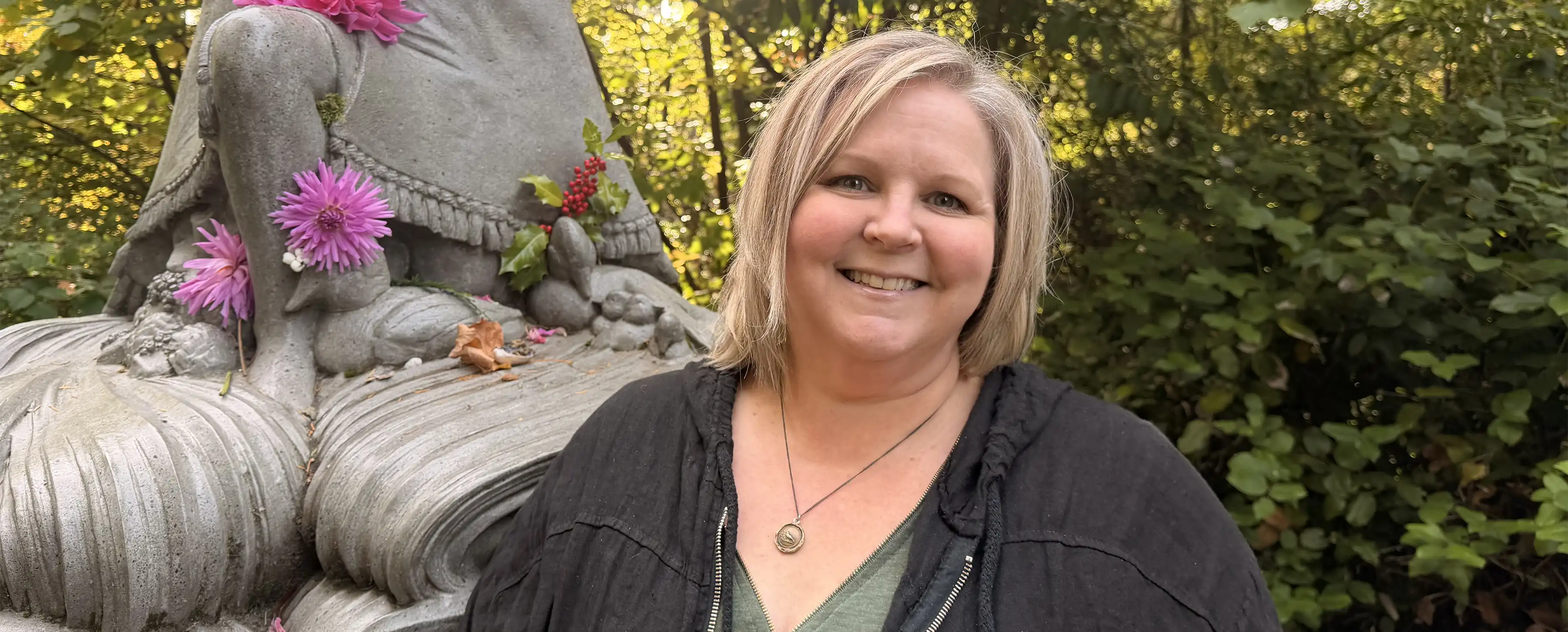
UVic psychology graduate Katherine Cobbs takes a 30-year gap year and turns a love of learning into dementia research.
“I took a 30-year gap year,” laughs Katherine Cobbs. “But I always loved learning.”
At 53, Cobbs is preparing to graduate from the University of Victoria (UVic) with a Bachelor of Arts, majoring in psychology. Her return to university began during the 2020 COVID lockdown, when curiosity and a desire to do something new led her to take an introductory psychology course.
“In 2020, my oldest son was taking psychology at Camosun College, and I had access to an educational benefit, so I took an introductory (online) psychology course,” says Cobbs.
She quickly signed up for additional courses, embracing a new rhythm to her day as a student. She was accepted into UVic’s psychology program; however, she delayed her admission so she could take another psychology class with—by this time—both her sons, who were students at Camosun. Cobbs says it was fun because all three of them ended up in a psychology class together.
Family experiences inspire a passion for psychology
For Cobbs, studying psychology became more than an opportunity to return to the classroom. It also helped her make sense of the illnesses that had affected members of her family and inspired her to pursue research aimed at improving public understanding of dementia.
After finishing high school in 1990, Cobbs found work in the provincial government where she stayed until 2002.
“When I was pregnant with my first child, my husband was diagnosed with MS,” says Cobbs. “By 2000, I had a new baby, a new marriage and my husband’s illness to navigate.”
She retired from government work to focus on her young family, which included welcoming a second child born in 2004. Shortly after, she shifted gears and opened a home-based gift basket business called Simply Gifted, which evolved into a storefront specializing in gifts, cards and décor items that thrived in the West Shore from 2008 to 2017.
Cobbs’s good humour and warm personality shine through as she describes supporting her husband and later her father through their illnesses.
“My dad got sick in 2017 and was diagnosed with Alzheimer’s; however, his actual condition was Lewy Body dementia,” explains Cobbs.
Caring for loved ones living with dementia
With Lewy Body dementia, a person can develop Capgras Syndrome, explains Cobbs, where they still recognize a loved one’s face, but the feeling of familiarity is gone, leading them to believe that person has been replaced by an imposter. Cobbs says the Capgras delusions are extremely distressing for the person experiencing them and for their loved ones.
“My dad could recognize my mom; however, he didn’t believe it was her and wondered what she was doing in their home,” says Cobbs.
Cobbs’s father lived at home with her mother, with Cobbs’s family living nearby. He went into hospital on the first day of the COVID pandemic lockdown in March 2020, which Cobbs described as the hardest part of his illness. He was completely isolated from family, and they did not know whether he’d come home. After strong advocacy from the family, he returned home three weeks later and remained there until his passing in March 2022.
“My psychology readings really helped me during my dad’s illness,” says Cobbs. “I became fascinated with the brain and the impacts of dementia, especially since eight of our family members have lived with it.”
Her family’s experiences deepened her interest in dementia and its effects on individuals and those who care for them. They also helped shape her commitment in reducing stigma and improving community understanding of the condition.
Navigating university as a mature student
Returning to the classroom after three decades away initially made Cobbs hesitant. She wondered what it would be like to study alongside students half her age, but she soon found her place and became comfortable sharing her lived experience.
She remembers two students approaching her after class to thank her for sharing her perspective.
“Those students likely don’t remember the impact they made on me,” says Cobbs. “It bolstered my confidence and my rightful place in the classroom.”
Overcoming health challenges while completing a degree
Cobbs also credits UVic’s Centre for Accessible Learning (CAL) for helping her navigate her studies after a serious car accident and a series of health challenges. A CAL designation allowed her to have more time for exams and assignments, a quiet space for in-person exams and lower lighting.
After contracting COVID in 2022, the year following her car accident, and losing her father, Cobbs faced additional health challenges, including long COVID, fibromyalgia, chronic fatigue and Postural Orthostatic Tachycardia Syndrome.
“I had to come to terms with the fact that I am a chronically ill person,” she says.
Despite these challenges, Cobbs completed her psychology undergraduate degree over six years. Her strong academic performance opened the possibility of graduate school, and she has since been accepted into UVic’s Interdisciplinary graduate program, bridging her love of psychology with neuroscience.
I love learning and especially neuropsychology. I want to improve the public’s general knowledge about dementia.”
—Katherine Cobbs, psychology graduate
From psychology undergraduate to dementia researcher
As an undergrad research assistant, Cobbs worked for Jodie Gawryluk, an associate professor in the Faculty of Health and a graduate student on a project called BRIDGE. The project focused on reducing stigma, increasing empathy and building knowledge about dementia.
Cobbs says the support her father received during the at-home palliative care stage was excellent, but she also saw gaps in the health system in the years leading up to that stage.
Those experiences have strengthened her commitment to dementia research and community engagement.
“BRIDGE included talking to high school students about dementia,” says Cobbs. “I want to continue and expand on that research to include education sessions for all community members during my master’s degree program.”
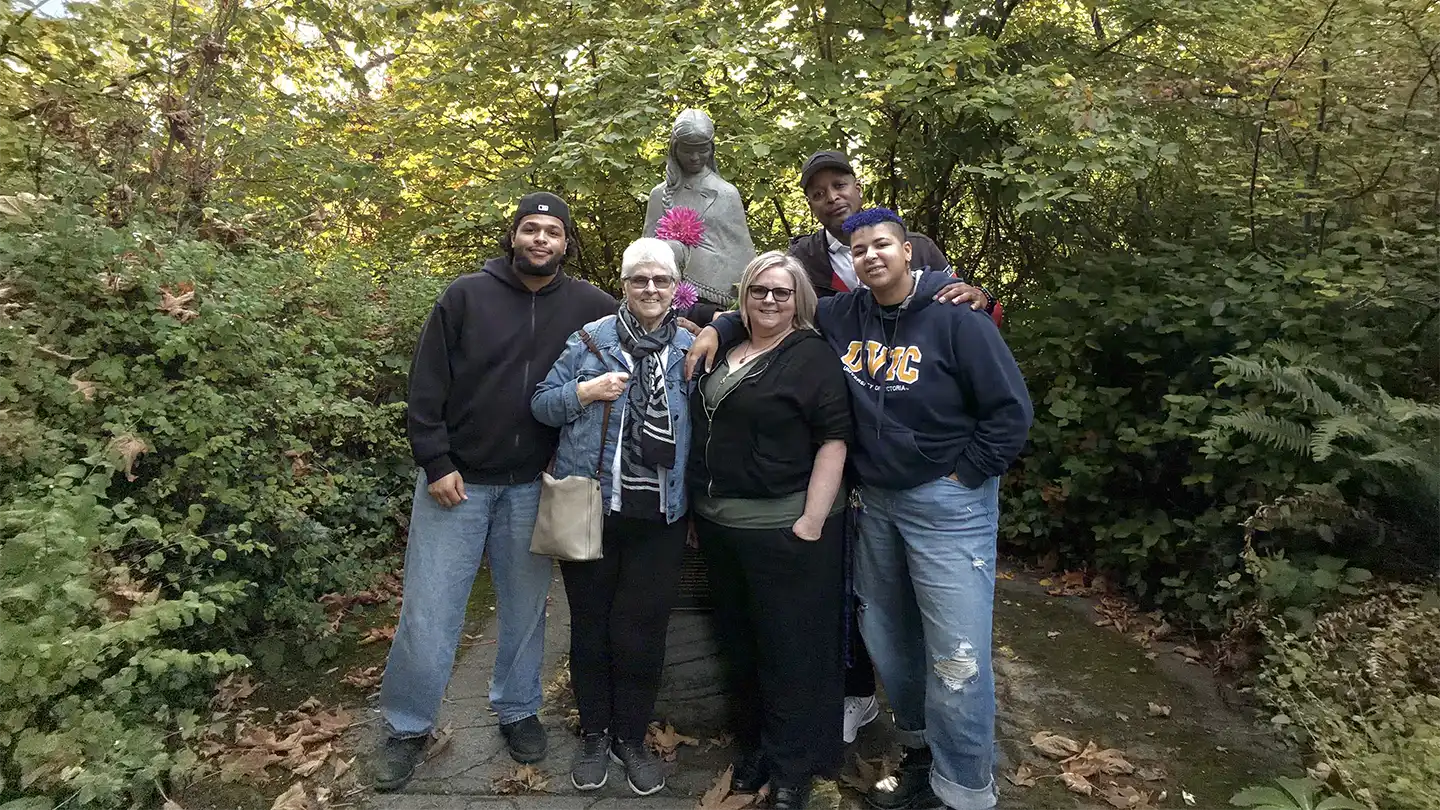
Cobbs praises the psychology faculty and staff for their support throughout her degree. She also formed close connections with fellow students, who became more like family during her time at UVic.
Advice for mature students returning to school
Her advice to other mature students is simple: take one course, give it a try and remember that you are never too old to learn.
Nov. 10 marks Cobbs’ convocation day at UVic—and her father’s birthday.
My dad knew I was pursuing university, so having my graduation fall on his birthday is very fitting. We need better support for people living with dementia and their families, and a greater understanding of dementia overall. I hope my research will make a difference.”
—Katherine Cobbs, psychology graduate