Students from the inaugural First Year Interconnect (FYI) Program say the peer mentorship initiative helped them form connections within the UVic community and feel supported as they adjusted to university life.
Peer programming supports community building
Run through the Office of Student Life (OSL) at UVic, FYI pairs incoming first-year students with upper-year mentors. In its first year, the program matched 504 mentees with 436 mentors.
First-year students are matched with mentors who share some aspect of their lived experience or interests—area of study, background or identity—creating a more natural and relatable connection. The program is made possible through UVic donors, whose contributions helped launch the program and provide honoraria for mentors.
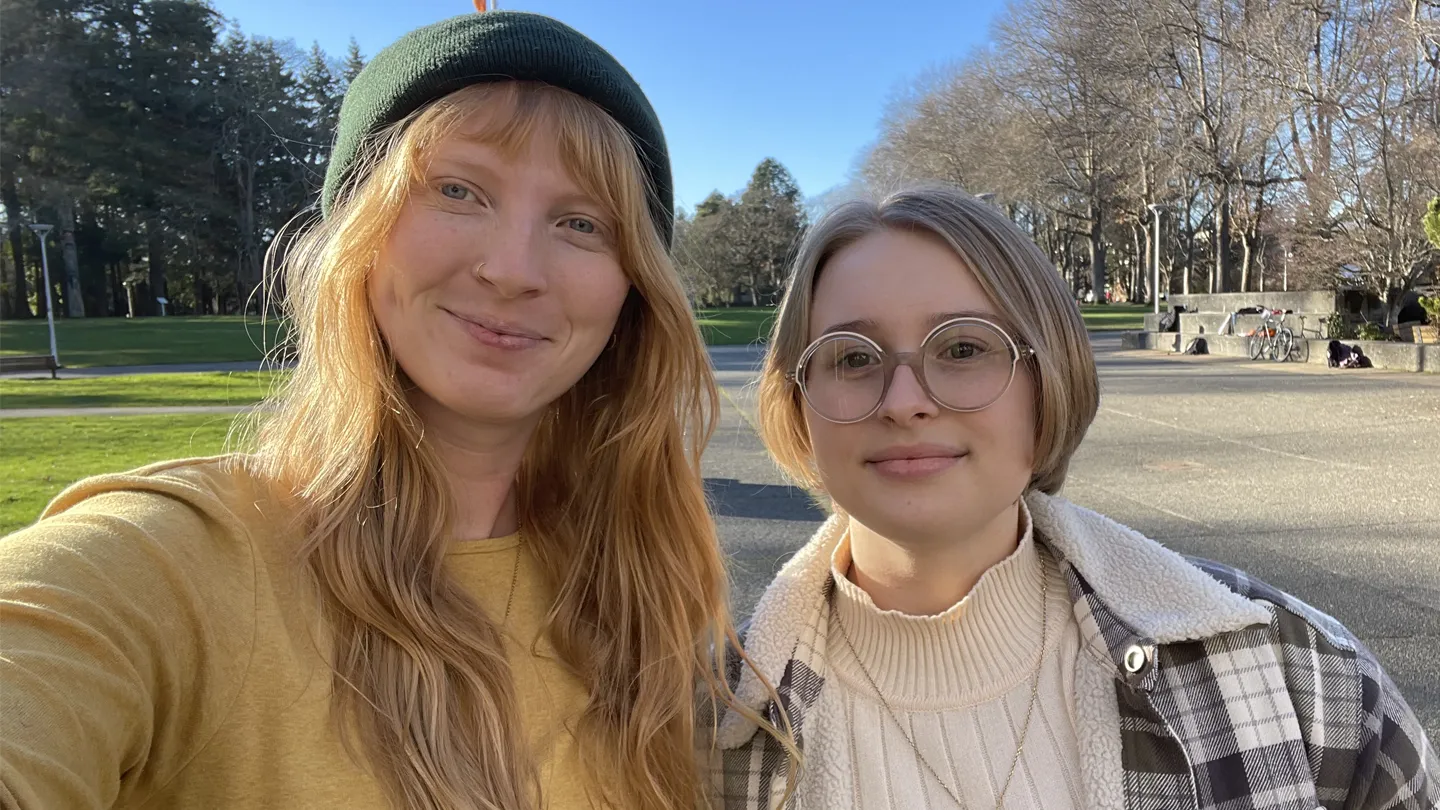
Second-year biology student Danika Postle developed a deeper sense of belonging at UVic through the relationship she built with her mentee.
My mentee and I were able to relate to each other’s academic experiences, discussing careers and recreational activities. FYI allowed me to be part of the university community in a way that feels genuine and aligned with where I’m at in life.”
FYI Program mentor, Danika Postle
Program mentors build leadership skills
FYI mentors complete a four-hour Brightspace training course that supports skills in communication, accessibility and inclusion, and making referrals when needed. They receive an $80 honorarium upon completion, along with another $80 after finishing the second term.
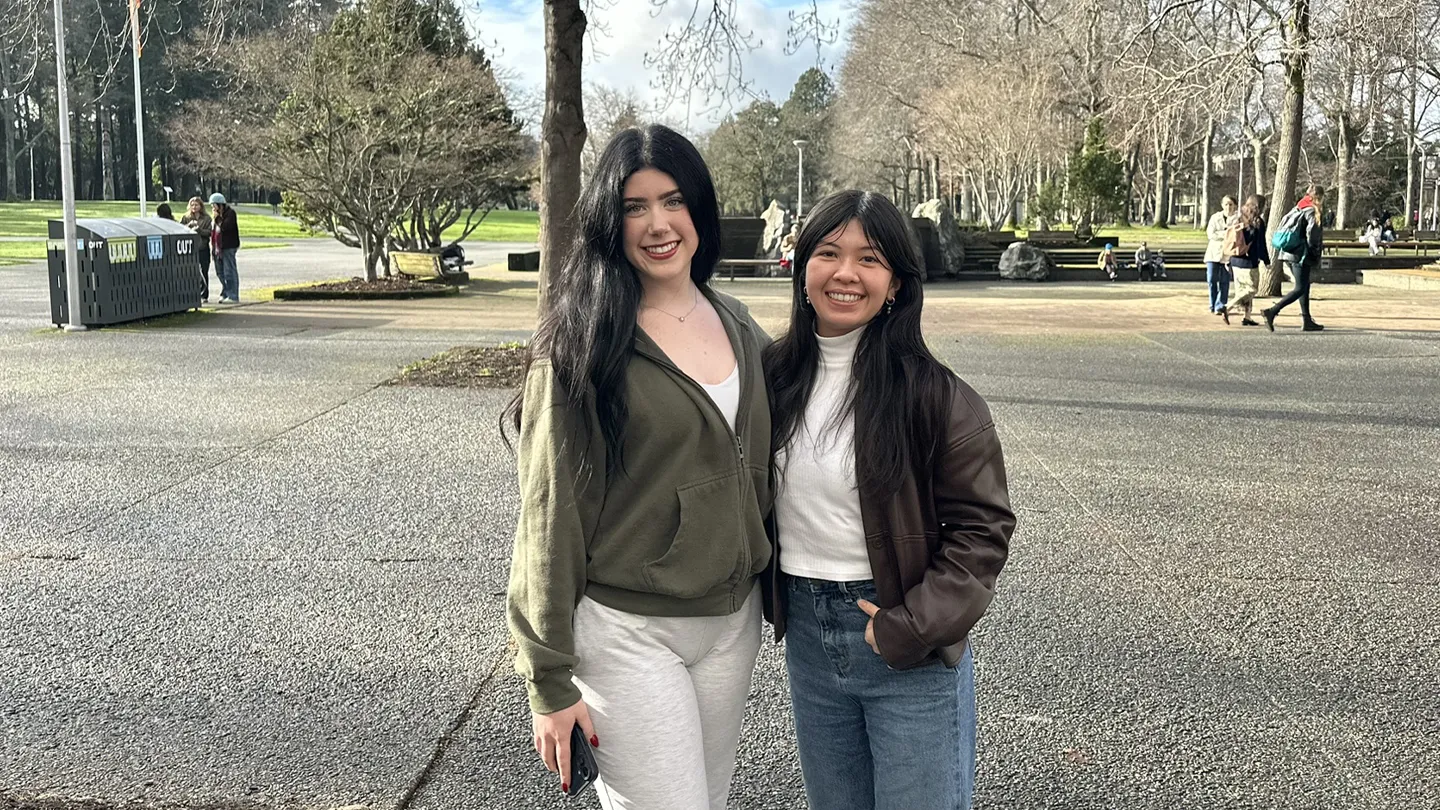
These skills help mentors build approachable, unique peer-to-peer relationships with their mentees. Fourth-year sociology student Kimi Chalmers focused on sharing practical advice with her mentee. She was surprised to learn how valuable those everyday insights could be.
“I was able to see how some of the things I had learned along the way (from notetaking, studying for exams or going to office hours) were all useful insights to someone just beginning their educational journey.”
Those individual experiences were reflected in the program’s broader engagement throughout the year. OSL uses the Mentor Collective platform to match participants and track engagement. The first year’s numbers show the program was highly active. Participants exchanged 19,254 text messages, logged 2,675 conversations and accessed online resources 3,838 times. Through the platform, staff monitor students’ progress. They proactively reach out to those who reported lower feelings of academic self-efficacy or belonging.
Flexible program design offers more possibilities for students
Research shows peer-based programming improves student retention and success at post-secondary institutions. FYI combines virtual and in-person interactions, allowing students to connect in ways that work best for them. Its flexible program design allows for adaptation based on evolving student needs. In end-of-year self-assessments, 90 per cent of mentors and 86 per cent of mentees reported an increased sense of belonging after participating.
The program is complemented by First Year Fridays (FYF), weekly in-person drop-in events organized by OSL. These events introduce students to peers, campus partners and support services in a casual setting. More than 15 campus groups participated throughout the year, including affinity-based events in partnership with organizations such as the African & Caribbean Students Association.
For first-year biochemistry student and mentee Leni Hajeckova, those events made campus supports feel more accessible.
“Meeting people in the departments that offer support really helped remove some of the anxiety that comes from utilizing those resources for the first time,” they said.
What’s next for the peer-based program
FYI plans to expand in its second year with more paid student leadership opportunities and mentor-mentee matching before classes begin. Increased affinity-based programming and more faculty involvement is also planned.
Although Chalmers and Postle are graduating, their mentees encouraged incoming students to participate.
FYI helped make my transition to university comfortable and accessible. I highly recommend this program to any first-year students who are nervous or are looking for a bit of guidance.”
First-year social sciences student, CJ Clarke-Melwood
Hajeckova says they’re excited to get involved with the program next year. “I hope the program’s popularity continues to grow. I’m looking forward to welcoming first years and supporting them through this change in their lives.”
Learn more about the FYI program, including how to apply to be a mentor or mentee.