Through puppetry, shadow theatre, ethnographic mapping, film and songs, the Itelmen story of Mount Elvel will live on—marking an important personal and professional milestone for University of Victoria (UVic) anthropology assistant professor Tatiana Degai.
Degai hails from Kamchatka, a community along the shore of the Sea of Okhotsk in the remote eastern region of Russia. This is where an Indigenous People named Itelmens call home. Only 3,000 Itelmen people remain with only a single fluent speaker alive.
Degai came to UVic in 2021 as an assistant professor in the Department of Anthropology, partly due to a connection to Dr. Brian Thom’s ethnographic mapping work in the Kamchatka Peninsula a few years earlier. She was driven to breathe new life into the Itelmen language through Indigenous storywork approach well-defined by a Stó:lō scholar Jo-Ann Q’um Q’um Xiiem Archibald.
“I follow the steps and guidance of my grandmother and my mother—Itelmen matriarchs who have been my primary teachers, advisors and co-researchers. It is because of their wise leadership I am now in the rich world of Arctic Indigenous arts and science,” says Degai.
First People of Kamchatka
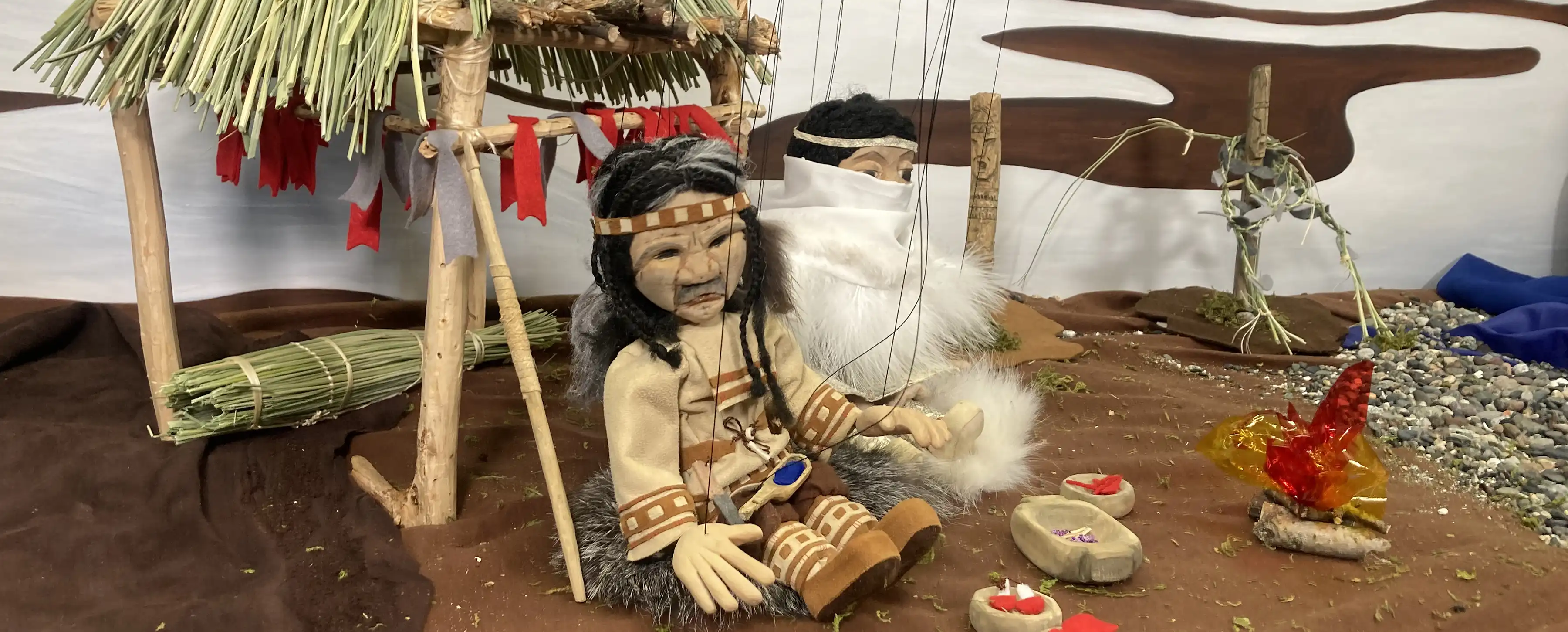
She was inspired by the Itelmen story about the beautiful Elvel and her heroes, and how they could come to life through traditional songs and melodies, puppet theatre and the memories of Elders. After four years of work with the Itelmen People, Degai crafted a shadow puppet theatre performance narrated by respected Itelmen Elder Tatyana Evstropovna Gutorova to become as a “window into the ancient world of the First People of Kamchatka.”
The puppets speak the voices of people from home, Itelmen. Being divided by the borders, we used virtual chat programs to record and share the voices of characters.”
—Tatiana Degai, anthropology assistant professor
Since much of Degai’s work was completed during the COVID pandemic, the interviews and recordings were all shared digitally. Trust was established through Degai’s family relations, previous lived experience, and community connections.
“It was extremely important to make sure that people felt part of the process. We were in constant contact sharing daily, weekly, monthly results of our work with the broader Itelmen community, waiting to hear feedback and advice.”
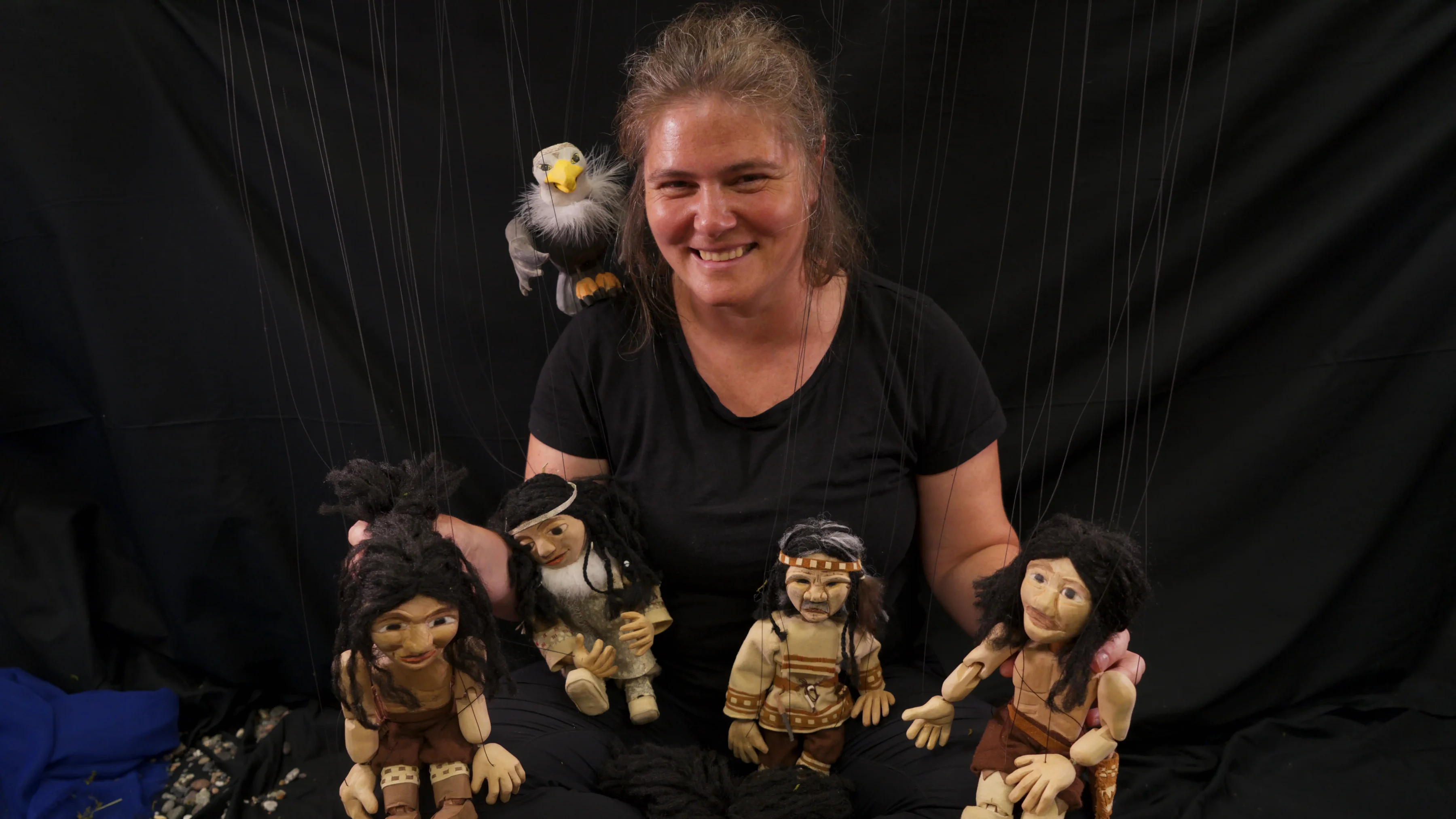
Student learning in production
The process took nearly four years with story boarding, puppet making, production, and translating Itelmen into English subtitles. Once finalized, the play was filmed for wider distribution. The core project team included puppet artist Maïté Agopian and filmmaker Eli Hirtle, along with UVic graduate student Liam Campbell, undergraduate student artists Tanyssa Northey and Mogan Holder, and cultural consultants Lydia Kruchinina and Aleksandr Mokryi.
Degai hired Campbell, Northey and Holder as a research assistants and they were overjoyed to be part of the Elvel crew.
“I cut out a lot felt for the puppets,” said Campbell, “also I had never operated puppets, so that was fun and exciting too.”
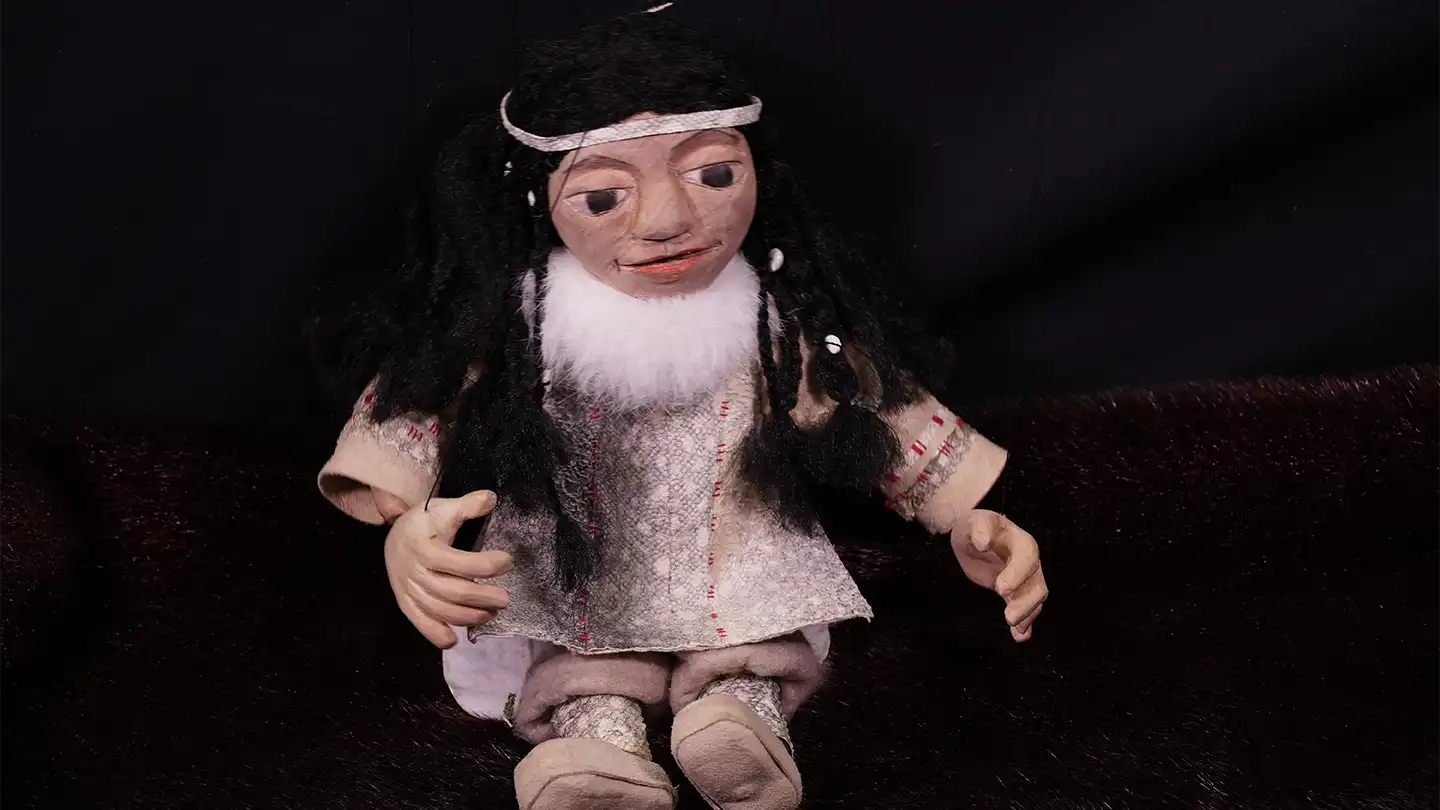
Language as cultural connector
Storytelling with puppet theatre can resonate across generations within a given culture. The story of Elvel is accessible to a broad audience from young children to Elders who may know the language and history.
“Language revitalization was the main driving force in this project; it is crucially important to provide supportive language learning material, especially to those interested to learn our language and get engaged with our culture,” says Degai, adding versions of the film were created with Itelmen and Russian subtitles, and the other with English and Latin.
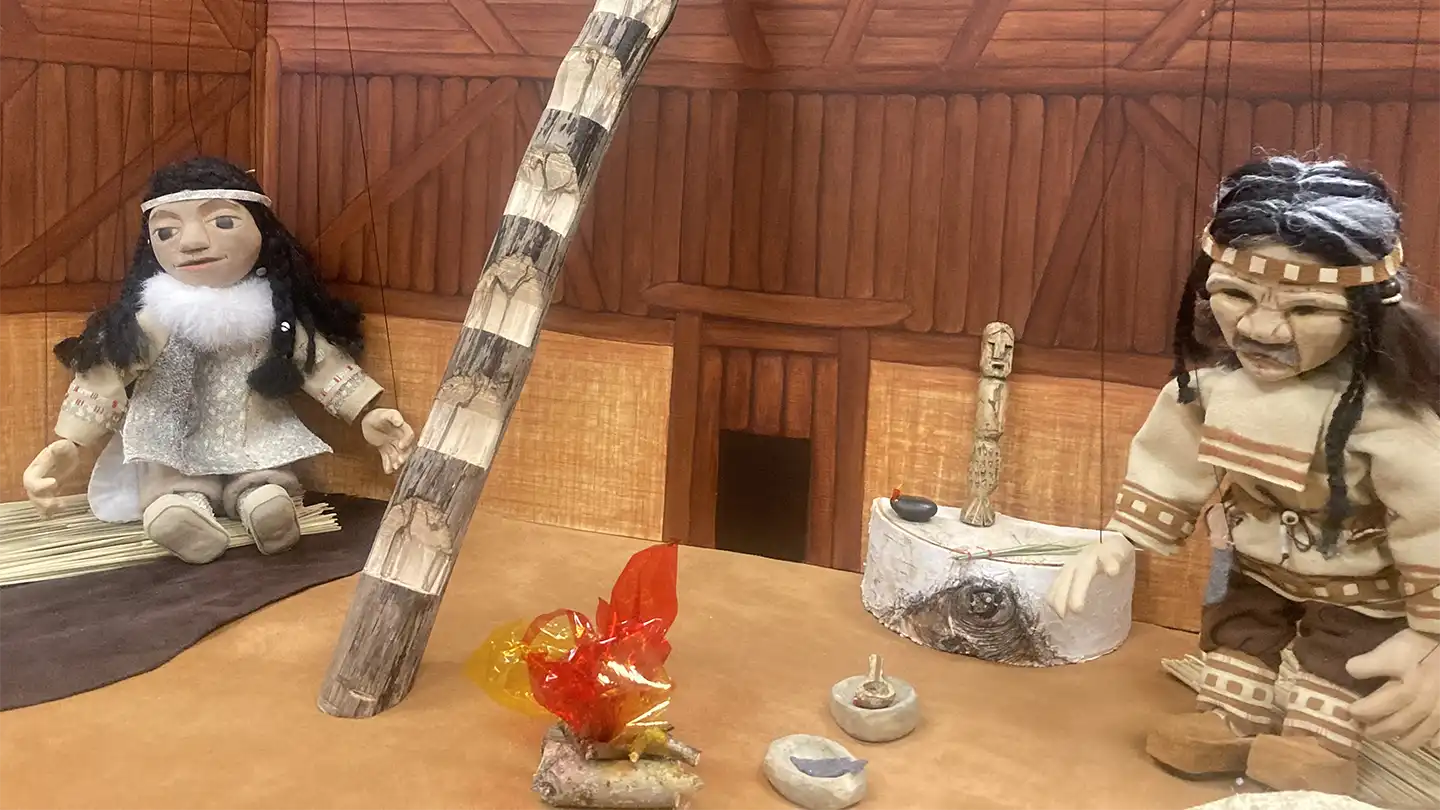
“We attempted to tell a story in a way that would be interesting to both Elders and younger generations of Itelmens; as we screened the film, we heard feedback from both groups. The film touched the Elders in a relational way—familiar songs and melodies—while the youth found pride in being Itelmen,” Degai says. “The film reaffirmed that our People, language, culture and land are important and unique.”
The debut screening of the movie was held at UVic’s Cinecenta in January, made possible with support from UVic’s Office of Vice-President Indigenous in an effort to expand spaces for learning and sharing through Indigenous teachings, languages, arts, cultural practices and ceremony (Indigenous Plan 2023, priority 1.1.3) and in line with UVic aspirations around UVic commitment to global Indigenous-led scholarship, and creative approach to addressing societal challenges.
The movie team is also working on a book chapter to come out in 2026 on the experience of the project. Elvel is currently travelling to different film festivals, but the online site allows users to download the movie in Itelmen and Russian, with English to come in future. The community version of the movie with Russian-Itelmen translation is also available online.