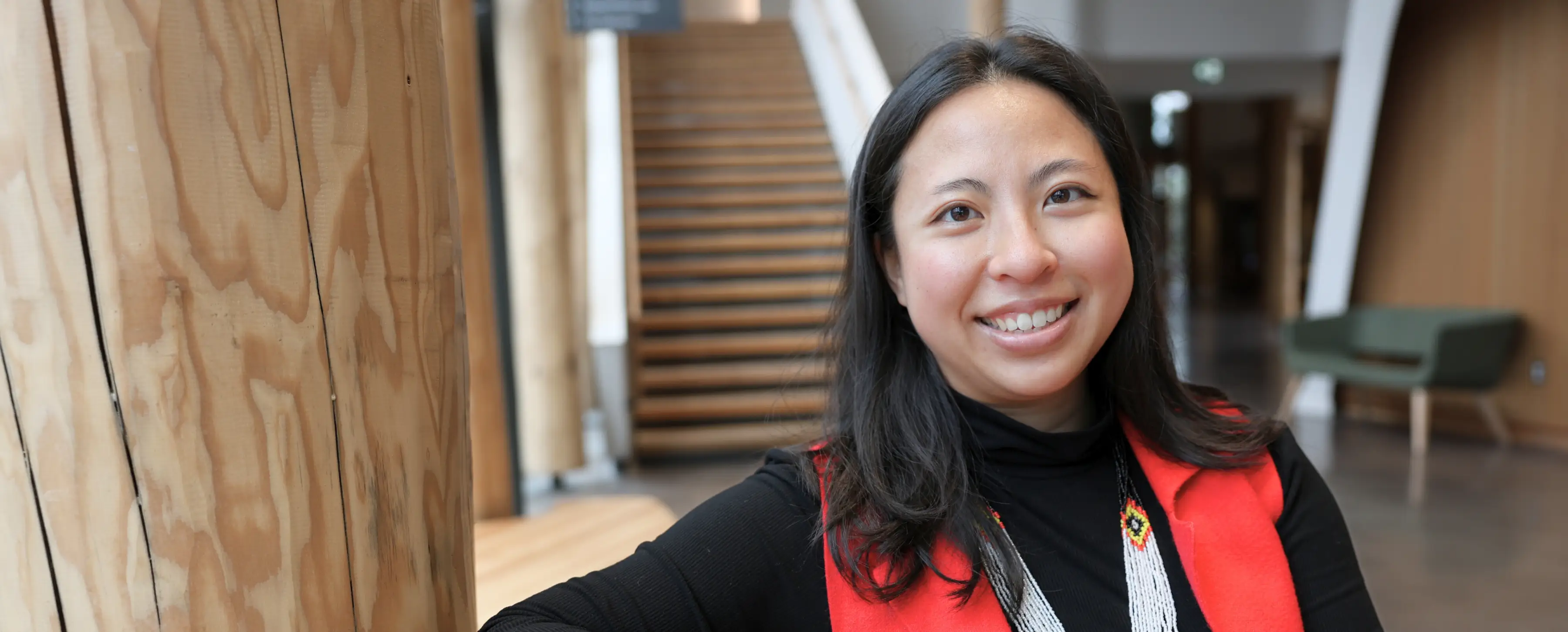
Rebecca Wong (she/her) is graduating from the JD/JID program. The UVic Law grad was born and raised on Algonquin territory in Ottawa to immigrant parents from Malaysia. Her mother is Bidayuh, an Indigenous group from the island of Borneo, and her father is Hakka. Rebecca earned her Master of Science in Migration Studies from Oxford in 2019.
She continued her career with the federal government at Indigenous Services Canada and Crown–Indigenous Relations and Northern Affairs Canada. In 2022, she moved with her husband Ben and their Yorkshire Terrier Hank to the traditional territory of the WSÁNEĆ, Lək̓ʷəŋən and Wyomilth peoples to begin law school.
What motivated you to return to school and pursue a JD/JID?
I grew up hearing how deeply my grandparents cared for our Bidayuh native customary rights land in Borneo. Over time, I learned that the struggles of Indigenous peoples in the Asia-Pacific and on Turtle Island are similar. Working at Crown-Indigenous Relations in Ottawa, I realized I needed a legal degree to work directly for First Nations. I was hesitant because I felt Canadian common law was a rigid, colonial system. Then I learned about the JD/JID. It enabled critical engagement with Canadian common law and true engagement with Indigenous law.
What moment or memory stands out most from your time at UVic?
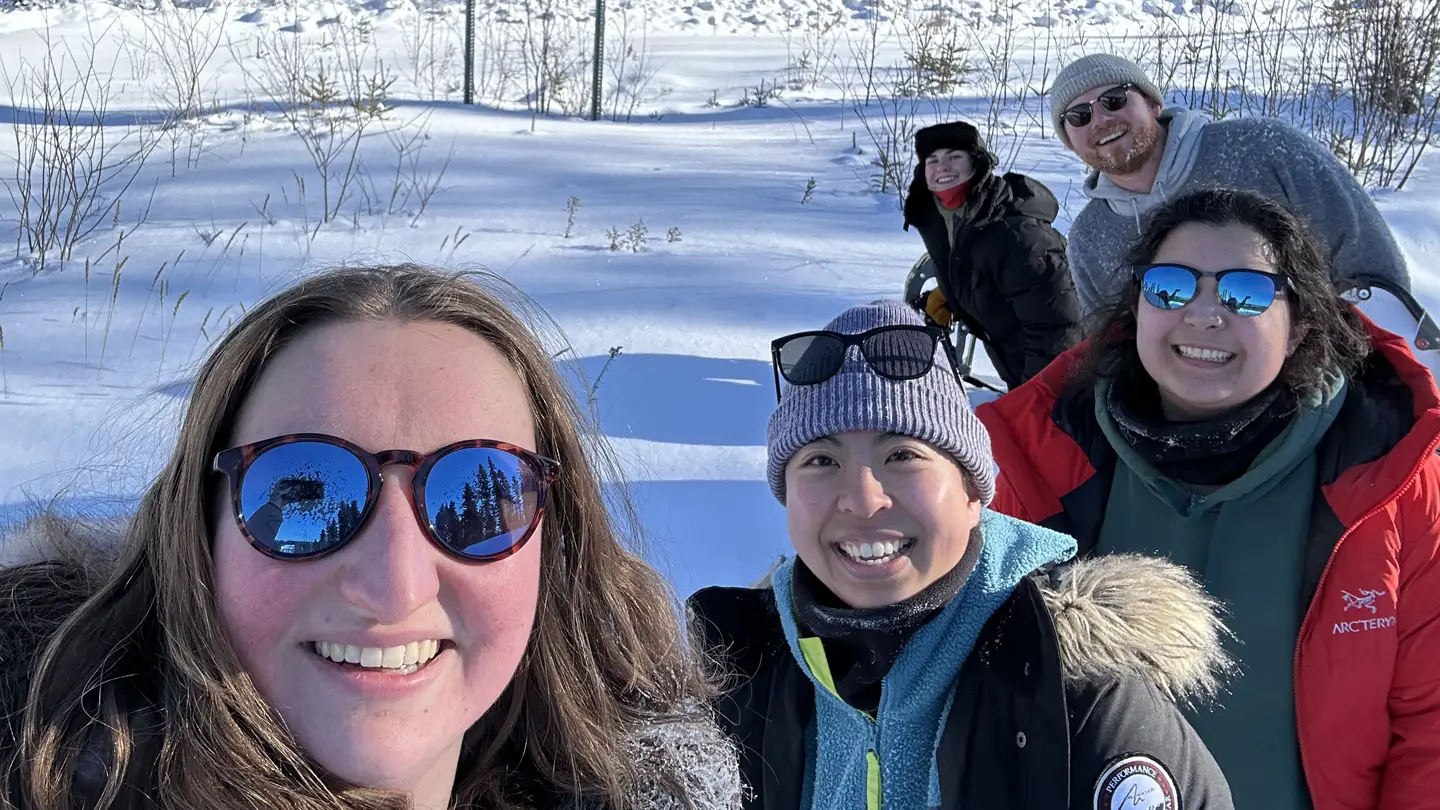
A field school in the Northwest Territories, with Łı́ı́dlı̨ı̨ Kų́ę́ First Nation and Pedzeh Ki First Nation. It was a dream of mine to see the Northern Lights. A few of us also snowshoed across the Dehcho (Mackenzie River). I remember feeling so grateful to be learning Dene law in that place.
Where did you spend most of your time studying, hanging out or unwinding on campus?
The first floor of the Diana M. Priestly Law Library and the Fraser Lounge.
Which course or instructor had a positive impact on your academic or personal growth?
Hands down, Professor Pooja Parmar! I worked as a research assistant for her throughout law school. Her expertise on the Indigeneity in a Global Context project shaped a lot of my own research. Through our work, I connected with other Indigenous Asian scholars. These relationships created opportunities to travel to Taiwan and Hawaii to present my major research paper on Bidayuh law called “adat.”
What activity or experience outside the classroom meant the most to you?
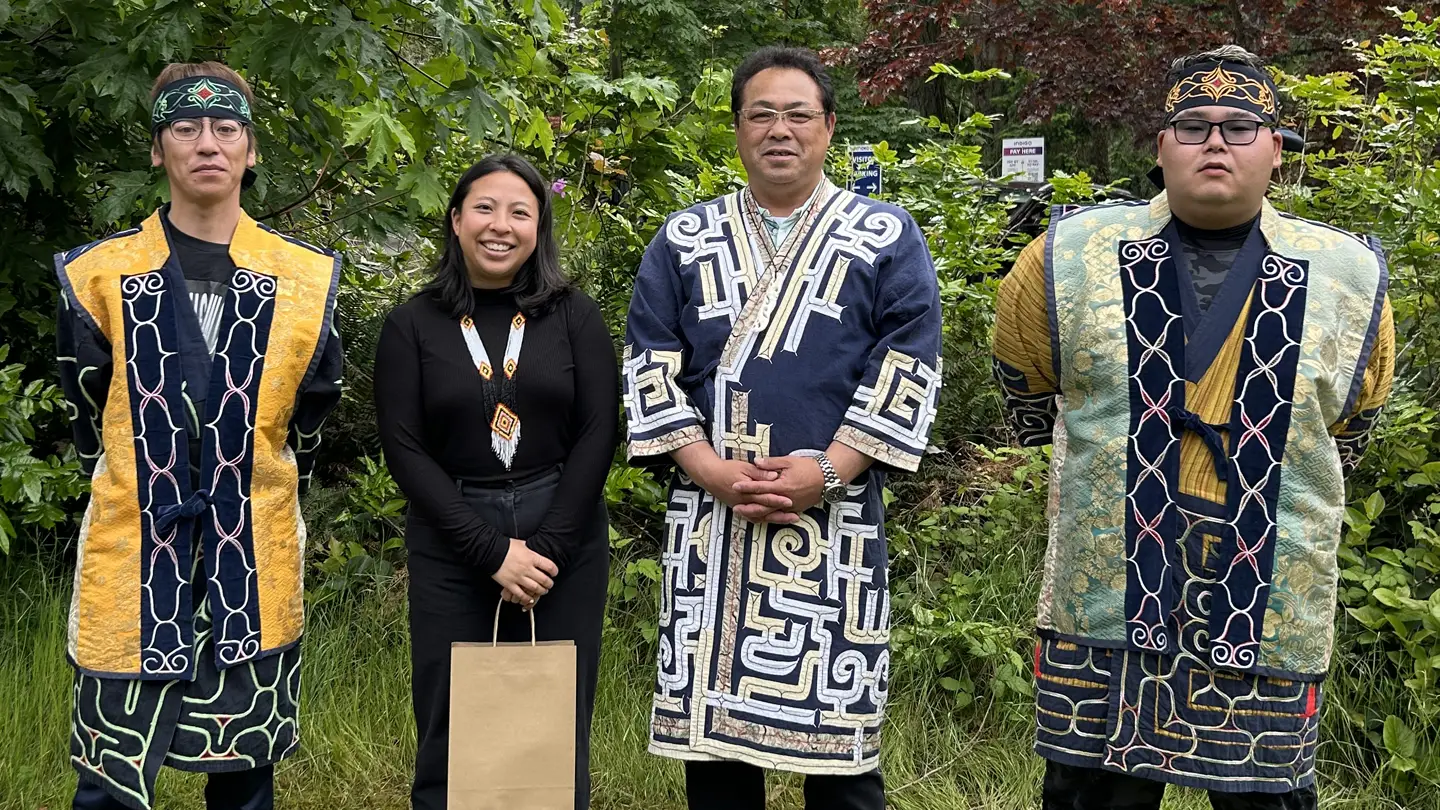
Being a research assistant for the Indigeneity in a Global Context project. We organized a two-part symposium on the Indigenous Peoples Economic and Trade Cooperation Agreement, bringing together Indigenous delegates from Turtle Island, Taiwan, Japan and Aotearoa. Part 2 is in Hualien, Taiwan, at National Dong Hwa University this May. I will be a rapporteur at the symposium — an incredible graduation present!
What are your plans after graduation and is it the path you envisioned for yourself growing up?
I will be articling with a small firm based in Ontario, called Fullerton Beresford Law LLP. They work with First Nation governments and support governance, self-government and land claim negotiations. My grade 6 yearbook says I wanted to be a human rights lawyer when I got older. I’m pretty close!
What would you tell someone who is considering choosing UVic for their degree?
The transsystemic nature of our law degree provides the chance to expand how we see and think through law. In my major research paper, I applied the case brief methodology we learned in the program, developed by Val Napoleon and Hadley Friedland, to Bidayuh stories. It is probably the first application of the methodology in a Southeast Asian Indigenous context. It provided me with a brand-new way of learning about our Bidayuh law.