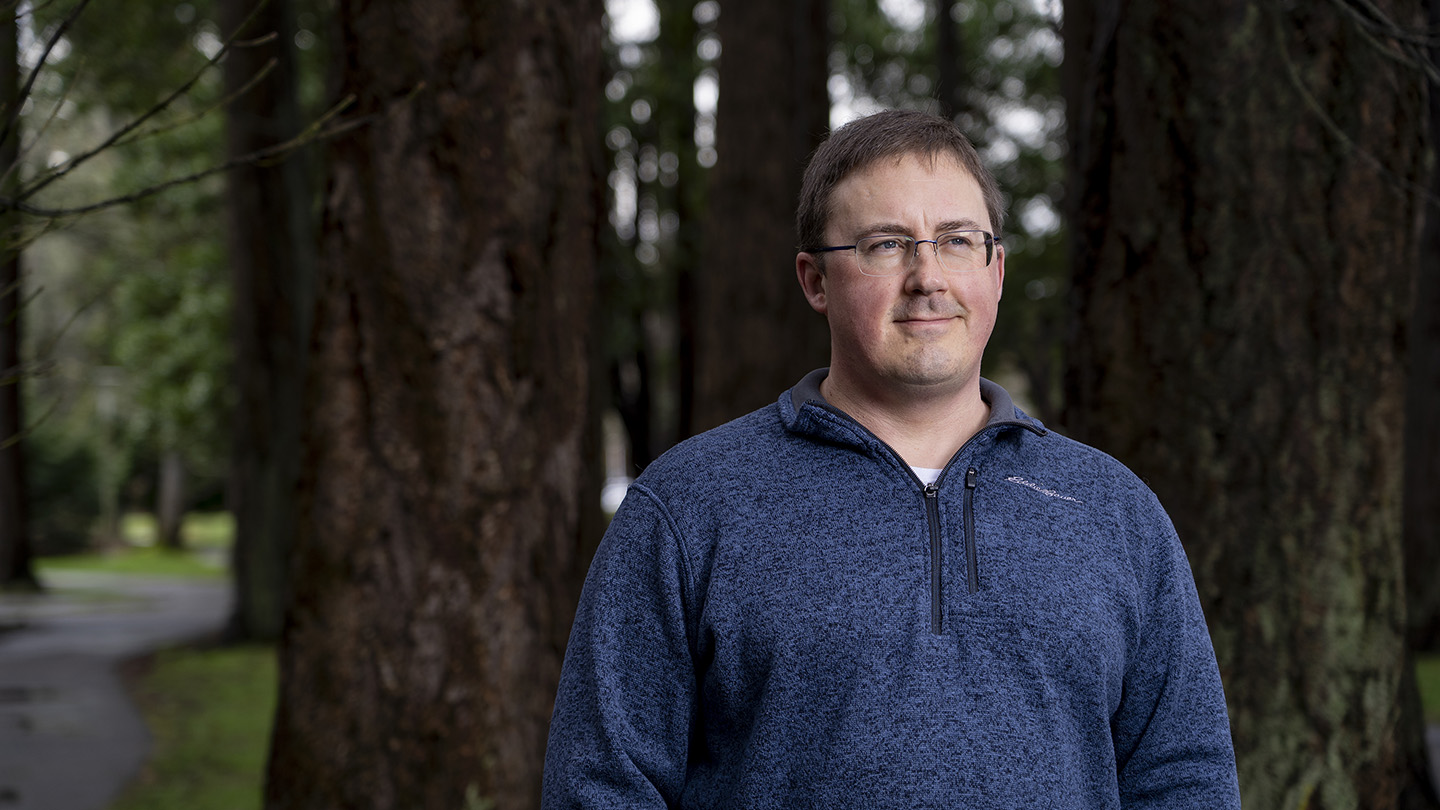
Weather is one of the forces that shape our daily lives, yet we rarely think of it in terms of art. But for award-winning intermedia artist, composer, curator and University of Victoria (UVic) Department of Visual Arts professor Paul Walde, weather is so much more than just the title of his latest exhibit, Paul Walde: Weather Conditions.
Walde’s body of work has long explored unexpected interconnections between landscape, identity and technology, most notably by his 2013 site-specific sound performance Requiem for a Glacier, which featured a 55-piece choir and orchestra filmed live on the Farnham Glacier in BC’s Purcell Mountains.
Running until April 11 at UVic’s downtown Legacy Gallery, Weather Conditions—curated by Carolyn Butler Palmer, the Williams Legacy Chair in the Department of Art History and Visual Studies—offers a double exhibit of site-specific video installations, both reflecting weather and art history in unique ways.
Q. Weather is one aspect of the human experience that everyone shares: we predict it, discuss it, try to avoid it and arrange our lives around it. Why bring it into a gallery space?
A. Another aspect of the human experience is that we’re altering our climate through our actions, and this is altering the weather. Extreme weather events are on the rise and there is new concern that, if we continue on the path we’re on, the low-lying clouds that do a lot to reflect sunlight and keep the Earth cool could disappear, leaving only the higher altitude clouds which will accelerate climate change exponentially by allowing more sunlight in and trapping that heat. As an artist, I’m interested in how cultural attitudes shape our relationship with the environment.
Q. Your creative practice has been engaged with environmental issues for the past 30 years. How can art bring awareness to issues like climate change in ways that science or politics can’t?
A. The great thing about art is that it can present information to people in experiential ways, including emotional and spiritual dimensions. This is a very different experience than being told something. Science and politics tend to tell people things but, as a professor, I’ve found folks really don’t like to be told anything. It’s more effective to create experiences that allow people to draw their own conclusions. This way, the information is internalized and becomes a part of their own thought processes, so the level of engagement and uptake is greater. The duration of my work is also important in this, as these longer works provide opportunities for people to think for themselves—which is in direct opposition to the “attention economy” and how content is consumed on social-media platforms.
Q. You often stage your performances in challenging locations highlighting the natural environment— glaciers, lakes and, most recently, old-growth forests—then pair them with meditative music that you compose. What’s your intention with these interdisciplinary juxtapositions?
A. I believe that culture comes from the land, where one is in the world that shapes who they are. This attitude has been affirmed and informed by the work that I’ve been doing with the Awi’nakola Foundation over the past six years. By bringing obvious cultural activities like opera, classical music and art handling into the natural environment, I’m essentially saying that these sites are cultural. The fact that contemporary urban societies don’t seem to recognize this is part of my point. I’d add that cultural values that don’t make this connection are the main reason we’re facing impending environmental catastrophe. What could be more valuable than clean water, clean air and abundant biodiverse ecosystems? Yet here we are feeding water to data centres that are also using vast amounts of energy, making it harder to transition to clean energy.
Q. Both pieces in this exhibit—”Of Weather (For Geoff Hendricks)” and “Tom Thomson Centennial Swim”—reference the work of other artists. How important is it to acknowledge the history of art, and the role of the individual artist, in your work?
A. Art history is happening all around us all the time. Acknowledging this history is another way of acknowledging where aspects of cultural thought come from, good or bad. For me, art history is sometimes a scaffolding of ideas to build upon and other times it’s something to push back upon. For example, the work of the Group of Seven was very dominant when I was growing up in northern Ontario, where the Group made their first trips. As a young artist, however, their approach didn’t connect with me. Since then, I’ve attempted to make alternative landscape art that deals with the complex issues that frame our relationship with the environment.
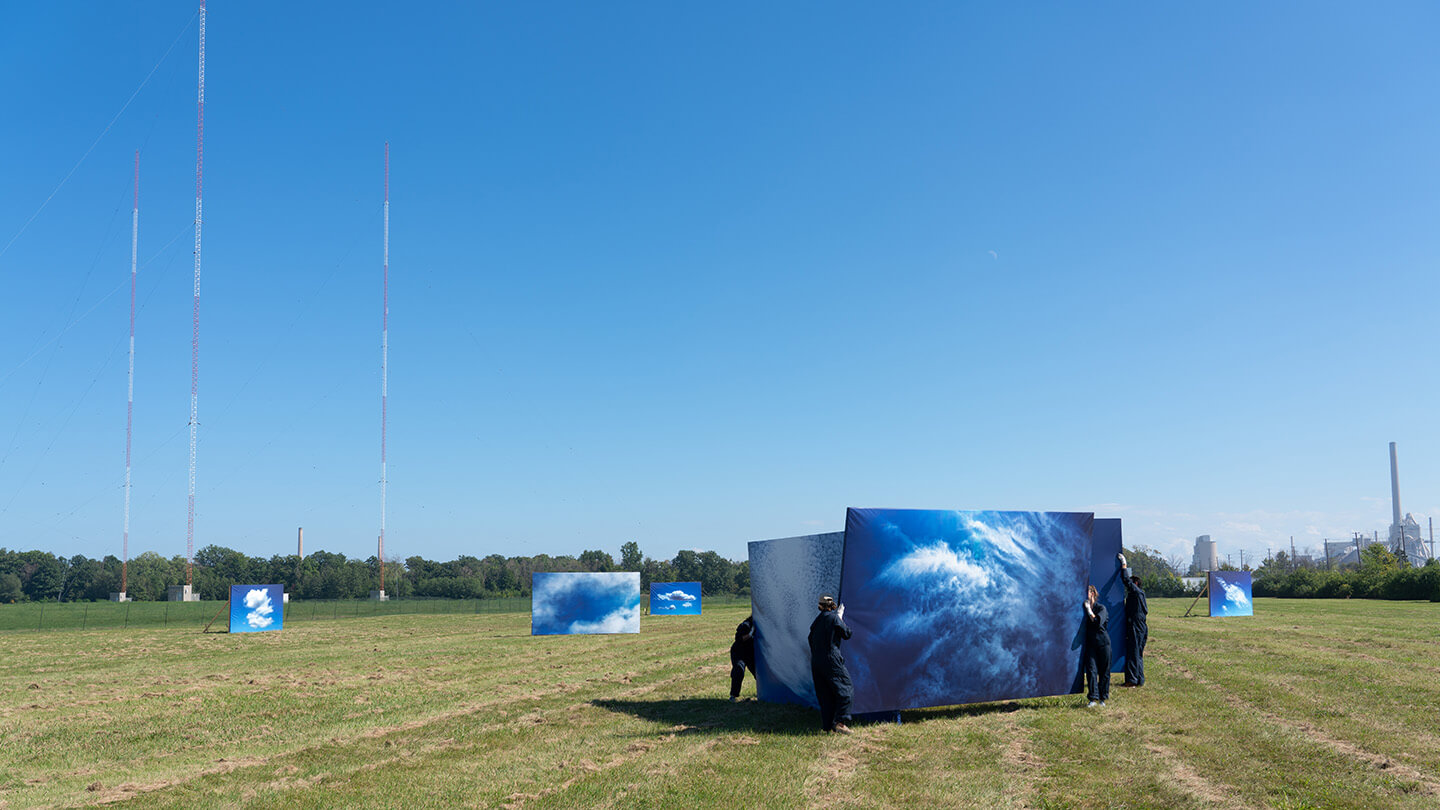
Q. Tell us about the “image ballet” that will be performed on March 28. What’s the intention of having pictures of clouds move around an indoor environment, and how does that reflect the original staging of this piece?
A. For the past 25 years the artworld has become more globalized and mobile. There are now dozens of international biennials and art fairs. Behind the scenes in these events are armies of art-handlers who are moving, setting up and taking down these shows. There is, of course, also a massive carbon footprint connected with these activities. By moving images of clouds around, I’m referring to how we as humans are changing the weather and are therefore responsible for it. And, on another level, because the “image ballet” involves large canvases being moved by art handlers, I’m referring to the art world’s culpability in all of this.
Weather Conditions runs until April 11 with two live musical performances on Saturday, March 28, at Legacy Gallery (630 Yates). Registration is required for the live musical performances.
A media kit containing high-resolution photos of Paul Walde and his exhibit Paul Walde: Weather Conditions is available on Dropbox.