Ocean Networks Canada (ONC) is co-engineering key infrastructure to create a deep-sea neutrino telescope that will transform vast stretches of deep ocean into a massive neutrino detector. The technology innovation will give scientists a glimpse into the universe from under the sea.
Research has shown that the pitch black of the deep ocean is a perfect environment to study neutrinos. The extreme conditions of working in the deep sea, however, present significant challenges that require specialized oceanographic instrumentation—a domain where ONC’s expertise is pivotal.
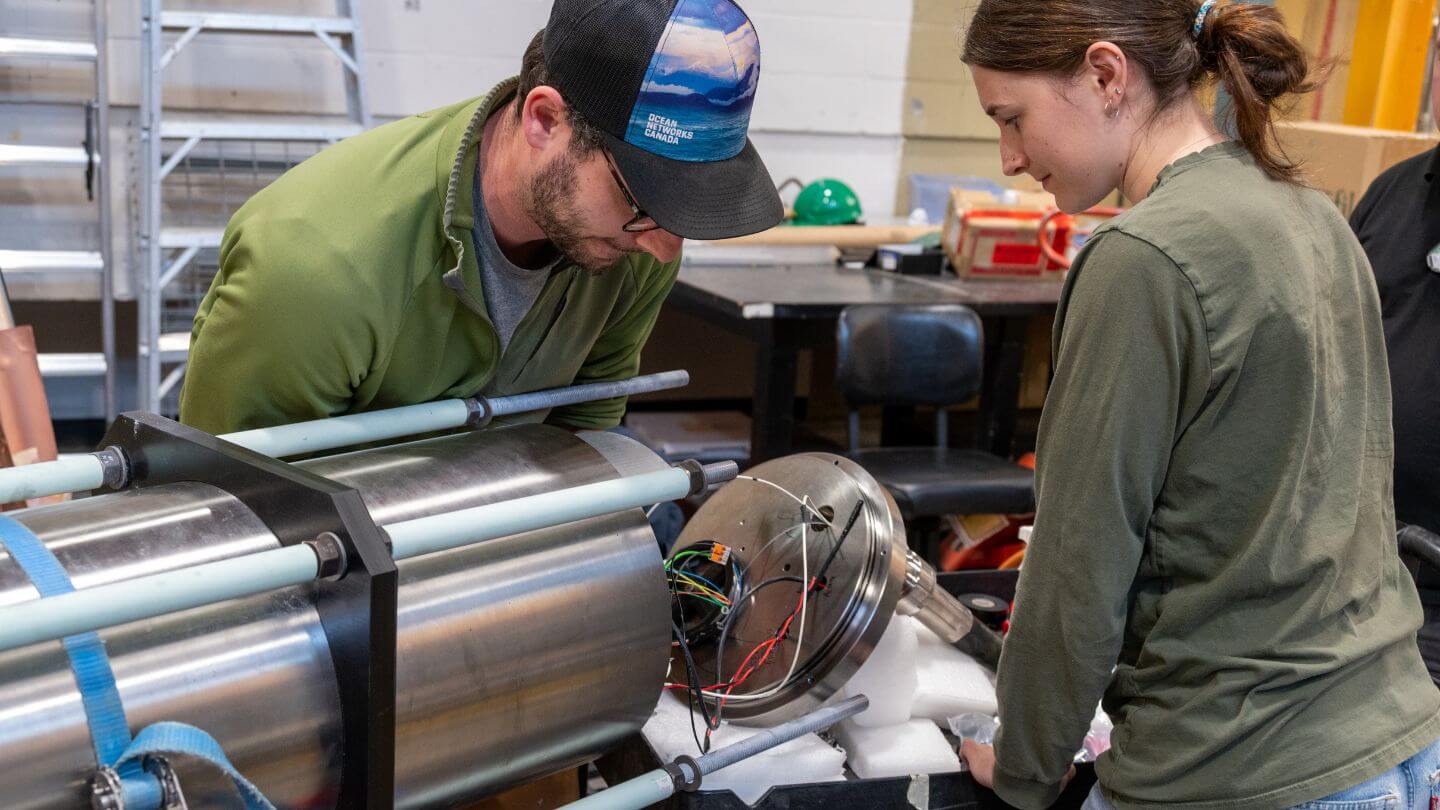
ONC, an initiative of the University of Victoria (UVic), and Pacific Ocean Neutrino Experiment (P-ONE) project partners successfully completed a shallow-water test of key engineering infrastructure on Granville Island to support the eventual creation of a P-ONE telescope. This testing is a major checkpoint ahead of the planned deployment of the first one-kilometre-long subsea mooring off the coast of British Columbia later this year.
The multi-partner P-ONE project, which has collaborators from Canada, Europe, the United Kingdom and the United States, aims to eventually comprise 70 one-kilometre-long moorings, spaced 80 metres apart, and equipped with scientific instruments extending up from the seafloor. P-ONE will be plugged into ONC’s NEPTUNE observatory using the pre-existing subsea network.
The following ONC experts are available to media for comment:
A.J. Baron, senior mechanical engineer and field manager, is an expert in the mechanical design of ocean observatory infrastructure, instrument preparation and ongoing hardware maintenance. He can speak about concept development for the string deployment operations and unfurling, the mechanical design of the frame, backbone cable and module terminations, the successes and challenges of previous deployments and the logistical challenges of deploying in the Pacific Ocean. Please contact ONC for interviews.
Deg Hembroff, senior project engineer, is an expert maintaining and supporting expansion of ONC’s network of subsea cabled observatories. He can speak to the design and assembly of the string junction box for this first mooring, as well as the integration and coordination challenges for such a large technical collaboration of universities around the world. Please contact ONC for interviews.
Read ONC co-engineers key infrastructure for Pacific deep-sea neutrino telescope
Click here for a media kit with photos and videos of the Granville Island test.
Ocean Networks Canada operates world-leading observatories in the deep ocean and coastal waters of the Pacific, Atlantic and Arctic coasts of Canada as well as the Southern Ocean. The cabled observatories supply continuous power and internet connectivity to scientific instruments, cameras and over 12,000 ocean sensors. ONC also operates mobile and land-based assets, including coastal radar. The observatories generate ‘big data’ in the form of high-resolution sensor measurements, video and underwater sound recordings that is used by researchers, communities and decision makers around the world. As an initiative of the University of Victoria, ONC is one of Canada’s Major Research Facilities.