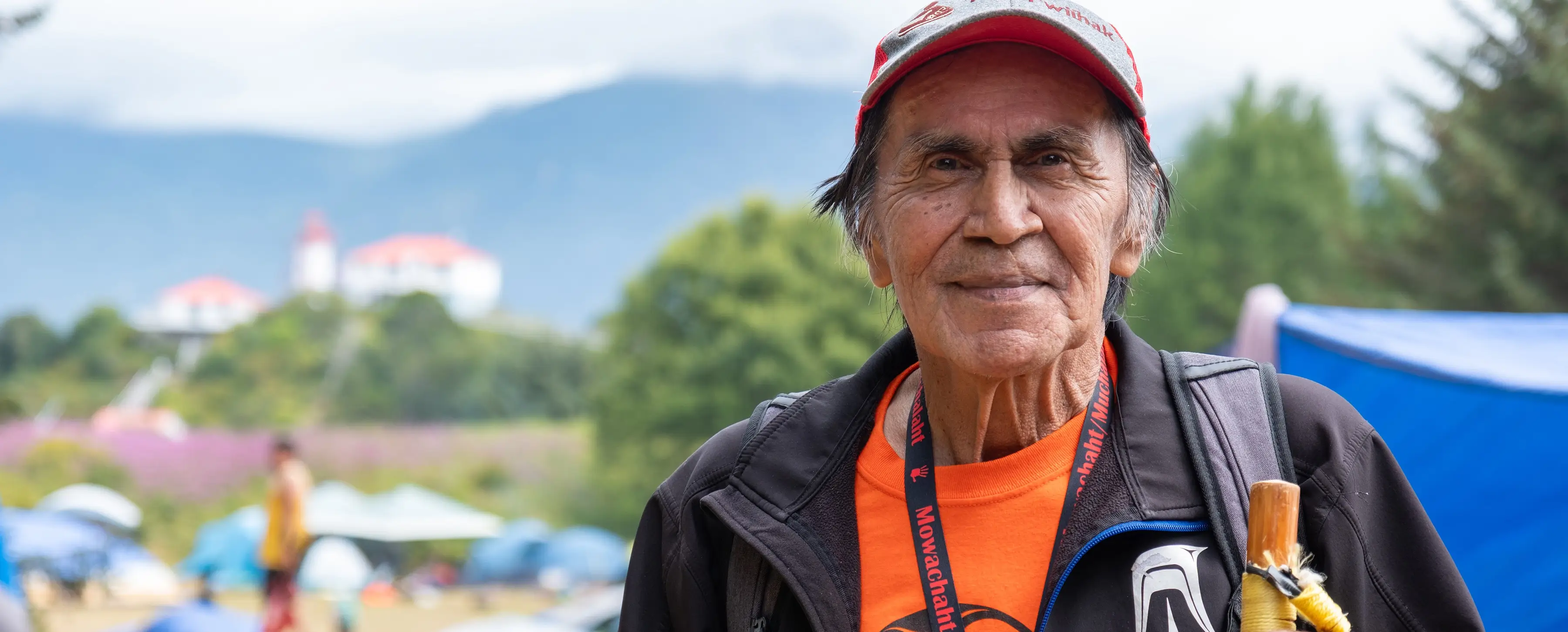
As Anthony Dick steps off the ferry at the Yuquot pier, dozens of his people await to help unload the ship’s freight and greet passengers with kind eyes, warm smiles and stirring songs that carry across the bay.
Today is Summerfest—an annual community camp-out and BBQ for which members of the Mowachaht-Muchalaht First Nation (MMFN) return to the ancestral village site from which they were forcibly displaced by the federal government in the 1960s, and to which they are working hard to re-occupy year-round.
“Today is the best feeling in my life…. It’s been I don’t know how many years now since I’ve been back here, back at home at Yuquot,” Anthony shares. “This is the most people I’ve seen and the most amount of tents and the most young children—young ones I don’t even know, but they’re calling me grandpa,” he says with a chuckle, eyes beaming.

Located on Nootka Island just west of what is now called Vancouver Island, Yuquot—also known as “the birthplace of B.C.” and Friendly Cove—is a storied land in Western discourse, all-too-well told through the narrative frames of Discovery and colonialism.
But today is not about those stories.
Started in 1992 by the late Tyee Ha’Wilth (or, Hereditary Chief) Ambrose Maquinna, Summerfest’s official aim is to “re-establish Yuquot as a global centre of cultural exchange and renewal” and celebrate the accomplishments of community members from the past year, but it has a slightly different significance depending on who you ask.
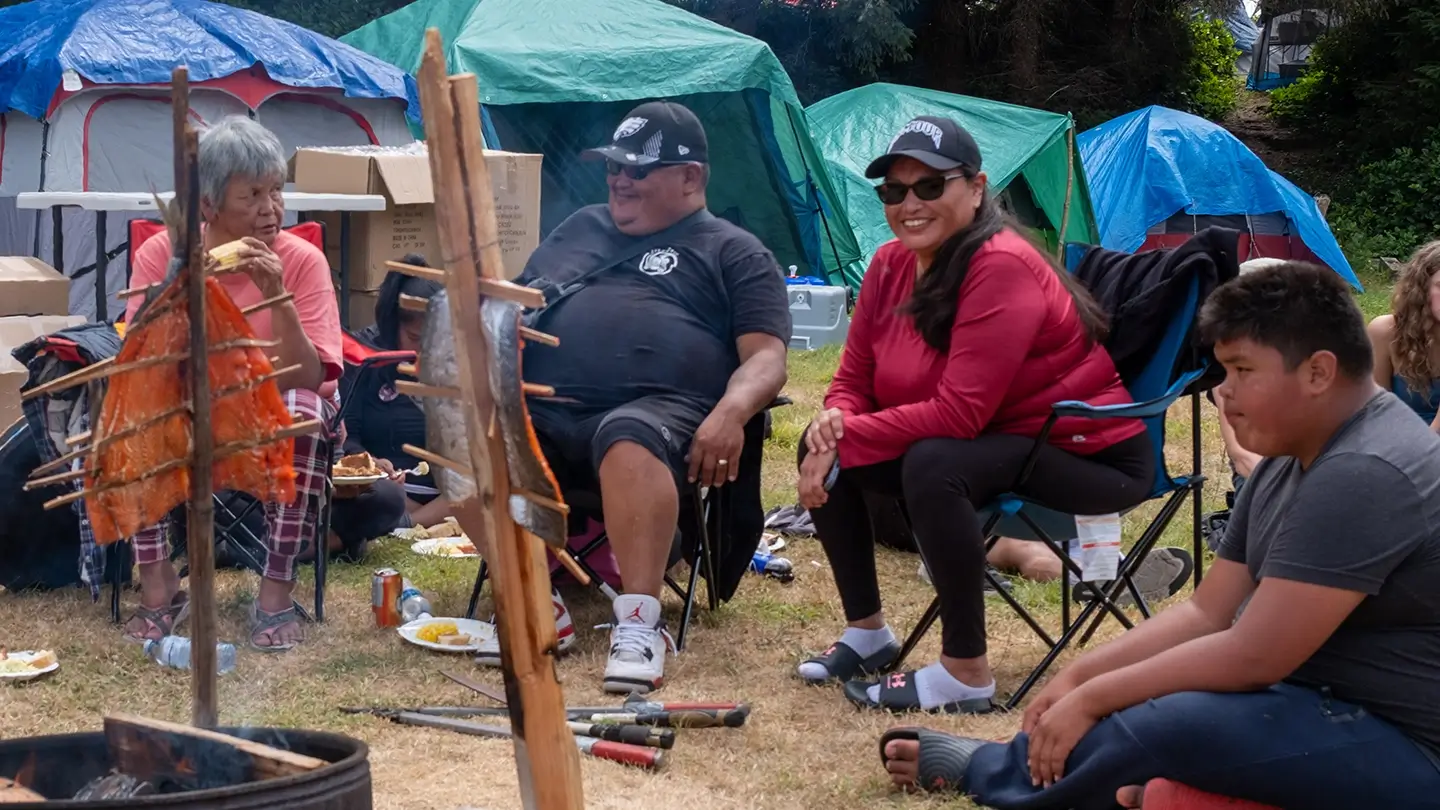
“Summerfest is a way for our people to come together,” says Sherry Mattice, a Summerfest attendee and assistant teaching professor at the University of Victoria (UVic), whose matrilineal line is from Yuquot.
It’s really important for our people to know who they are, to have a sense of belonging. This place is where we come from. It’s important for our people to have that sense of identity and to reconnect with each other.”
— Sherry Mattice, Mowachaht-Muchalaht First Nation
For Yakaap Margaretta James, who has organized Summerfest for all years but two, and who recently received a King Charles Coronation Medal for that work, the event has a healing role to play as well.
“We’re coming through the forces [of colonialism]. Our Nation and other Indigenous communities globally have struggled with things like residential school, like addictions and other social harms,” Margaretta shares. “We need to get through. You have to come together as a community. And today is one of those days. To stand proud. [Summerfest] is about community pride.”

Bright days ahead
The Mowachaht-Muchalaht community has much to be proud of.
They are a kind people with a long history, never spiritually impoverished by hardships that followed first contact with Europeans and subsequent colonial impositions, and have achieved a number of successes recently that suggest bright days ahead.
In 2021, the B.C. Court of Appeal reaffirmed their and other Nuu-chah-nulth Nations’ commercial fishing rights after decades of prohibition by Fisheries and Oceans Canada.
The Nation hopes for a similar outcome for a claim filed last December in B.C’s Supreme Court seeking title to their traditional territories and financial compensation for unjustified infringement and breach of Crown duties.
This summer, they also repatriated their Whaler’s Shrine, which contains culturally significant carvings and ancestors’ remains that were controversially held by the American Museum of Natural History in New York since the early 1900s.
“The return of the Whaling shrine is something our people have been fighting for since it left us,” Sherry Mattice explains. “[It’s] important because… it’s our ancestors in there that are coming home. I’m looking forward to being a part of the ceremony [of its return] so that I can share it with my grandchildren.”
Future generations will also share the rewards of smart economic developments like the purchase of the Baymont by Wyndham hotel and other investments in tourism services, which will create jobs and pay dividends without compromising on the community’s values.
Meanwhile, the community’s traditions continue to grow stronger as well, which Anthony sees reflected at Summerfest. “The younger ones are singing at a younger age, dancing at a younger age. Which is good. That’s what it was like when I was growing up,” he says.

Wave energy promises to power return home
Momentum is growing within the MMFN community and Yuquot—for millennia a Nuu-chah-nulth cultural, economic and political centre—plays a critical role in their resurgence and revitalization.
One major barrier to their return is the lack of affordable and reliable energy. To address this, the Nation has partnered with PRIMED, which is a division of the UVic-based Accelerating Community Energy (ACET) initiative, and Barkley Project Group to build a hybrid microgrid powered by wave energy.
“The Yuquot wave and microgrid project is about building the energy system that will literally power the Mowachaht-Muchalaht First Nation’s return home to Yuquot,” says Mary Vasey, project manager and development team lead at Barkley Project Group. “Our objective is to help support that with technology solutions that are suitable for the environment and meet the priorities and values of the community.”
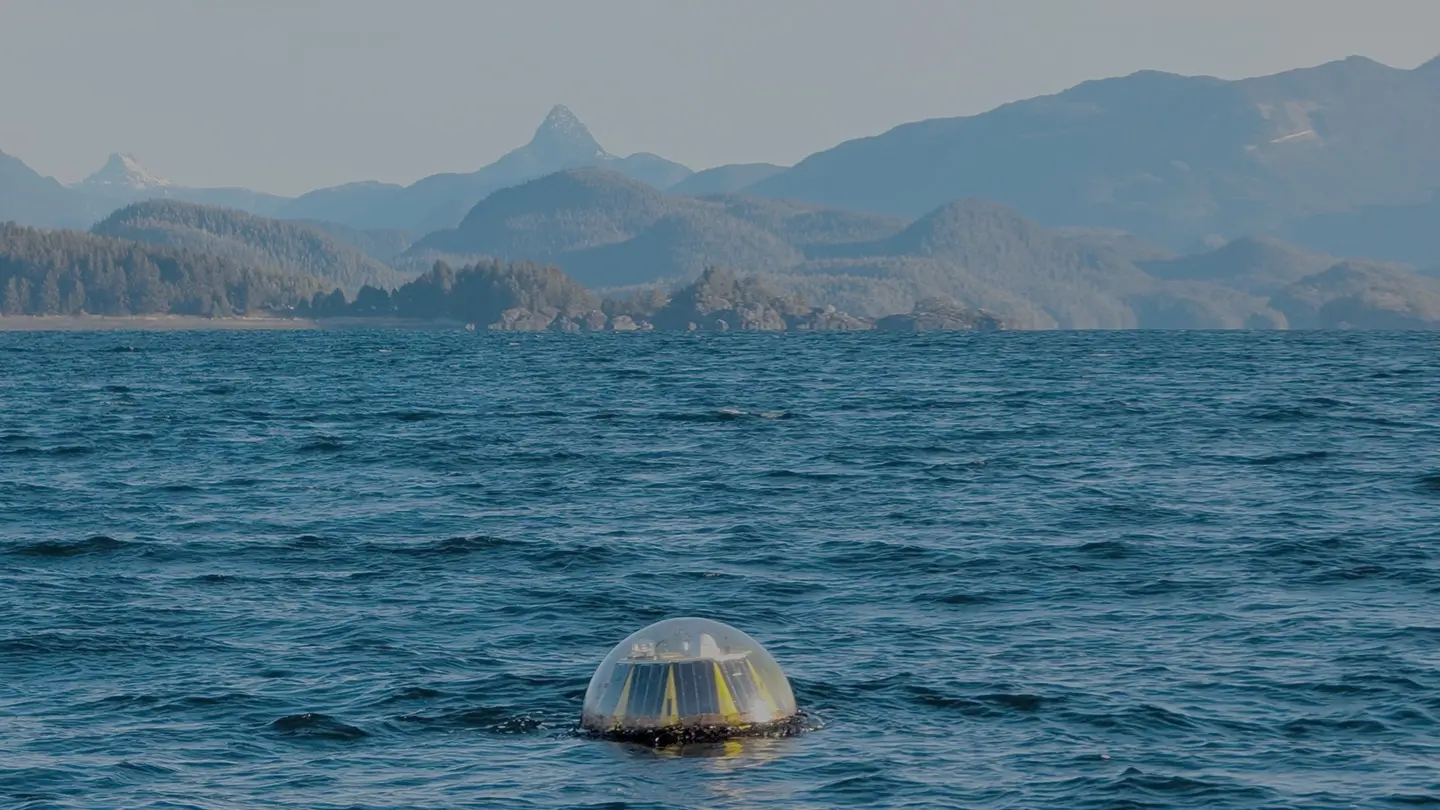
Long term, the project also enhances the Nation’s autonomy says Curran Crawford, executive director of ACET and co-director of PRIMED.
“Harnessing local clean energy sources will decrease the community’s reliance on diesel and boost their resilience against extreme weather, supply disruptions and price fluctuations for generations to come. We’re proud to support the Mowachaht-Muchalaht First Nation’s efforts to achieve energy sovereignty on Yuquot through this wave energy project,” Crawford states.
According to Mowachaht-Muchalaht Tyee Ha’Wilth Yahtloah Mike Maquinna, waves are a perfect source of energy for a community that has long relied on the ocean for its sustenance.
“Wave energy is important for [reoccupying] Yuquot because it’s so isolated,” he says. “The role the ocean had for us when I was growing up, that the Elders taught me, is that the ocean is our refrigerator. We have everything we need in there.”
The power of the people
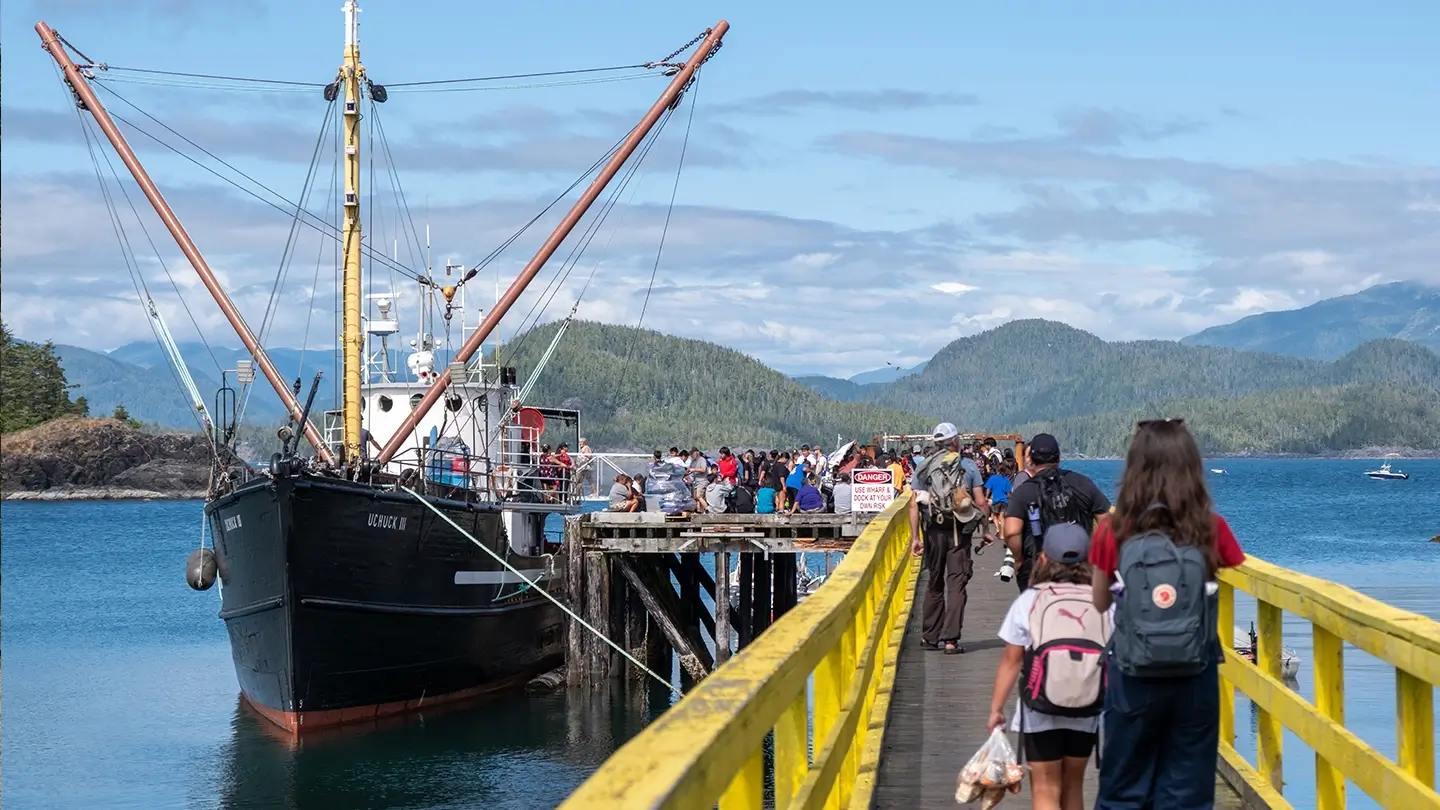
The return to Yuquot for the 33rd annual Summerfest is, for most attendees, all too brief.
On the ferry for the hour-long ride back to Gold River, the group basks in the waning glow of the sun setting on another year’s celebrations
As we wind between the headlands of Nootka Sound, the legacies of colonialism are most apparent on the lands and waters of Mowachaht-Muchalaht First Nation’s traditional territories—swaths of forest clearcuts crisscrossing the hillsides; overfilled fish farms seeping effluents into the sea; an ancient village site longing to be full again—and in the stories of Elders, each of whom have their own version to tell.
Margaretta leans against the starboard railing, exhausted and exhilarated, watching the living history of her people play out before her eyes.
“The meaning [of Summerfest] has not changed. I love it. It’s become my world,” she tells me. “To listen to the songs today…. Just imagine: the people were doing this thousands and thousands of years ago. And they’re still doing it. Celebrating. Being proud of who they are. All the forces … they can’t take away the power or the spirt of the people.”
All photos, videos and intellectual property included in this article are owned by the Mowachaht-Muchalaht First Nation and used here with permission. This content is protected under the principles of OCAP®. Photographs taken by Philip Burgess Cox.