
Throughout 2025, Indigenous storytelling continued to unfold in ways that remind us that resurgence is not something we visit or commemorate—it is something we live, practice and carry forward together.
These stories are not isolated achievements. They are part of a much larger movement—one that reaches far beyond campus—where Indigenous Peoples are reclaiming identity, restoring systems of governance, law and language, and asserting voice on our own terms. The work happening at the University of Victoria (UVic) is deeply connected to the work happening within home communities, Nations and Indigenous movements globally.
What we see reflected in these moments is revitalization as a way of life and not a project. Guided by the local teachings entrusted to UVic by Elders, Knowledge Keepers and community members, this work asks us to remember who we are, to be accountable to one another and to prepare ourselves for the responsibilities ahead.
The stories that follow offer just a small glimpse into how these teachings have been lived throughout the year—through leadership, learning, ceremony, governance and the relationships that hold this work together.
In 2025, Canada marked a decade of truth and reconciliation following what transpired at Indigenous residential schools across the country.
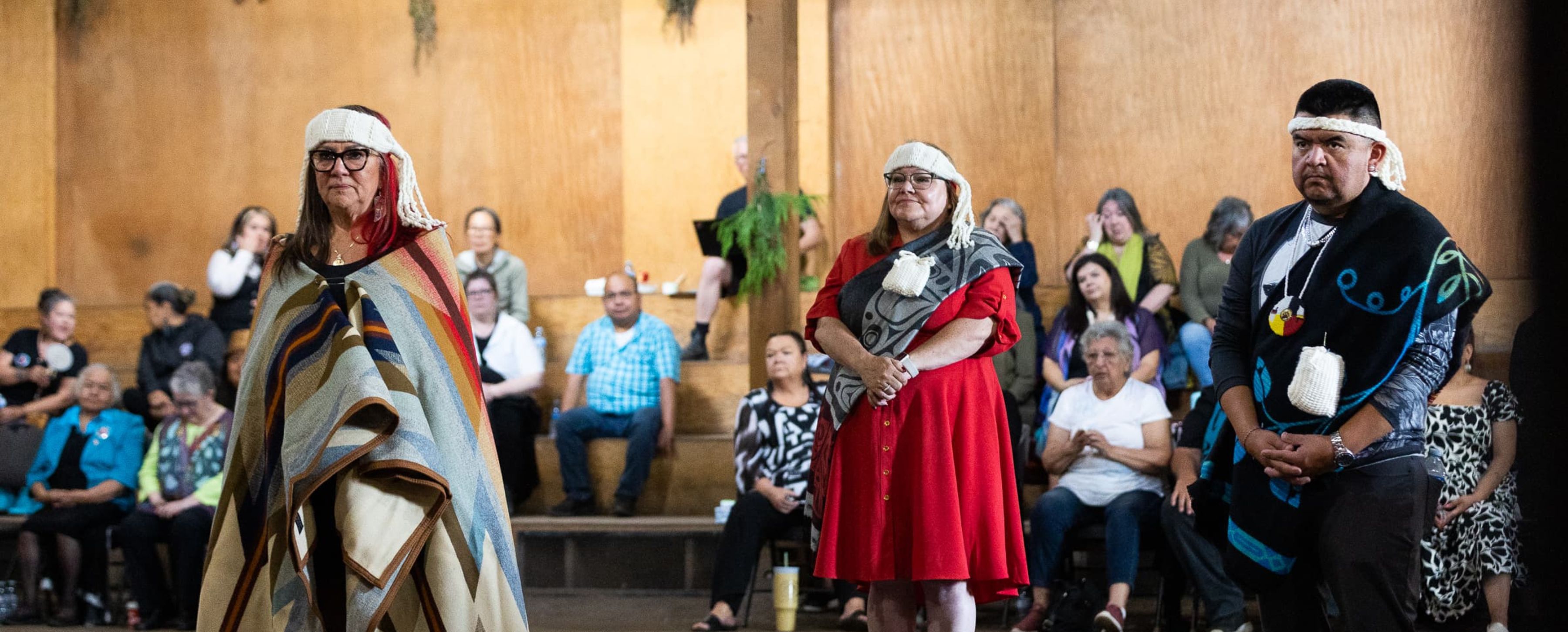
The Governor General came to the University of Victoria in February to commemorate the 10-year anniversary of the Truth and Reconciliation Commission’s release of the 94 Calls to Action. It was a moment to reflect on the emotional journeys of Survivors, families, communities and Nations as the truth of their experiences was affirmed.
It was also a moment to remember the national reckoning that followed—how that spurred changes in education and beyond that acknowledged the injustices of Canada’s painful past and what was needed for a more just future.
Her Excellency the Right Honourable Mary Simon outlined the breadth of work that UVic has done in response to the TRC Calls to Action, which built upon decades of work alongside First Nations and communities to support resurgence of Indigenous languages, land and law.
Those reflections continued throughout the year. In the summer, Qwul’sih’yah’maht, Dr. Robina Thomas was named acting president and vice-chancellor of the University of Victoria. In a Vancouver Sun op-ed published ahead of the National Day for Truth and Reconciliation, Qwul’sih’yah’maht reflected on the importance of the four Laws and Philosophies (teachings) entrusted to UVic by local Elders, Knowledge Keepers and community members.
The Sk̓ʷes | TŦE SKÁLs I, TŦE Ś,X̱ENAṈs | Laws and Philosophies call on us to: remember our ancestors and birthright; work together; bring in our good heart and mind; and be prepared for the work to come.
As 2025 comes to a close, these teachings continue to ground us in our responsibilities—to one another, to our communities and to these territories. The stories that follow share a few examples, among many, of how UVic is working to carry the four Laws and Philosophies forward in meaningful ways.
Remember our ancestors and birthright
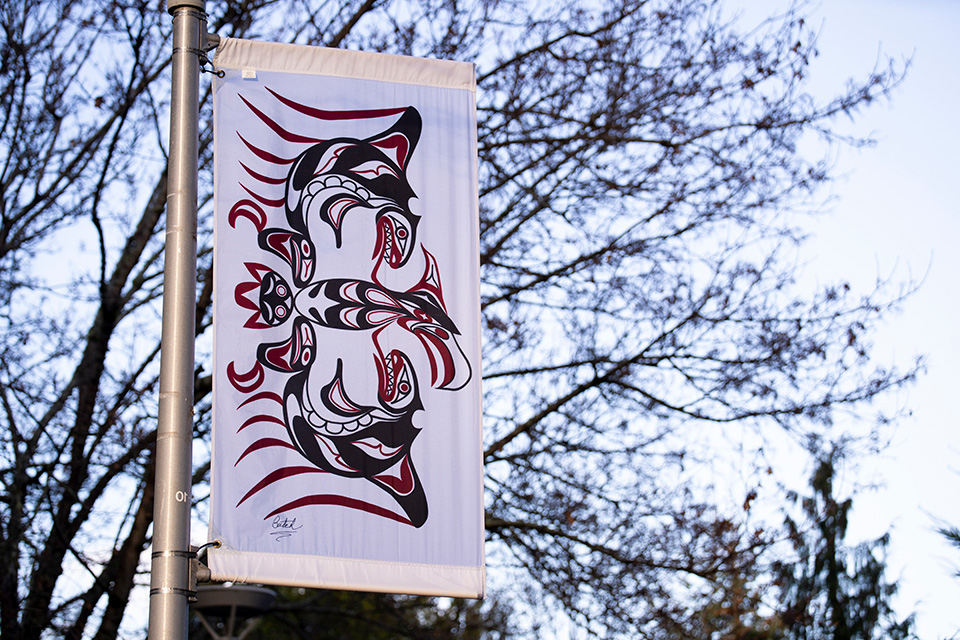
New banners were erected on campus, designed by internationally renowned Lək̓ʷəŋən master carver and artist Yux’way’lupton, Dr. Clarence “Butch” Dick. The banners depict the creation story of the Lək̓ʷəŋən Nation. Symbols related to the origin story include the eagle and the orca. The eagle embodies peace and friendship, and the orca is a symbol of longevity, protection and family. Together, these symbols reflect UVic’s transformative journey, from a colonial institution to one fostering Xʷkʷənəŋistəl | W̱ȻENEṈISTEL| helping to move each other forward.
Learn more about the teaching of Héʔəkʷ ʔə cə čəléŋən ɫtə | HÁEQ ȽTE OL TŦE ĆELÁṈEN ȽTE | Remember our ancestors and birthright.
Work together
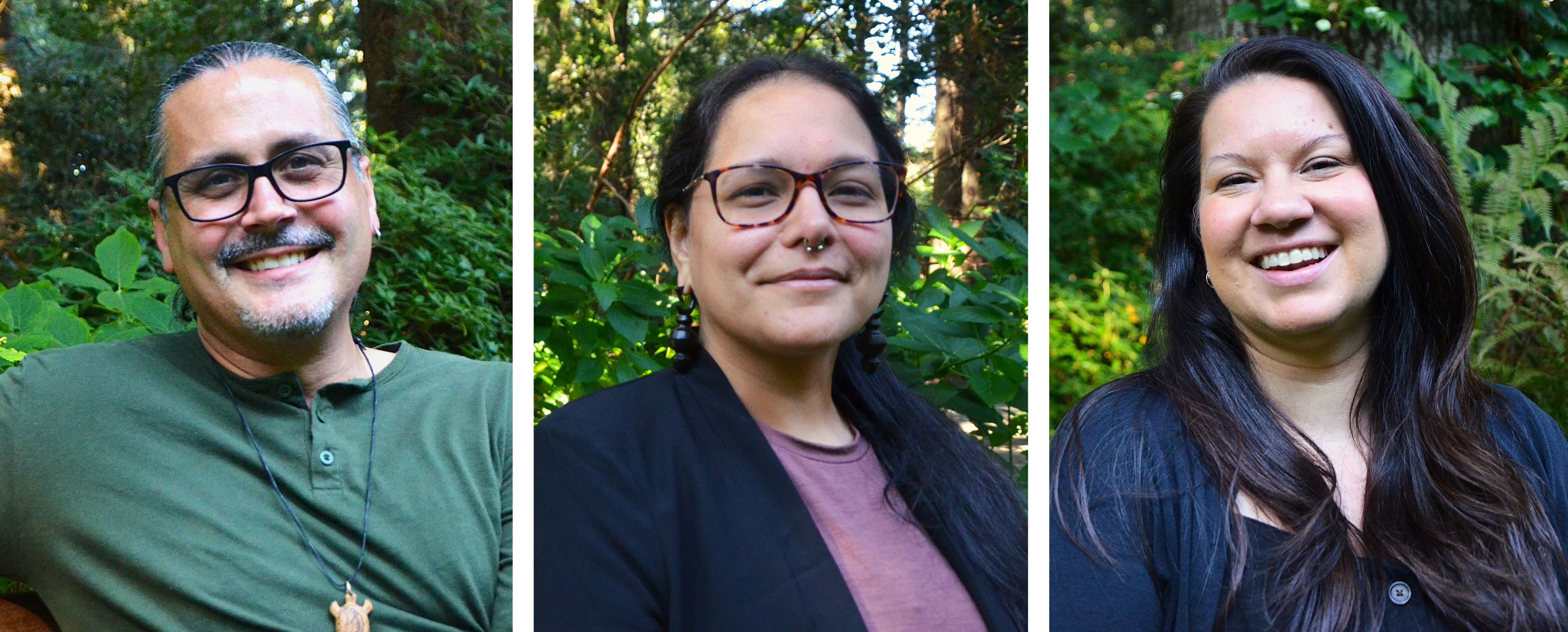
Three new associate deans Indigenous (ADI) were appointed in the faculties of Law, Fine Arts and the Gustavson School of Business. These senior academic roles were created to provide visionary leadership and ensure Indigenous perspectives, knowledge systems and governance practices are embedded in faculty structures, curriculum, research and decision-making.
Learn more about the teaching of Nəc̓əmaat kʷəns čeʔi | ĆȺNEUEL OL | Work together.
Bring in your good heart and mind
What does it mean to be a respectful visitor on the territories of the Lək̓ʷəŋən and W̱SÁNEĆ Peoples?
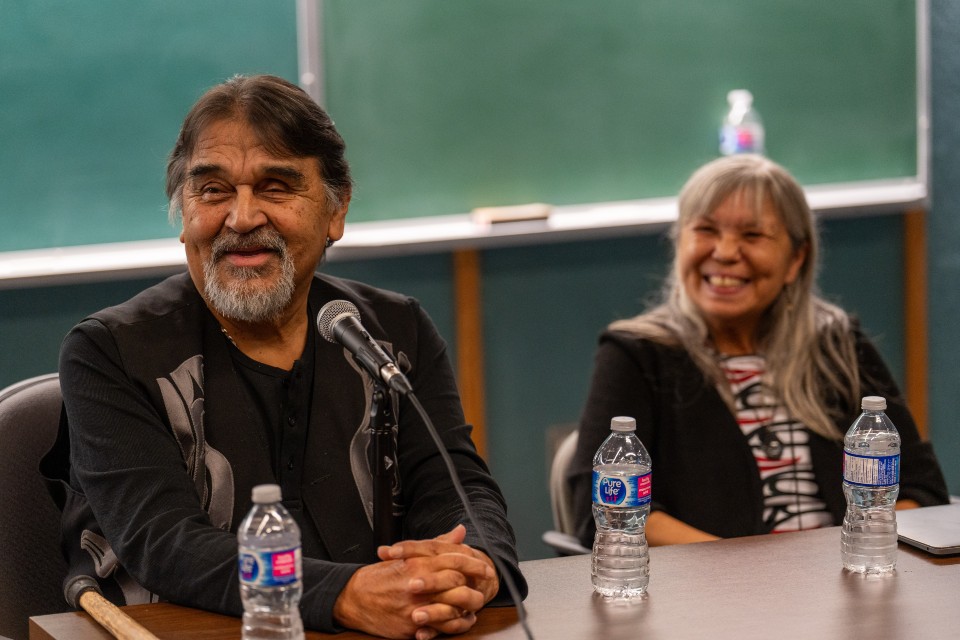
Since the fall of 2023, students and community members have gathered at the University of Victoria for Indigenous Studies 100, a course to facilitate greater cultural understanding amongst students, faculty, staff and community members. From the very beginning, cultural protocols of the Lək̓ʷəŋən and W̱SÁNEĆ Peoples are woven into the fabric of Indigenous Studies 100. Students ask for permission to learn on the territory, and every semester begins and ends with a shared meal prepared by the Songhees Nation. For many students, sharing this meal is an important part of their learning experience, and for some, their first time eating frybread or beginning a course in this way.
Explore the teaching of Nəw̓es šxʷ cən ʔay̓ šqʷeləqʷən | ÁMEḴT TŦEN ÍY, ŚḰÁLEȻEN | Bring in your good heart and mind.

Be prepared for the work to come
UVic’s Faculty of Law is now home to a new Indigenous Law wing, supporting the growing movement of Indigenous Laws empowering communities to reclaim and exercise authority over their own legal systems. Designed in close relationship with Lək̓ʷəŋən and W̱SÁNEĆ Peoples, the 2,440-square-metre building carries Coast Salish legal traditions in its form, materials and orientation, reflecting the responsibilities that arise from these territories and the relationships that brought the building to life. The new building is part of how Law faculty are scaling research partnerships for greater impact in community. Next Steps: Rebuilding Indigenous Law, a new research initiative from UVic’s Faculty of Law, launched in November to rebuild entire Indigenous legal orders, focusing on all areas of law. Each Indigenous society has its own unique traditions from which legal orders—systems of law, including common law—are drawn, including centuries of knowledge and interactions within and across cultures. Working alongside Indigenous partners, the initiative supports the revitalization and application of Indigenous legal traditions to address today’s realities, in ways that honour the past while preparing for the work to come.
UVic’s commitment to Indigenous resurgence
We invite you to learn more about how UVic is living these teachings every day—through relationships grounded in respect, accountability and care, and through actions that move beyond commitment into practice. This is ongoing work, carried forward alongside Indigenous Nations and communities, as part of a shared responsibility to support Indigenous resurgence now and for generations to come.