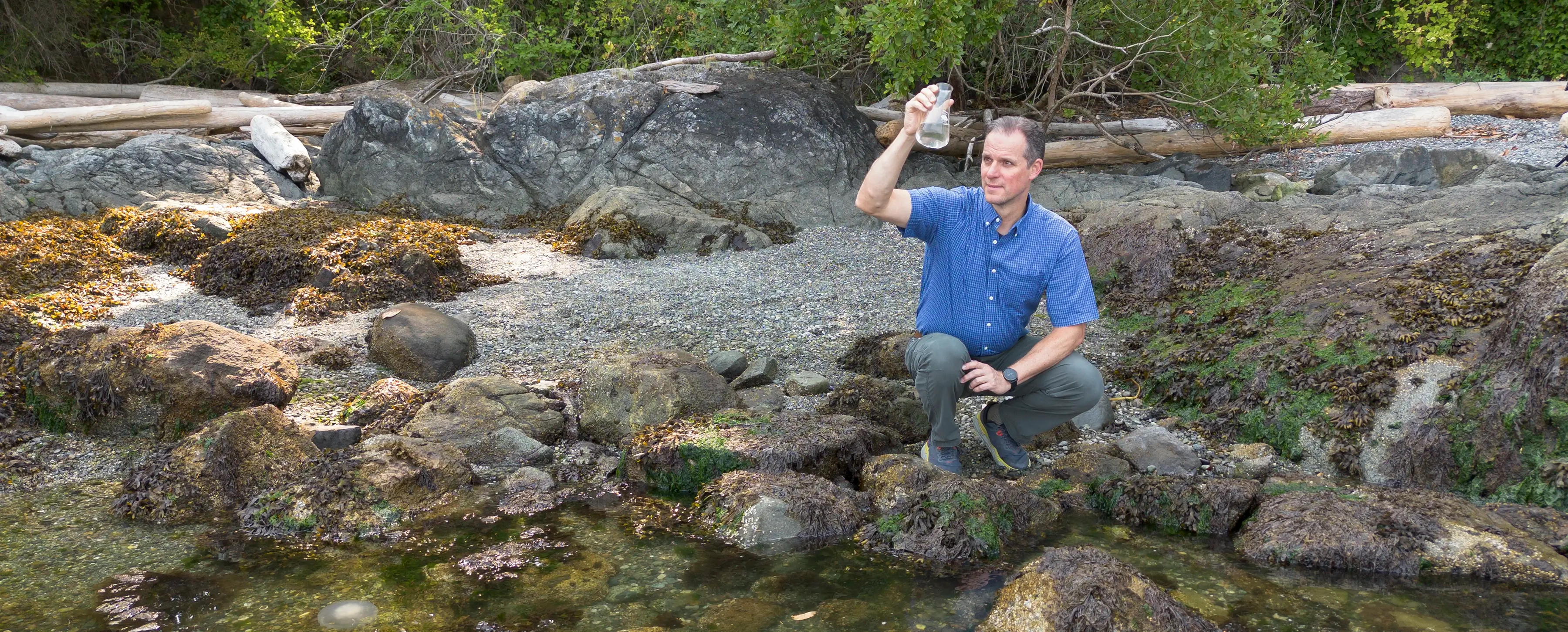

When Bryson Robertson spent three and a half years sailing around the world studying plastic pollution, he didn’t publish journal articles about what he saw. Instead, he told stories.
It was 2007, before the term “Pacific Garbage Patch” was widely known. Robertson and his crewmates documented plastic debris in some of the world’s most remote waters and shared what they learned in schools and communities along the way. The experience reshaped how he thinks about impact.
Research doesn’t live in a vacuum. If it’s going to matter, it has to connect with people.”
—Bryson Robertson, director, IESVic
Today, as the new director of the Institute for Integrated Energy Systems (IESVic) at the University of Victoria, Robertson is applying that same philosophy to one of the defining challenges of our time: how we generate and use energy in a rapidly changing world.
Not just an engineering problem: shift to renewables requires integrated thinking
Public conversations around energy have tended to focus on decarbonization and climate change. Those priorities remain urgent, but the narrative has expanded. Energy security, grid resilience, geopolitical pressures and national defence now shape the conversation as well.
The shift toward renewable energy is not simply a change in fuel source. It requires a different way of thinking about how energy systems are designed and operated.
“With renewables, you don’t just put fuel in and flip a switch,” Robertson explains. “You’re designing systems that work in collaboration with natural forces like wind patterns, waves, with environmental conditions. That changes how you think about engineering.”
Marine energy offers a clear example. A single technology can operate across dramatically different scales: powering an oceanographic buoy that tracks environmental change; supporting remote coastal communities; or contributing electricity to a regional grid. Each step up in scale brings new technical, environmental and social considerations.
“You have to understand the ocean, mechanical systems, electrical controls, grid integration,” he says. “But you also have to understand communities, policy and perception. That’s systems thinking.”
IESVic: a hub that advances clean energy research, innovation and community impact
No one lab can tackle those intersecting challenges alone. That’s where an institute like IESVic comes in.
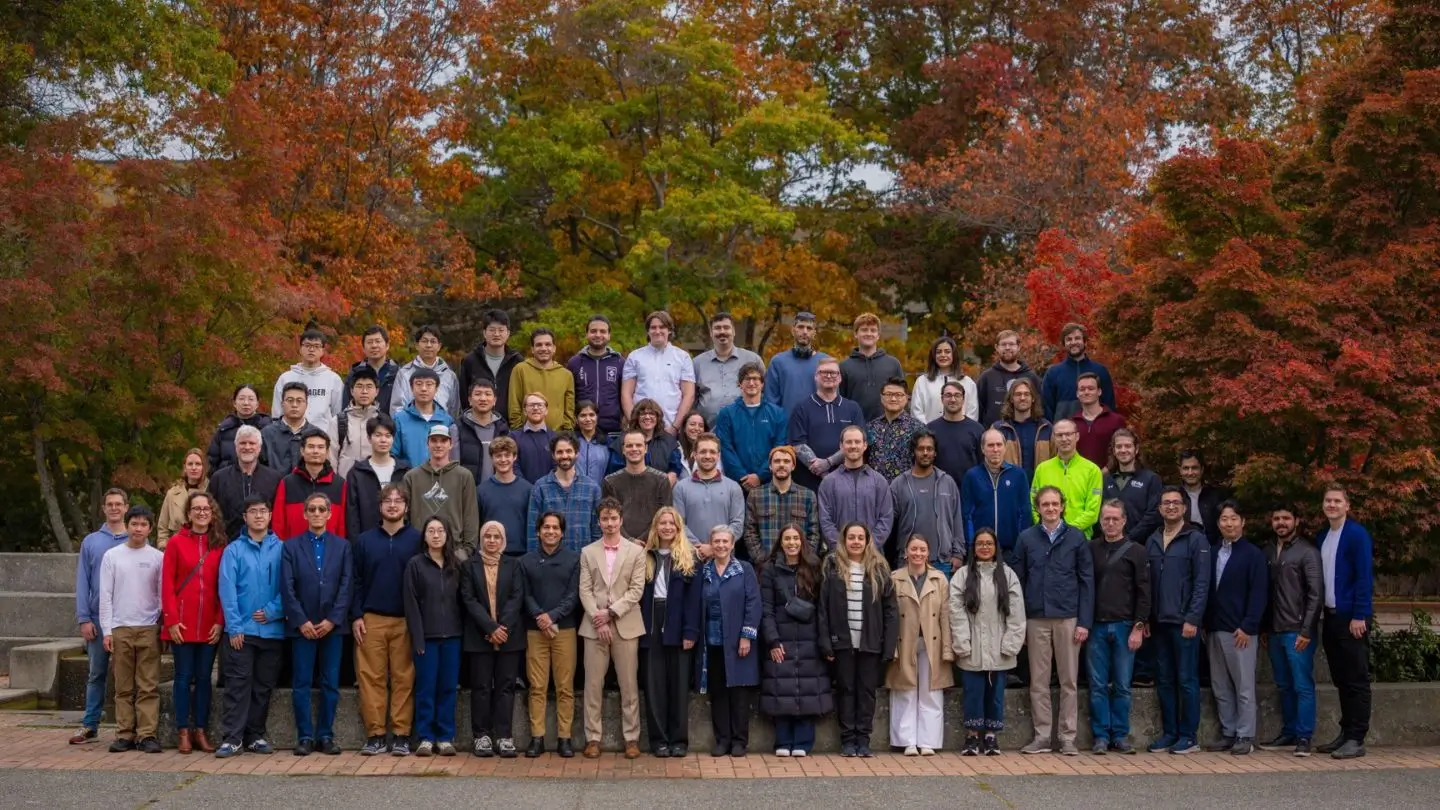
Founded in 1989, IESVic has grown from a single research initiative into a transdisciplinary hub that brings together engineers, scientists, social scientists, policy experts and industry partners. It serves as a “centre of gravity” and a shared space to focus on integrated energy systems with both technical expertise and real-world applications.
Institutes like IESVic allow students and researchers to move beyond disciplinary silos. A mechanical engineering student might collaborate with an ocean scientist. An electrical engineer might engage with policy experts or industry partners. Alumni working in government and the private sector help ground research questions in emerging workforce and regulatory realities.
“We can’t afford to be an inch wide and a mile deep,” Robertson says. “We need to be mile-wide and mile-deep on the right problems.”
That approach also shapes how IESVic supports innovation. In marine energy, Robertson has helped develop open-source prototype platforms that serve as shared benchmarks. These systems allow researchers and companies to build, test and compare ideas without constantly starting from scratch. It’s a way of reducing duplication and accelerating progress in a field that has often struggled to scale.
Canada’s coastlines, Canada’s opportunity
With the world’s longest coastline and vast marine resources, Canada faces both responsibility and opportunity in the energy transition. Coastal communities are navigating climate impacts and economic pressures, while governments look for ways to strengthen grid reliability and national resilience.
On the West Coast, marine and offshore renewable energy intersect with ocean monitoring, defence applications and the emerging blue economy. Robertson sees universities as essential partners in building that future by advancing technology, training the next generation of experts and working alongside communities to co-design solutions.
He also believes infrastructure matters. Expanding testing facilities and research capacity on Canada’s West Coast would position the region to play a larger role in global marine energy development.
“We have the ocean expertise, the engineering strength, and the strong connections to coastal communities,” he says. “The question is how we bring those pieces together strategically.”
Putting people back at the centre of energy innovation
Throughout his career, Robertson has seen promising technologies stall when technical ambition outpaced social acceptance.
Energy projects often followed a predictable path: develop the technology, announce the project, defend it against criticism. That process can be slow and divisive.
Robertson advocates a different model, one that puts communities at the centre of the design process. “We need to put the human back in the loop,” he says. “Communities should be part of shaping the constraints and priorities from the beginning.”
Sometimes that means accepting trade-offs. A solution might be slightly less efficient but better aligned with local values and long-term goals. By bringing diverse perspectives together earlier in the process, projects are more likely to succeed.
True innovation can’t happen in isolation. For it to have real impact, it has to be technically sound, economically viable, politically feasible and socially embraced.”
—Bryson Robertson, director, IESVic
As director, his goal is to ensure IESVic remains a place where researchers and students feel a sense of belonging and shared purpose, and where governments, industry and communities see the institute as a trusted partner in navigating an uncertain energy future.
The technologies will evolve. The public narrative will shift. But the core challenge remains the same: designing systems that work with nature, and with people. And that, Robertson believes, is where lasting impact begins.