What’s the point of creativity during climate crisis? UVic Master’s student Braedon Lowey found himself stuck on this question while studying literature. In the face of a climate crisis with ever-more-visible impacts on human and non-human life, why bother doing art at all?
The question led him to his Master’s project, a documentary film titled A Fire to Last Until Morning. The answer, Lowey found, was not just in talking to climate-engaged artists about their work, but in creating art himself.
Community healing through the arts
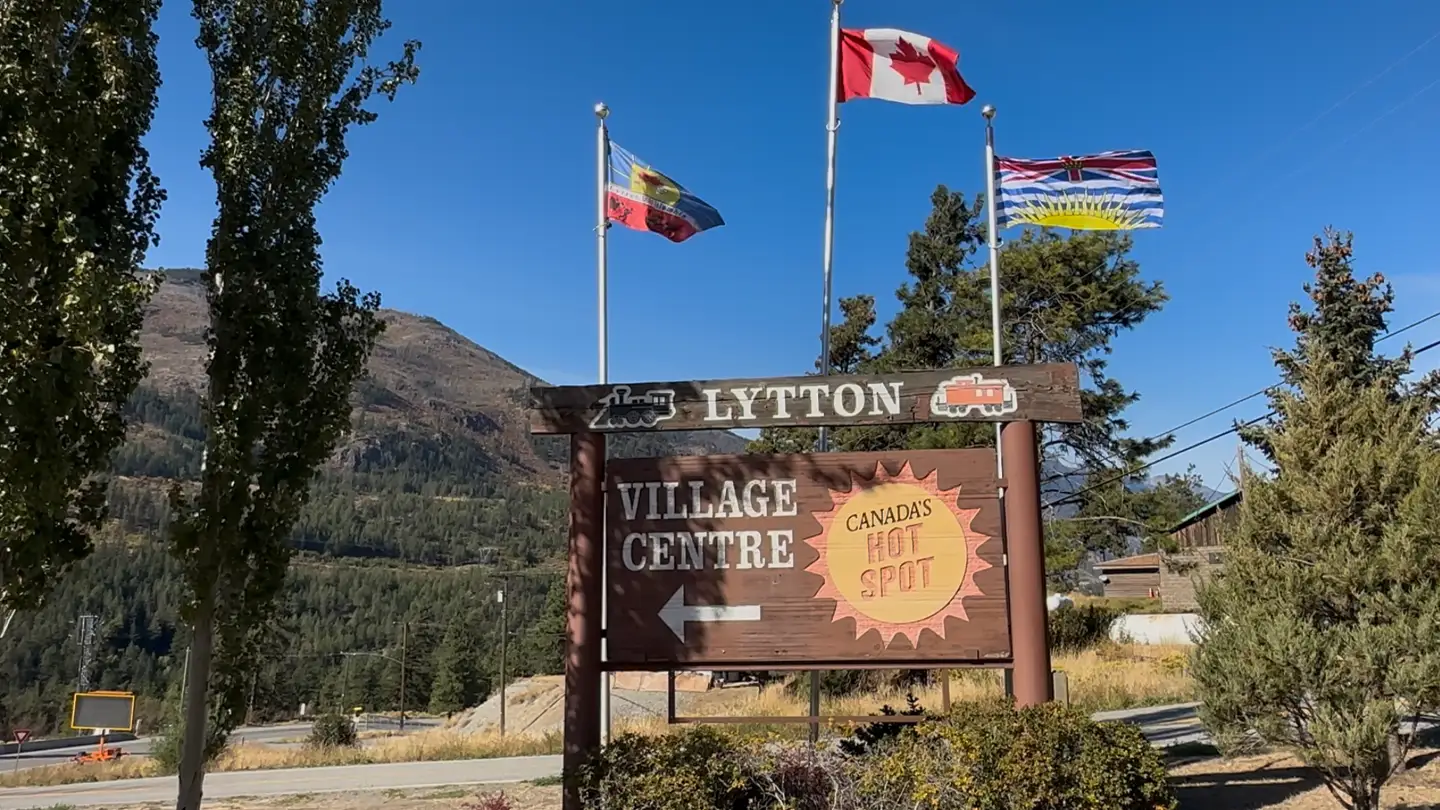
The film begins in the village of Lytton, BC. On June 30, 2021—the day after Lytton set a Canadian all-time temperature high of 49.6 °C—a wildfire swept through the community, destroying most structures. Lowey travelled to the village and interviewed poet Megan Fandrich, author of Burning Sage (Caitlin Press, 2023). She explains that her work “puts words on the experience [of climate catastrophe] for others.”
For Lowey, the arts can unite people with a shared experience and narrative—a crucial aspect of coping with climate catastrophe that he witnessed in Lytton, a small, tight-knit community of about 250 residents.
Art as activism
Beyond working as an avenue to handle the trauma of living through climate crisis, Lowey argues that art can also lead to policy change. In an interview with UVic’s Wayne Crookes Professor in Environmental and Climate Journalism Writing Professor Sean Holman, who is the director and founder of the Climate Disaster Project (CDP), Lowey explored how personal testimony can, through journalistic investigations, instigate policy change.
A series of climate survivor testimonials taken by UVic Writing students Ashley Ciambrelli, Raamin Hamid and Fernanda Solorza recently ran in the UK’s The Guardian as part of a partnership with the CDP. Raamin Hamid captured Ruchira Gupta’s account of surviving a devastating 2005 flood in India and Ryan Kirkham’s experience with the 2023 Maui fires. Fernanda Solorza spoke with Peruvian mountain guide Saúl Luciano Lliuya about his landmark lawsuit against German energy firm RWE and its role in increasing glacial melt. And Ashley Ciambrelli connected with Jaguar Identification Project founder Abbie Martin about the impact of fires in Brazil’s Pantanal region in 2020.
I used to think of climate change in abstract, global terms. Through the CDP, I began to recognize how these crises shape our lives in quieter, ongoing ways, such as economic instability or the loss of place and memory. Hearing others’ stories made me reflect on my own, and helped me understand that the climate crisis is not just a destructive flood; it is all the little moments woven into our histories and our bodies. It is wondering, where have all the butterflies gone?
– Fernanda Solorza, UVic Writing student
Another UVic project featured in the documentary is the International Climate Change Theatre Action (CCTA) project. 95 students collaborated to present 18 commissioned 5-minute plays on campus. Organized by Theatre professor Alexandra (Sasha) Kovacs and CCTA co-founder and UVic English PhD candidate Chantal Bilodeau, the performances fostered dialogue about climate crisis and empowered action. In Kovacs’ words, “By having students directly participate in staging the plays, they were not simply reading about how playwrights respond to climate crisis, but actively entering the conversation with their own creative practice.”
Amy Blackburn, a theatre student, directed Bilodeau’s play Homo Sapiens for the project. “My biggest takeaway is that we are not going to make positive impact without continuing to develop education and policy. We need to consider climate crisis with a clear end goal, as it not only impacts humans in present and future, but also our fellow plant, animal and bacterial species.”
Climate crisis on a global scale
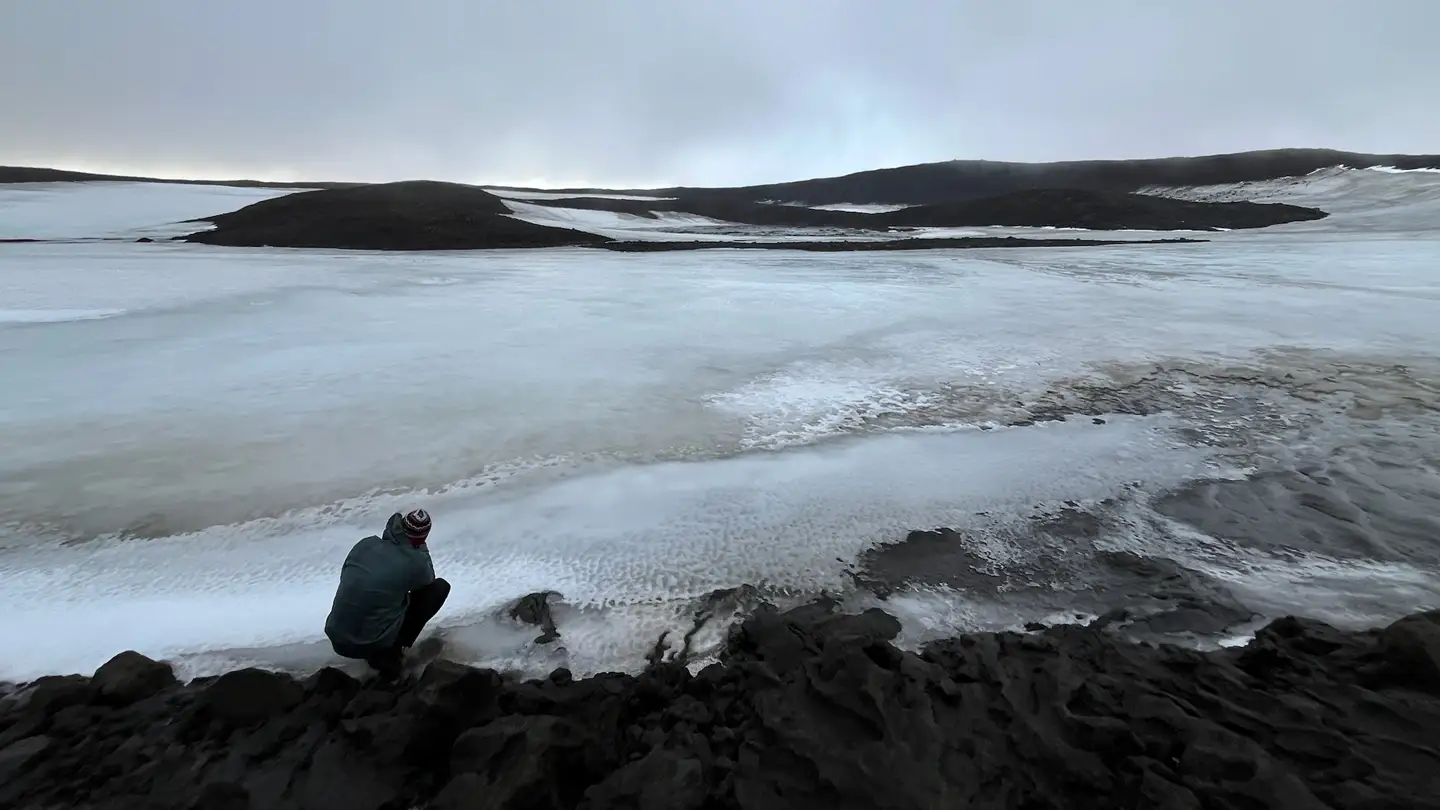
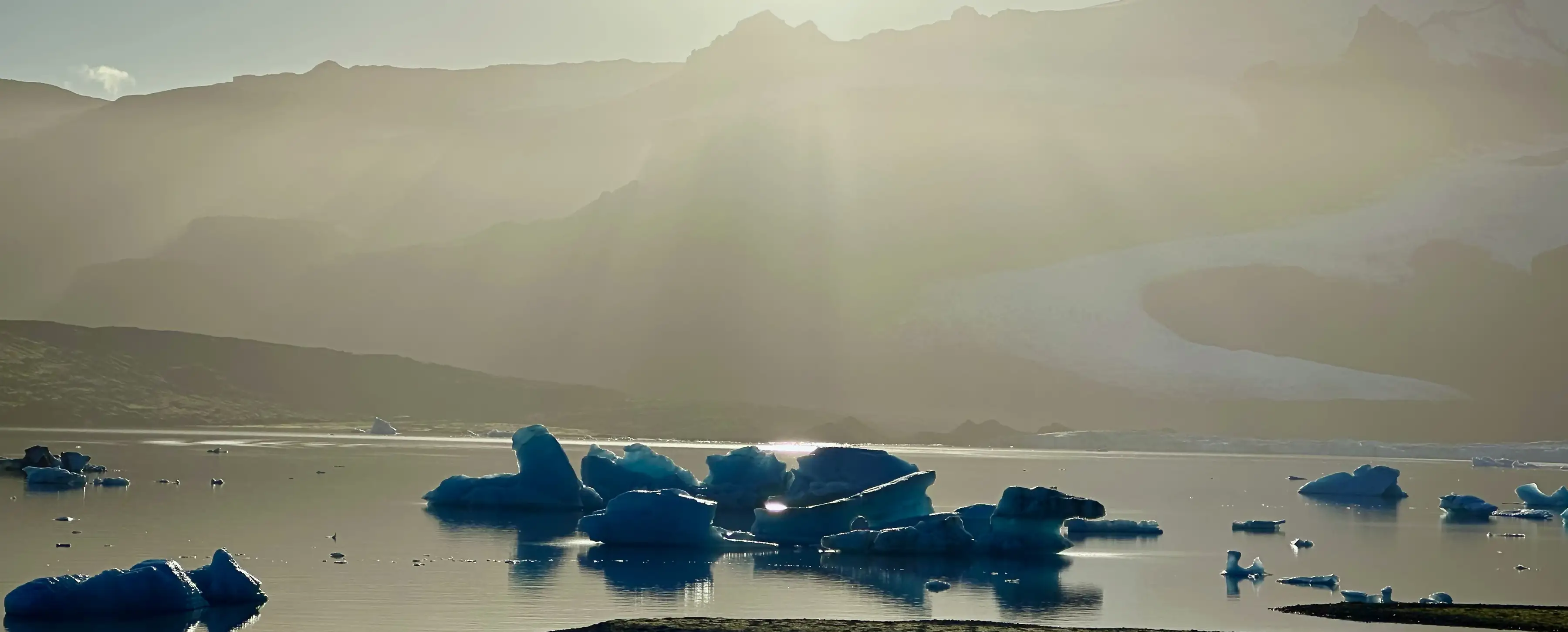
Off-campus, Lowey’s research took him much further afield— to Iceland, where receding glaciers are a stark indicator of a changing climate. Funded by the Richard and Margaret Beck Student Travel Award, he visited the corpse of the world’s first glacier to be declared dead due to climate change: Okjökull. Declared dead in 2014, Okjökull’s loss prompted both a documentary film, Not Ok, and the installation of a plaque with an inscription by Icelandic writer Andri Snær Magnason, titled “A letter to the future.”
Okjökull is an eerie glimpse into the future for Canada, where glaciers continue to recede at an accelerated rate due to warming temperatures. Okjökull’s memorial plaque, installed in August 2019, includes the global atmospheric carbon dioxide reading for that month: 415 ppm. In November 2025, that number has increased to 426 ppm.
“I got to speak to these artists who are working with these geological features before they’re gone,” Lowey says. “There’s an impending grief that they’re dialling into that we’re experiencing here too, as we lose so much of our old growth or towns and forests that we love to climate change or resource extraction.”
For Lowey, art in climate crisis can move people through that space of grief, into action. Converting people to the cause doesn’t have to always be the goal, either. For environmentalists, art can also raise awareness about their work and empower them to do more, which is just as impactful.
For many years, I was in that state of despair. The more we engage with those feelings of anxiety, grief and nihilism, the more we can process them and move forward into action.
– Braedon Lowey