
For a student who is interested in pursuing a career in finance while also wanting to support communities and create positive social change, they may have had a difficult decision to make: which direction should I choose? Now, the field of impact investing means there is a place where you can achieve both.
For many students, impact investing opens a door to a different kind of finance: one where capital is not only measured by the returns it generates, but also by the social and environmental solutions it helps advance. Impact investments begin with the intention of contributing to positive change while still earning financial returns. It is an idea that resonates strongly with students looking for careers with both purpose and rigour.
Through its unique summer school program, the University of Victoria’s (UVic’s) Impact Investing Hub is helping students explore this field and build practical skills. This is part of a broader knowledge mobilization and experiential learning initiative under ACET’s Business and Finance Innovation strategic research area.
As the first dedicated program of its kind in Canada, the summer school opens the field of impact investing to students from all disciplines and levels. It gives them a chance to explore how investment decisions are identified, assessed and implemented in ways that actively support low-carbon, resilient and equitable economies. The experience goes beyond learning about a practice from the outside; it brings students into a conversation with the investors, academics and leaders who are shaping the field in real time.
Developing effective financing mechanisms and community focused ownership models is a critical part of ACET’s vision of community energy transformation. Access to capital remains one of the primary barriers for communities wanting to develop renewable energy systems. That is where impact investing can play a powerful role; not only by mobilizing private capital and giving communities new opportunities to raise funds, but also in preparing future investors to understand community needs and deploy capital responsibly.
Impact Investing Hub founder, and Gustavson School of Business professor, Basma Majerbi, explains, “if we want capital to support low-carbon, resilient and equitable economies, we need to train future investors to recognize and support the full range of opportunities driving that transition: from community-led energy projects to clean tech startups and climate-focused innovation.
This program helps students understand how finance can turn promising ideas into investable pathways for real-world impact.”
—Basma Majerbi, Gustavson School of Business professor
This tangible connection between capital, climate action and innovation is what makes the summer school particularly opportune. It equips students with the mindset and skills to direct capital to the future economy we urgently need to build.
A deep dive into the impact investing world
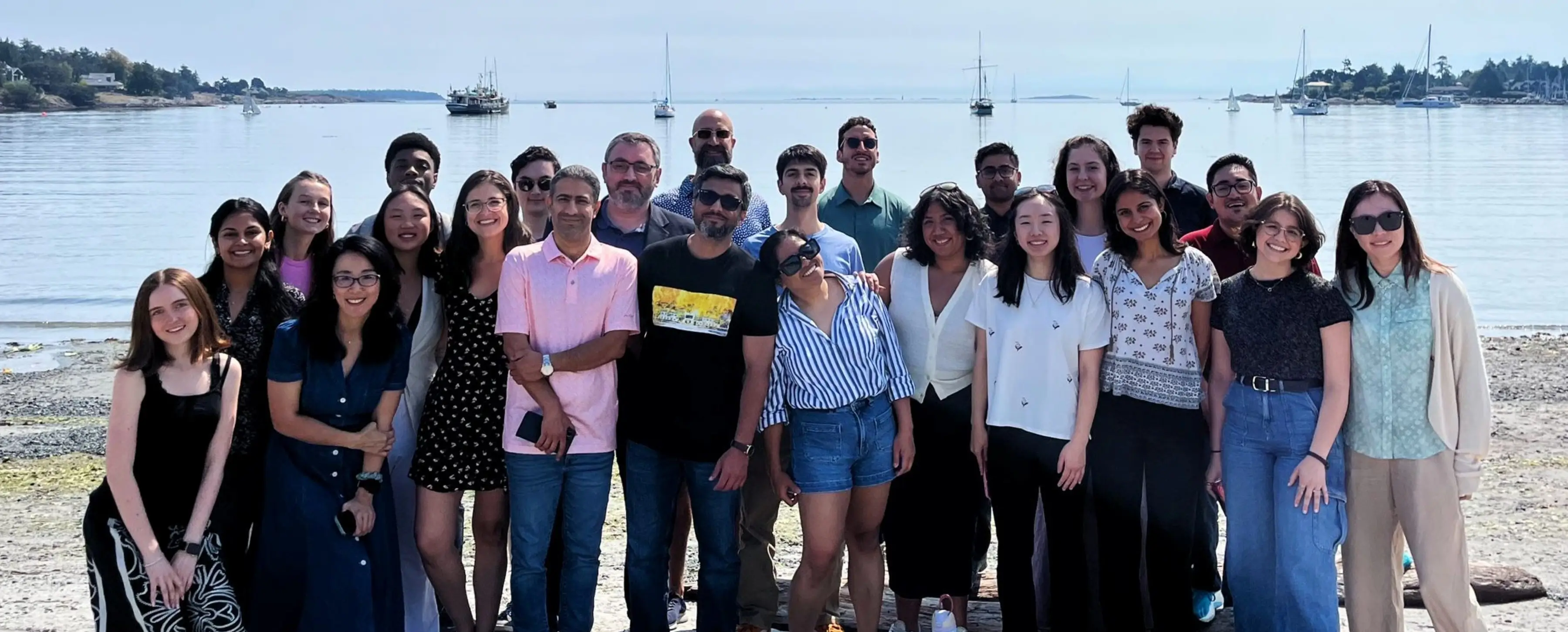
Last year the summer school had an intake of 28 students and ran a program which several of them described as “life changing.” For many of the participating students this was the first time they could clearly see how capital can become a genuine force for good.
The full program is set up as an intensive eight-day, in-person training program, held at UVic in the last week of August. The program is organized and hosted by the Impact Investing Hub, in partnership with Propel Impact, a non-profit organization focused on capacity building within the impact finance ecosystem. The program is accredited by the United Nations Institute for Training and Research (UNITAR) through CIFAL Victoria and is supported by several organizations, many who also offer their time as guest speakers in the learning sessions.
What makes the summer school special is that students aren’t just learning about impact investing in the abstract. They’re underwriting real cleantech deals, wrestling with real trade-offs and building the muscle memory Canada needs to finance the net-zero transition, all while being immersed in academic lectures, practitioner-driven sessions and peer collaboration.”
—Keshiv Kaushal, chief investment officer, Propel Impact
Last year, sessions included 33 expert speakers. Students heard directly from Canadian Senator Rosa Galvez, impact fund managers and experts in social finance, energy systems, entrepreneurship and many ecosystem builders. As UVic MBA student Aby Tannas explained, “we got to meet the luminaries of the impact investing world.”
The program intentionally overlaps with the Victoria Forum (a partnership between UVic and the Senate of Canada designed to address global challenges). Students are given access to plenaries, roundtables and receptions providing further exposure to discussions around climate action, decolonizing wealth and advancing sustainable finance. All of this made for a rich learning experience.
The program and the Victoria Forum was a rare chance to learn directly from people working in finance, policy and community energy, while collaborating with an interdisciplinary cohort. It all really pushed my thinking about how investment can support a just energy transition.”
—Nicu Zaharia, UVic MBA student
Sparking new ideas and insights
The experience of the program became a thought catalyst for many of the students, inspiring them to take forward new projects in different directions.
Brent Wennekes, who is studying for a master’s degree in Indigenous development practice at the University of Winnipeg, saw an opportunity that social impact financing could bring in supporting self-determined infrastructure for indigenous communities. Attending the summer school validated this as a viable approach and provided connections that helped with the design of his final research project. Brent is now looking at how blended capital models, with different layers of capital, can support Indigenous communities.
Teya Knightingale, another attendee from the University of Toronto, was surprised that this knowledge wasn’t readily available to students. In efforts to broaden engagement and awareness, she organized a speaker event back at her own university to introduce impact investing to her fellow finance undergrads. She was also inspired to write a children’s book, due to be published this summer, which will introduce the core principles of investing in communities to a wider audience.
Arushi Dahiya, who studied International Development at the University of Toronto, learned through her work placements that “it is not a lack of ideas or people that causes problems in the world, but a lack of resources and capital.” The possibility that financial skills could be purposely designed to help people and support communities gave her fresh inspiration, “the summer school showed me there was another direction we could take.”
Although impact investing is gaining momentum across the financial industry, it remains an emerging practice in Canada and has not yet become part of the core finance curriculum in most business programs. The Impact Investing Summer School is helping to change that by giving students an early entry point into a field that is reshaping how capital can serve communities, climate action, and the future economy.
By understanding how financial mechanisms can bring positive impact to society, students can envision a world where financial returns can proactively help people and the planet. Not surprisingly, that is a popular proposition.
Learn more about Impact Investing Summer School and enrol for 2026.