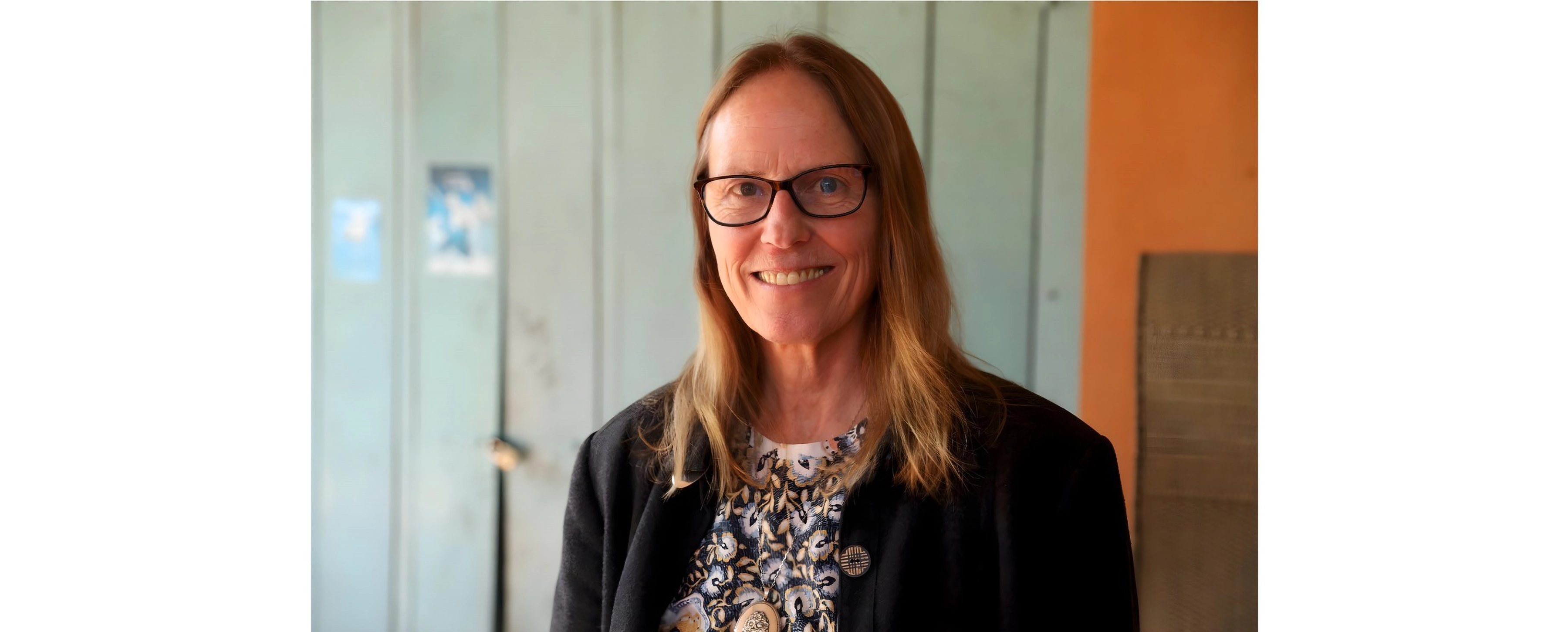
For more than two decades, University of Victoria (UVic) geographer Jutta Gutberlet has been studying one of society’s most persistent challenges: what we do with the things we throw away.
Through the lens of waste governance, she has engaged with some of the most urgent challenges in Canada and Brazil. Her commitment to social justice and solutions for global waste challenges has been recognized as a finalist for the SSHRC Insight Award, one of Canada’s highest honours for achievement in social sciences and humanities research.
Global waste challenges public health issue
Addressing global waste challenges has been at the heart of Gutberlet’s research since 2003, when few social scientists were studying waste. Her interest pre-dates the emergence of “discard studies,” an interdisciplinary field that examines what societies throw away.
I came to understand waste as a highly complex, socio-environmental and cultural concept; fluid and constantly changing, shaped by different contexts, perceptions, materials and the systems through which we produce and manage it.”
—Jutta Gutberlet, UVic geographer
Her research began to take on a deeply human dimension during her early work on quality of life in suburban settlements in São Paulo, Brazil. Gutberlet encountered waste as both a public health concern and an environmental challenge—and met the people who were doing much of the work of managing it.
“As I came to know these waste pickers and hear their stories, I began to see the important contributions they were making in their communities: cleaning up neighbourhoods, recovering valuable materials, generating income and educating others about waste and the environment,” says Gutberlet.
Waste-picker communities
Her experience in Brazil inspired her to study waste-picker communities and, importantly, bring their knowledge, experiences and expertise into broader debates about waste, sustainability and social justice.
Gutberlet has since worked with waste-picker communities in several countries. Her research demonstrates that waste pickers—workers who engage with discarded recyclable materials in different ways, including collecting, recycling, transforming and reusing them—bring valuable knowledge and expertise to address serious challenges associated with waste.
Over the decades, the nature and scale of waste have changed dramatically. The sheer volume of household waste continues to grow, reaching 11 million tons annually, alongside waste from resource extraction as well as industrial and agricultural production.
Gutberlet says recycling alone cannot resolve a problem that needs to be addressed at its root.
How we design, produce, consume and ultimately deal with materials throughout their life cycle matters deeply.”
—Jutta Gutberlet, UVic geographer
How humans understand waste influences behaviour and practices at many levels, she adds. By recognizing the expertise and societal contributions of waste pickers, her work has helped reduce stigma and contributed to waste governance and environmental education in schools.
Transforming waste governance
One project Gutberlet championed, in conjunction with UVic and partners in Brazil, is the University for and with Waste Pickers (UNICATA). The initiative is helping transform local waste governance by building the confidence, knowledge and skills of waste pickers.
“The experience of UNICATA reverberates across many aspects of students’ lives. It builds confidence and strengthens their capacity to advocate for themselves and their communities, while providing knowledge and skills that help them become more effective professionals, community leaders and citizens.”
Despite existing stigma and prejudice, waste pickers are becoming key players in recycling programs and contributing to the formulation of new policies. They are a driving force behind collecting and redirecting recyclable materials to industry, making them an important part of the circular economy.
UNICATA is part of building their confidence, knowledge, awareness and power, says Gutberlet.
Solution-driven research
Today, waste pickers are speaking up against waste incineration and its environmental and social consequences. They speak about their contribution to environmental education and planetary healing, and reveal the barriers to recycling materials that don’t have markets or are too complex to currently be recycled.
Gutberlet says her work is ultimately about finding solutions to interconnected environmental and social challenges.
I am driven to work toward solutions. Biodiversity loss, poverty, the climate emergency are issues deeply interconnected with how we produce, consume and manage resources and waste.”
—Jutta Gutberlet, UVic geographer