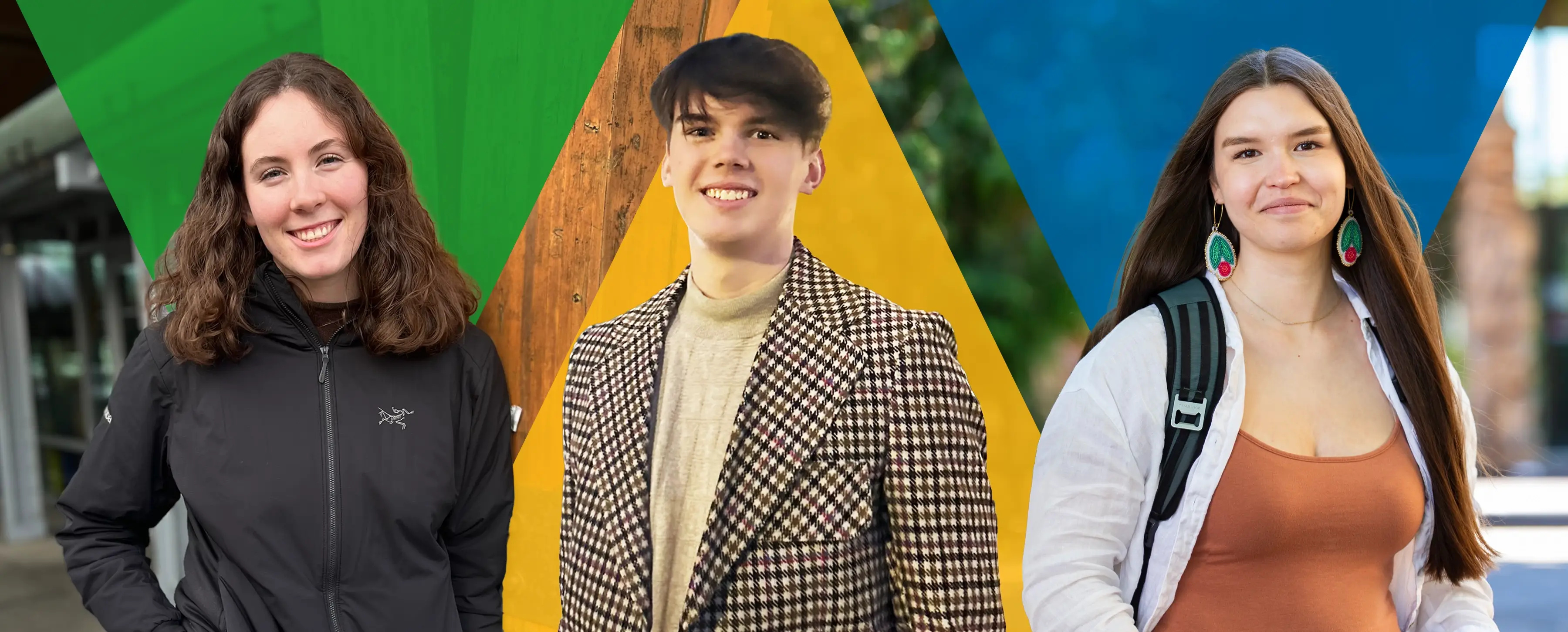
Three students are 2025’s UVic Co-op Students of the Year. The awards are based on outstanding academic success, workplace performance and community involvement. One student is selected each from Business, Engineering and Computer Science, and Optional and Professional Programs (all other programs). Congratulations to all the award winners on your hard work and accomplishments!
Business Co-op Student of the Year
Jack Taylor (commerce)
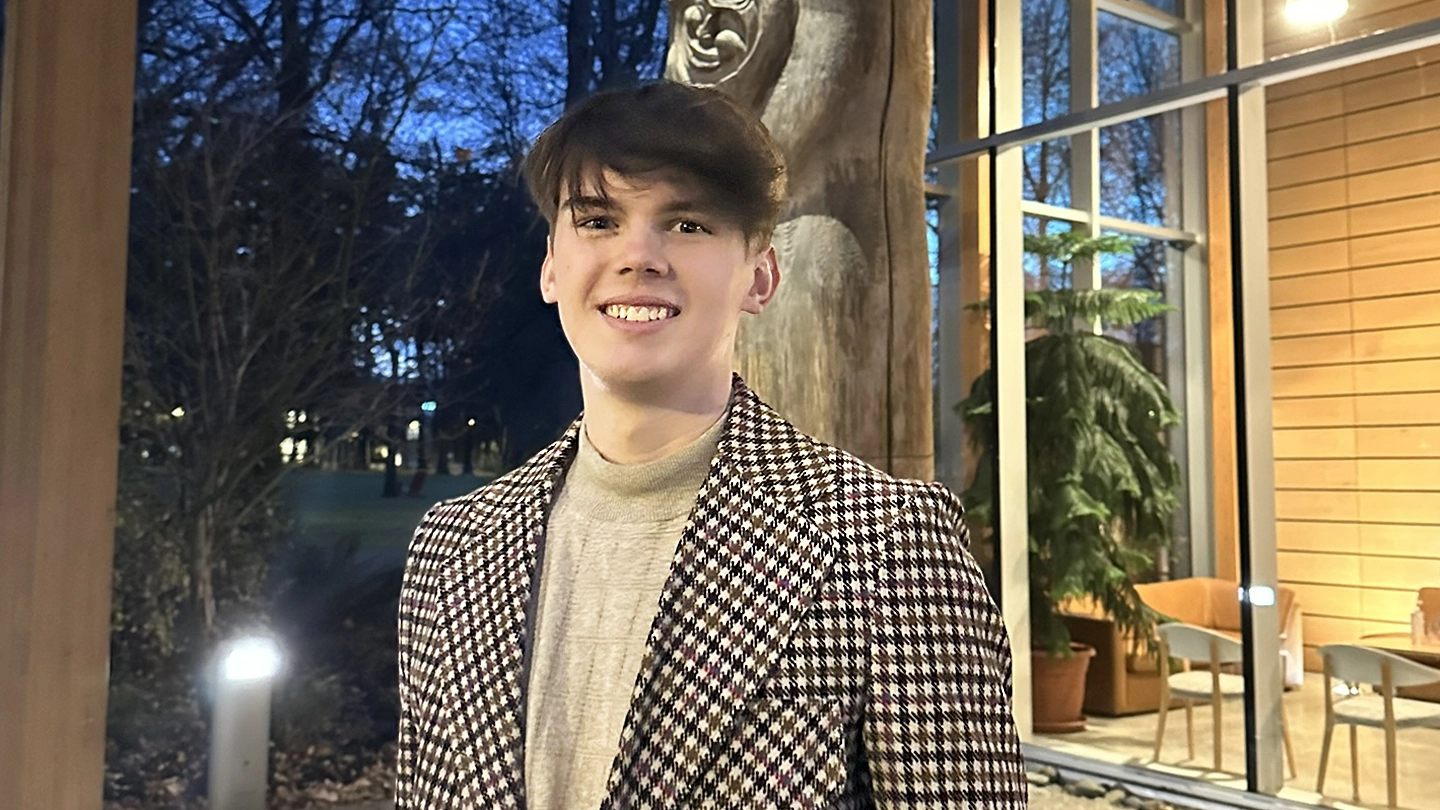
Community connection is extremely important to third-year Gustavson School of Business commerce student Jack Taylor (he/him). It has shaped the direction of his education and work experiences at UVic. As a member of the Red River Métis, finding meaningful work supporting Indigenous communities is a major focus.
For his first co-op work term, Jack joined the team at mechanical engineering firm AME Group. There, he worked as a marketing and communications co-op student. He supported outreach for the ḴEL, ḴELOŦEN ȻE S, ISTEW̱ Education Fund (which translates to “a dream for what becomes of you”). This program provides funding, mentorship and co-op opportunities to Indigenous students pursuing careers in engineering and architecture.
Currently, less than 1% of engineers and architects in Canada are Indigenous. This program hopes to encourage more Indigenous participation in these industries.
“I developed branding guidelines, created outreach materials, and built a national contact database to share the opportunity with communities, universities, and scholarship aggregators. I also met directly with schools and tribal councils to walk them through the program, answer questions and tailor our services to best fit program needs.”
Jack Taylor
Developing skills and fostering connections
Jack completed the work term in August and is currently immersed in his foundational year of his commerce program. His goal for future work terms is to build on the growth he experienced at AME. Ideally, this includes further developing his business skills while helping to improve and support Indigenous culture or initiatives.
Currently, Jack works with VIDEA as an art programming facilitator. The program connects youth (including Indigenous youth) experiencing homelessness and housing insecurity to culturally safe spaces, community and creative expression.
“I have continued to find work that feels purposeful. I have learned to focus on what I can control and stay optimistic; I’ve also learned that building real connections with people matters. These relationships are genuine and valuable.”
Jack Taylor
Engineering & Computer Science Co-op Student of the Year
Meghan Whyte (mechanical engineering)
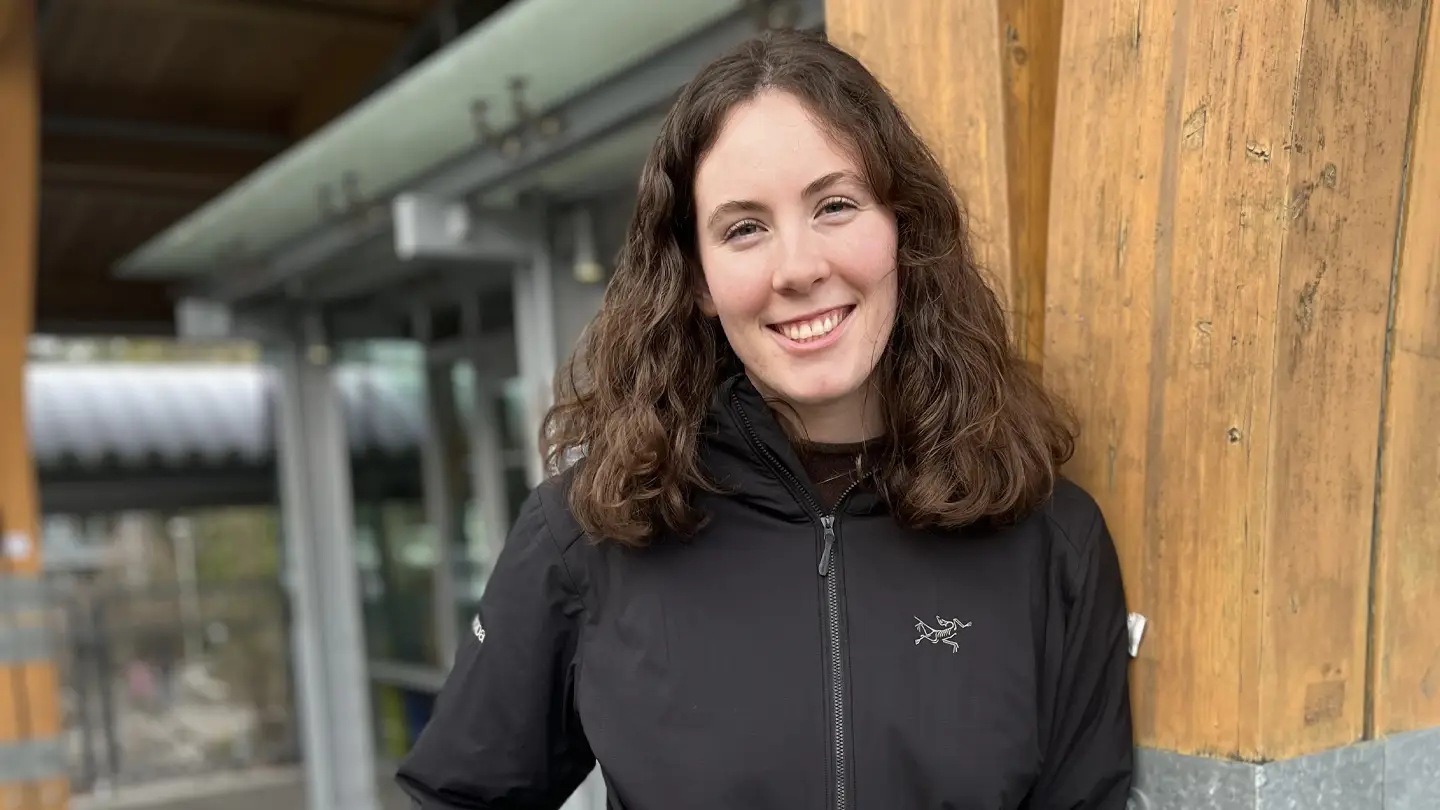
Meghan Whyte (she/her) loves a challenge. Whether that’s training for an Ironman, working on projects with various engineering student clubs, or diving into new responsibilities at work, the third-year mechanical engineering student carries this drive into every co-op term. It’s no surprise that she’s lauded by her employers for staying curious, asking questions, and cultivating positivity.
During her co-op work terms with Platinum Engineering and Introba, Meghan contributed to over 30 projects with engineers across Canada. She gained hands-on experience in HVAC and plumbing design, LEED accreditation, site reviews, system simulations, and traction power systems. At Platinum Engineering, one of Meghan’s biggest challenges was mastering the Revit software program, used for modeling HVAC and piping systems.
“I was asked to create a functional Revit model of the traction power and electrical systems for the Maintenance and Storage Facility for Calgary’s largest infrastructure investment project in the city’s history – the Calgary Greenline LRT. It was a challenging but incredibly rewarding project.”
Meghan Whyte
Finding a voice and a direction
Co-op also helped Meghan grow into a leader. She chaired workload meetings, planned office culture team events, and represented Introba at the Passive House Canada Pulse Event. There, she spoke about the value of industry mentorship in shaping early-career engineers.
“My invitation to present at the Passive House Canada Pulse was a defining moment in my career so far,” says Meghan, “Presenting about the WEST (Women in Engineering, Science and Technology) and Introba Passive Building Prototype Project in front of sustainable design experts and having meaningful discussions afterwards made the field of sustainable building design feel accessible and enriching. It was exciting to have my perspective heard and to know that I have a voice in this community.”
“She consistently showed up at the office with an amazing attitude—ready and willing to learn, taking on any tasks and challenges thrown at her with enthusiasm. Meghan’s contribution helped our team complete many projects on time and on budget, improving relationships with clients & increasing reputational capital for the firm as a whole.”
Erica Mak, Associate Principal – Victoria Office Leader, Meghan’s supervisor at Introba
These experiences helped Meghan confirm the type of career she wants to pursue. After graduation, she wants a career in energy-efficient engineering that values both people and place. Her experiences also helped her connect the theory she learned in the classroom with its workplace applications.
“Work-integrated learning has been pivotal in shaping me as a future engineer. While the classroom has taught me the theory and principles of engineering, the co-op program has allowed me to apply engineering in a way that is collaborative, hands-on and in the best interest of the community.”
Meghan Whyte
Optional and Professional Programs Co-op Student of the Year
K’sana Wood Lynes-Ford
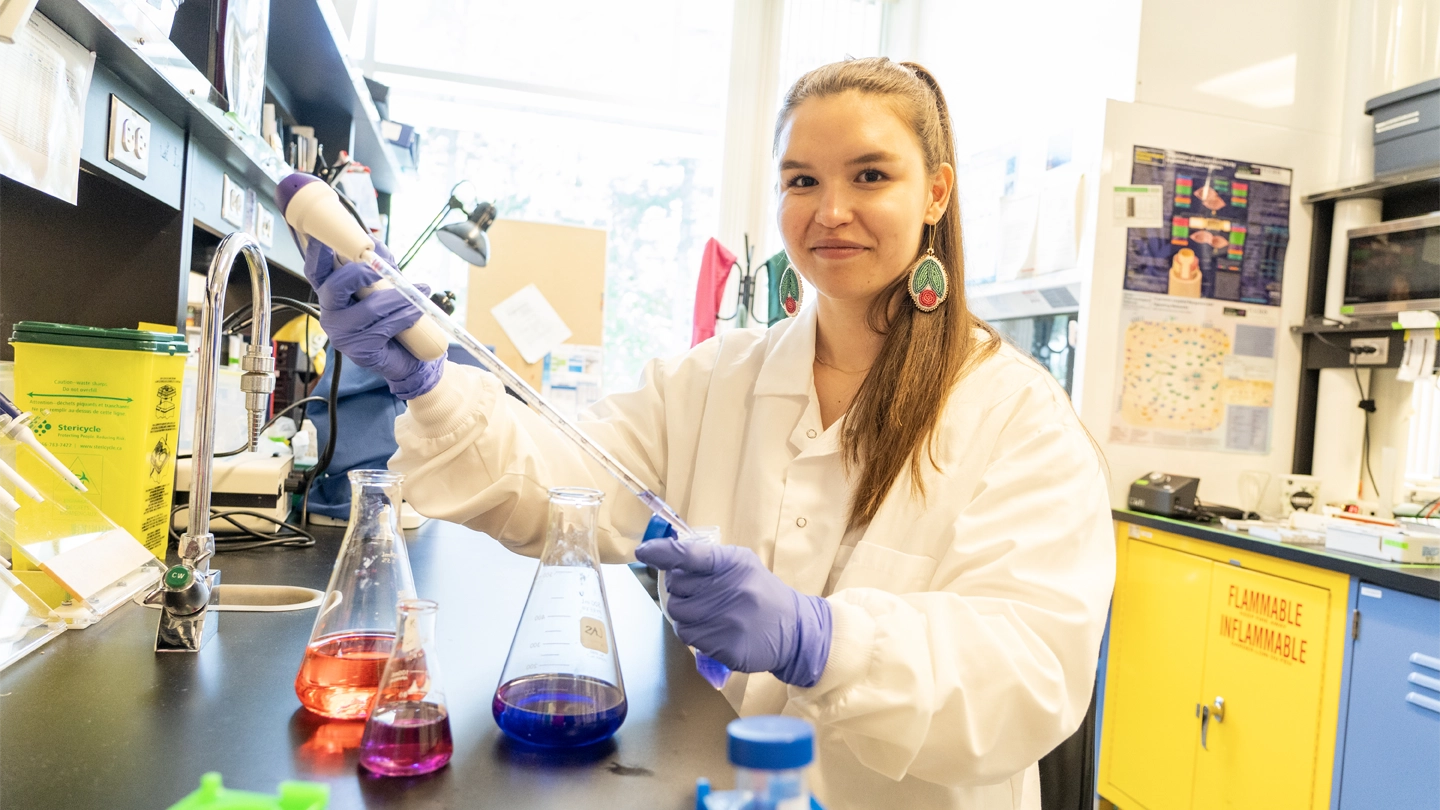
Chemistry student K’sana Wood Lynes-Ford (she/her) is passionate about engaging in work that advances medicine and research for Indigenous communities. As a member of the Kwakwakaʼwakw (‘Namgis), Gitxsan (Gitanyow), and Tsimshian (Gitxaala) First Nations, she found co-op experiences that aligned with this goal. These were three work terms with the Swayne Lab and Community Genetics Research Program (CGRP) at the University of Victoria.
After receiving a research internship award from the International Brain Research Organization and Centre for Brain Health (IBRO-CBH), K’sana worked with supervisors Dr. Laura Arbour and Dr. Leigh Anne Swayne, studying the impacts of genetic variants on the health of the Gitxsan People.
Some genetic variants found in the Gitxsan First Nation have been associated with health conditions such as heart arrythmias, fainting, seizures, and brain aneurysms. This research is an example of community-based participatory research, where the research is driven by the community interests and needs.
“This project’s subject matter has personally affected me and my loved ones and because of this research I can personally aid in the effort to understand health issues affecting my community. Throughout my time with the CGRP and Swayne Lab, I have visited the Gitxsan First Nation on two separate occasions to share my research contributions to my community.”
K’sana Wood Lynes-Ford
These work integrated learning (WIL) experiences have contributed to K’sana’s increased confidence in the lab and as a scientist – even leading to two publications. “When I started this WIL opportunity, I had very little lab experience. I was required to complete many certifications ranging from ethics to sterile technique and laboratory safety.”
In recognition of her accomplishments, K’sana also received the 2025 Co-op Student of the Year award from the Association for Co-operative Education and Work-Integrated Learning BC/Yukon (ACE-WIL). ACE-WIL’s awards recognize outstanding post-secondary students across BC and the Yukon. These students demonstrate exceptional achievement through their Co-operative Education and Work-Integrated Learning experiences.
Continuing to support community
K’sana is named after the Skeena River, known as the ’Ksan River, which runs through the heart of Gitxsan traditional territory. Her name loosely translates to “Woman of the River”.
Outside of co-op, K’sana is an active member of the UVic Indigenous student community. She currently serves on the Native Students Union Council as Firekeeper and has previously worked in the First People’s House as a campus cousin.
Looking towards the future, K’sana plans to become a medical doctor. She wants to continue to support Indigenous communities through ethical medical practice and research.
“This WIL experience has allowed me to support my peers to pursue similar opportunities, which is essential as many Indigenous students do not have familial supports to navigate academia or know how to network in search of WIL opportunities. This experience has given me the fundamental knowledge to continue in this field.”
K’Sana Wood Lynes-Ford