A collection of small icy bodies orbiting the Sun beyond Neptune is helping University of Victoria (UVic) researchers better understand how the planets in our Solar System were formed. Two complementary papers recently published in The Astronomical Journal revealed the findings of the deepest survey of Trans-Neptunian Objects (TNOs) to date, where researchers investigated TNO colour, size and orbit.
The study was conducted by Marielle Eduardo, a UVic PhD student, Wesley Fraser, an adjunct professor at UVic and research officer at the National Research Council of Canada, and their international collaborators. Eduardo explains the TNO findings.
Q: What are Trans-Neptunian Objects (TNOs) and why are they important?
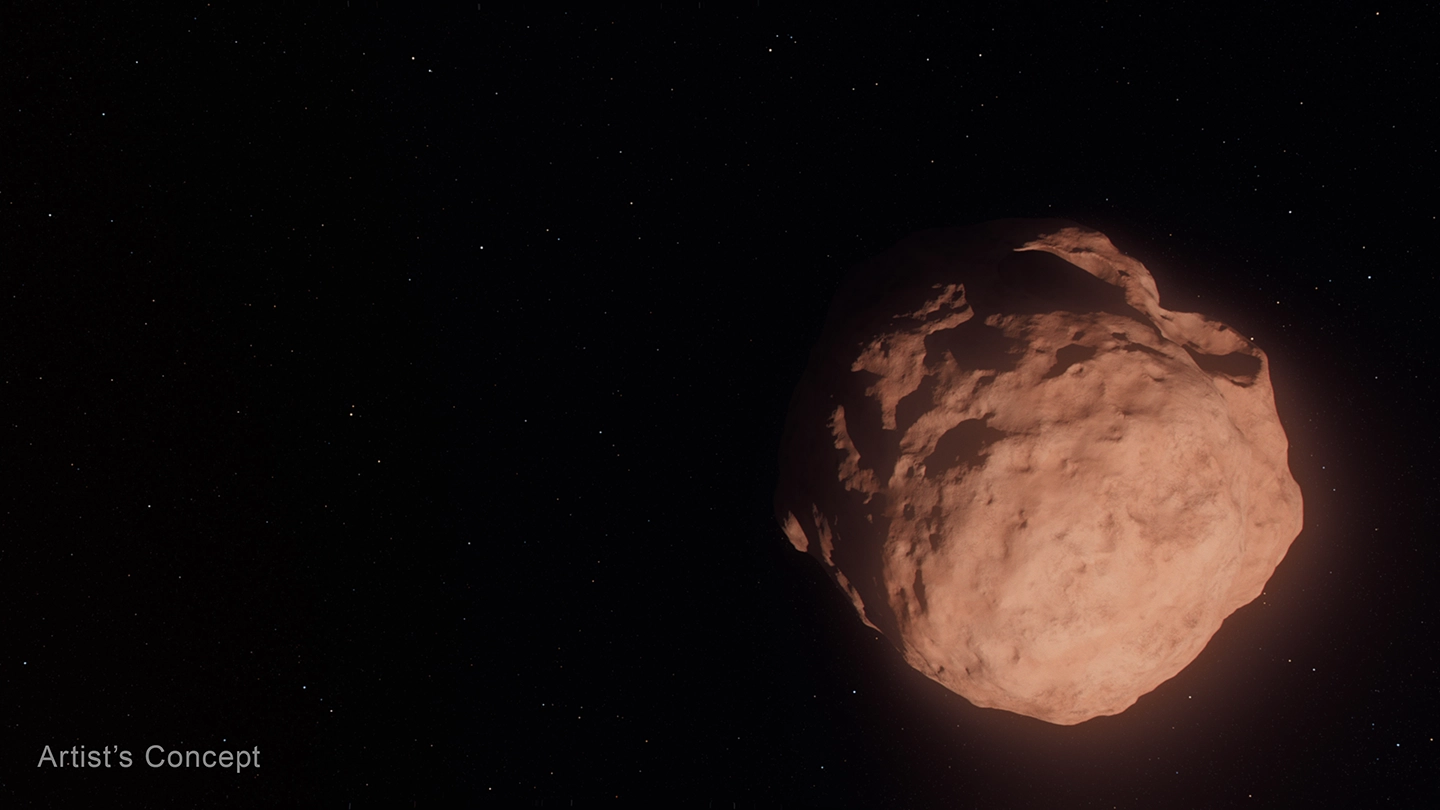
A: TNOs are small icy bodies found beyond the orbit of Neptune. They are considered planetesimals—small bodies of the Solar System that serve as one of the basic building blocks of planets. TNOs are some of the best-preserved objects in the Solar System, having experienced little alteration since their formation. As such, they provide an extremely important window into the conditions experienced at the time the planets were growing.
Q: How do you determine the size of TNOs? What can TNO size reveal about planet formation?
A: Directly measuring size is impossible for most TNOs as we cannot differentiate between a small body with a shiny surface and large body with a dull surface. Instead, we rely on the brightness of a source to provide a proxy of its size, which works well for TNOs since they exhibit only a small range of surface reflectivity.
One of the key findings from our size distribution paper is the surprising result that different TNO populations share remarkably similar size distributions—the relative number of objects as a function of size—despite different formation locations and histories. This similarity indicates that the conditions during formation do not determine the products of the planetesimal formation process.
Q: What can the colour of a TNO tell you about its surface composition?
A: A TNO’s colours are primarily determined by their material compositions, where objects rich in organic-like materials appear redder and objects with more water and ice appear bluer. This allows us to piece together a broad picture of the compositional makeup of the surface of a TNO based on the wavelengths observed. TNOs are mostly red in colour, from slightly redder than leaves in the fall, to the reddest materials in the Solar System.
The companion study found that TNO colours are consistent between large TNOs, measuring hundreds of kilometres across, and the much smaller objects we discovered, measuring 10-50 kilometres across. This demonstrates that TNO surface compositions do not appreciably change with size. This is particularly interesting because smaller TNOs almost certainly experienced more surface-altering collisions than large bodies, and yet somehow these objects seem to have preserved their original compositions.
Q: How do the Hubble Telescope and James Webb Space Telescope (JWST) help researchers study TNOs and planet formation?
A: Hubble and JWST together provided critical compositional information that either observatory alone could not provide. The key to this project was the ability to observe TNOs as small as 10 kilometres—smaller than ever before—which was nearly impossible prior to JWST. By searching in JWST’s near-infrared camera imagery, we could pinpoint each object’s location, enabling us to identify the objects in the Hubble imagery. Hubble then allowed us to observe the TNOs in the visible light spectrum.
Eduardo and Fraser have a much larger and extended JWST program on deck, with a goal of searching for TNOs as small as one kilometre. Investigating these small TNOs will help answer questions about the planet formation process that have remained unanswered thus far.
This research was conducted in collaboration with researchers at Northern Arizona University, NASA’s Space Telescope Science Institute, Harvard’s Smithsonian Centre for Astrophysics, the University of Waterloo and the University of Pennsylvania.
Learn more about the research in NASA’s press release.