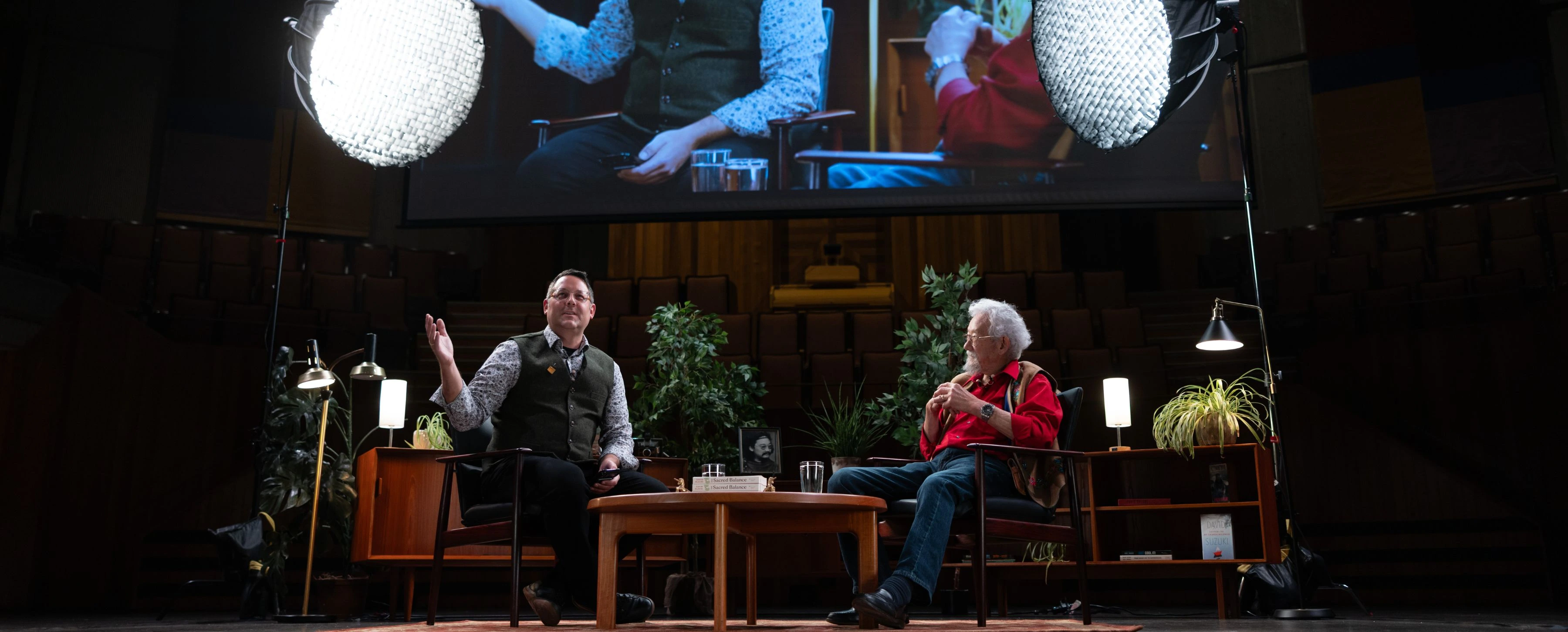
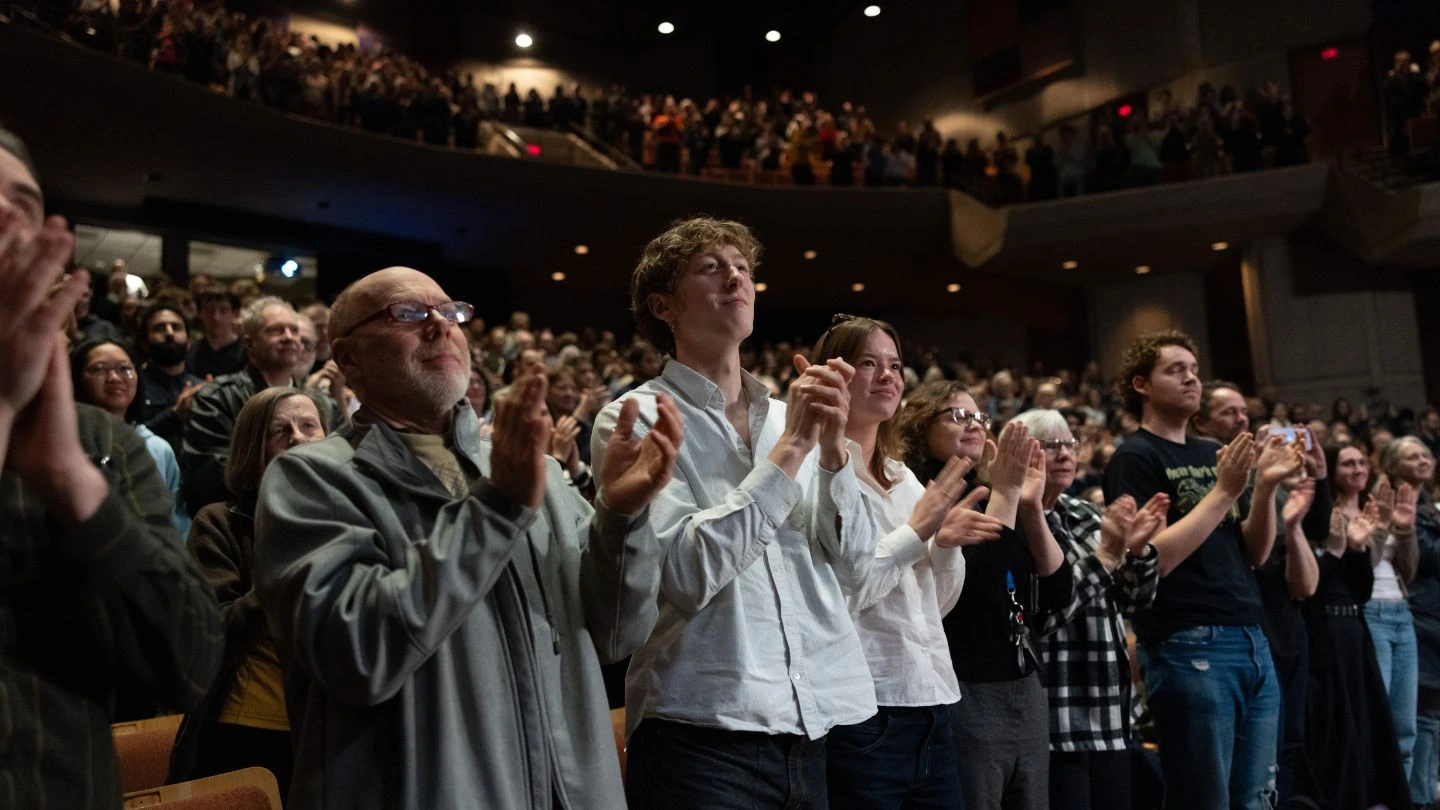
David Suzuki had barely taken the stage at the Farquhar Auditorium when the crowd of 1,000 leapt to their feet, loudly cheering.
“We haven’t started yet!” Suzuki said, laughing, as he settled into his chair for A Conversation of a Lifetime, the Feb. 9 event at the University of Victoria (UVic). The community seemed elated to spend time with the legendary scientist, broadcaster and environmentalist, and that energy created a palpable buzz all evening.
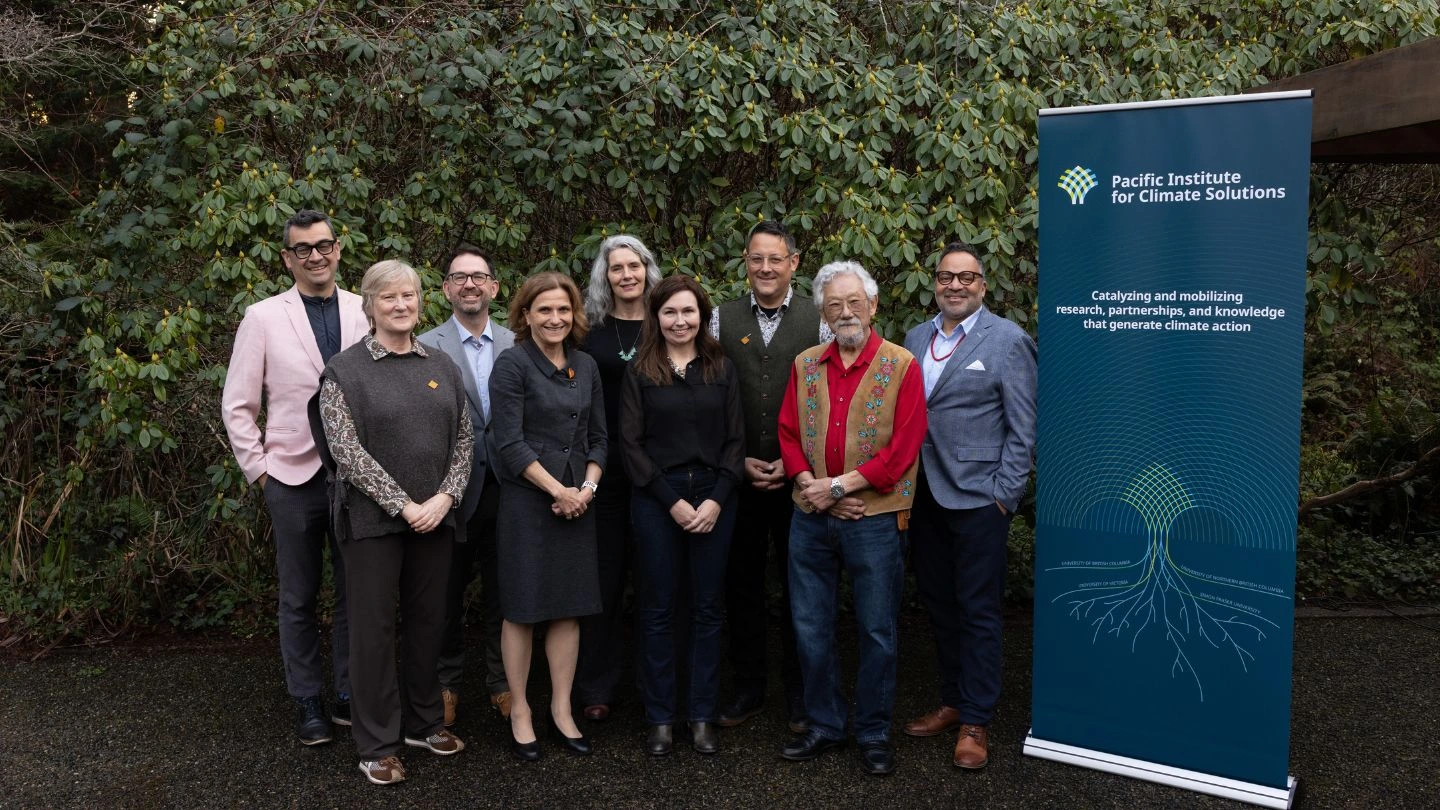
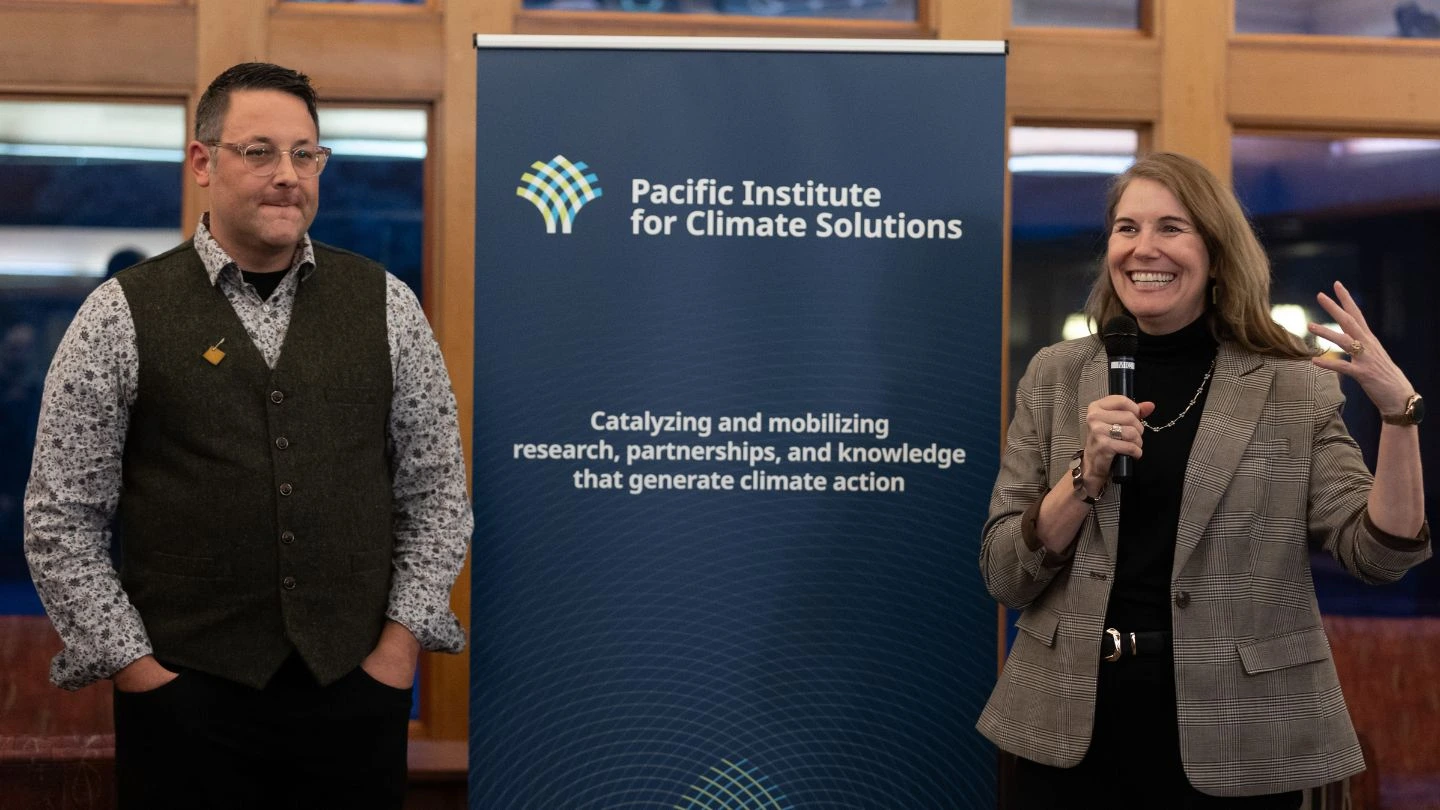
Presented by the Pacific Institute for Climate Solutions at UVic and the David Suzuki Foundation, the event celebrated the life and impact of Suzuki, who is now in his 90s.
Over almost two hours, Suzuki and his long-time collaborator and friend, PICS Executive Director Ian Mauro, engaged in conversation that reflected on Suzuki’s remarkable life and work, most especially as a fierce advocate for the protection of all life on this planet.
The value of values
The friends traced Suzuki’s journey, starting with a happy childhood cut short when his family was forcibly moved into an internment camp during the Second World War.
“In a democracy, it’s easy to guarantee rights of equality before the law and freedom of expression and freedom of movement when times are good,” he reflected. “The only time those rights and guarantees matter is when times are tough. If you can’t guarantee it then, what the hell is this society about?”
The family was released after the war and moved to Ontario. After high school, Suzuki went to university in the United States, earning his PhD from the University of Chicago. He eventually headed back to Canada, despite job offers in the US, to a country he felt was “not better, but different.”
“That we had Medicare. That we had equalization payments… That Canada was a country with Quebec and the French language. We had the National Film Board. We had the CBC. Those were things that, despite what had happened to us during the war, I felt were important. And those values, I preferred.”
The power (and limits) of science
He settled back in Vancouver, teaching and researching genetics at UBC, and stumbled upon the power of television when asked to present lectures on a local show. As he contemplated this new medium’s reach, he said, “a woman changed the course of my life.”
“In 1962, Rachel Carson published a book called Silent Spring, about the unexpected effects of pesticides,” he said. “As I read that book, I thought, holy cow, science is very powerful, but it’s restricted. Science only discovers the effect after the fact.
“And so, when I started out on The Nature of Things, I felt here was an opportunity to spread the word about pollution.”
Over the course of more than 40 years, Suzuki used his television show to connect the power of science to the real-world consequences. That’s where most of the evening’s audience had previously met him, on the family television.
Seedlings of inspiration
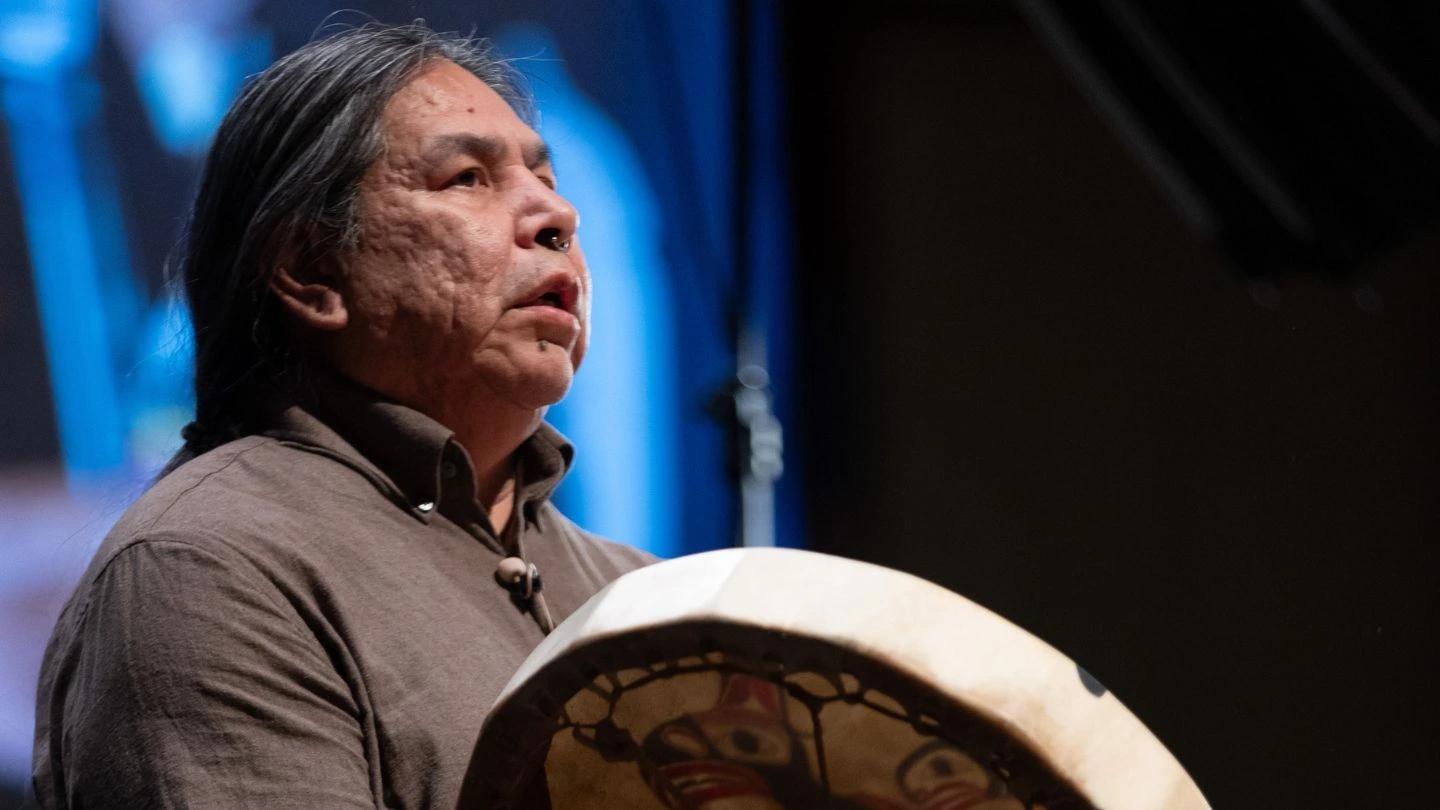
“When I think of the opportunity to honour Dr. David Suzuki, it’s that I get to meet one of the individuals that I consider a celebrity in my world,” said lək̓ wəŋən, Mamalilikulla and Ditidaht artist Yuxwelupton Qwal’ qaxala Bradley Dick, as he offered a territorial welcome to open the evening. “To acknowledge and to recognize him for not only the legacy he continues to leave, but the little seedlings that he’s likely planted in many of us and inspired us to speak up and speak out.”
That planting happened both ways. Suzuki’s work with The Nature of Things brought him into conversation with Indigenous activists fighting to protect old growth forest from logging, stop fossil fuel pipelines, and preserve their territories from exploitation. What he learned from them inspired his book The Sacred Balance: Rediscovering Our Place in Nature.
The fundamental lesson, Suzuki said, is that we are nature.
“We are the air. If the air that we breathe is polluted, we get sick. We are water. If we don’t have water for four to six days, we’re dead. If we have to drink polluted water, we’re sick. So how can we, who claim to be intelligent, use air and water as a garbage can?”
Hope comes from action
Suzuki has been clear that we have failed to change the narrative whereby the economy consistently trumps the climate and environment. But he said we can still make a difference in how hot the climate gets—if we get serious about the threat facing us.
“The economy is more important than us, than the atmosphere. We’re not serious about this. And as a scientist, I am infuriated that science has been denigrated to such an extent that it’s not even in the discussion.”
Hope, Suzuki said, must come from action. He said he derives much hope from the actions of people, Indigenous Nations and communities as they work to lower greenhouse gas emissions and create viable climate solutions—the kind of work that PICS and UVic have deeply invested in through collaborative climate research and teaching.
He gave this advice: prepare, together.
“Get to know your neighbours. Who in your neighbourhood can’t walk and is going to need help? Who is able to run a generator? Where is the water? Who are nurses or healthcare people? We have to continue to reduce our emissions, but we’re going to take the brunt of the change now in the local communities.”
And remember, Suzuki said, nature can surprise us if we let her.
“We saw during COVID lockdown that when we began to pull back our demands on nature, nature came out of hiding. They reported hummingbirds at Toronto Airport and fish in Venice.
“If we can give nature a chance, and that means pulling back, she will rebound in ways that we haven’t ever anticipated.”
The Pacific Institute for Climate Solutions at the University of Victoria catalyzes and mobilizes research, partnerships, and knowledge that generate climate action in British Columbia and around the world.
Always grounded in sound evidence, the David Suzuki Foundation empowers people to take action in their communities on the environmental challenges we collectively face. We’re One Nature.
The University of Victoria is here for what matters—including vital community dialogue. Explore how UVic is connecting with the South Island community.