We, as a society, are obsessed with stress. But how much do we really know about how small everyday experiences impact our overall health?
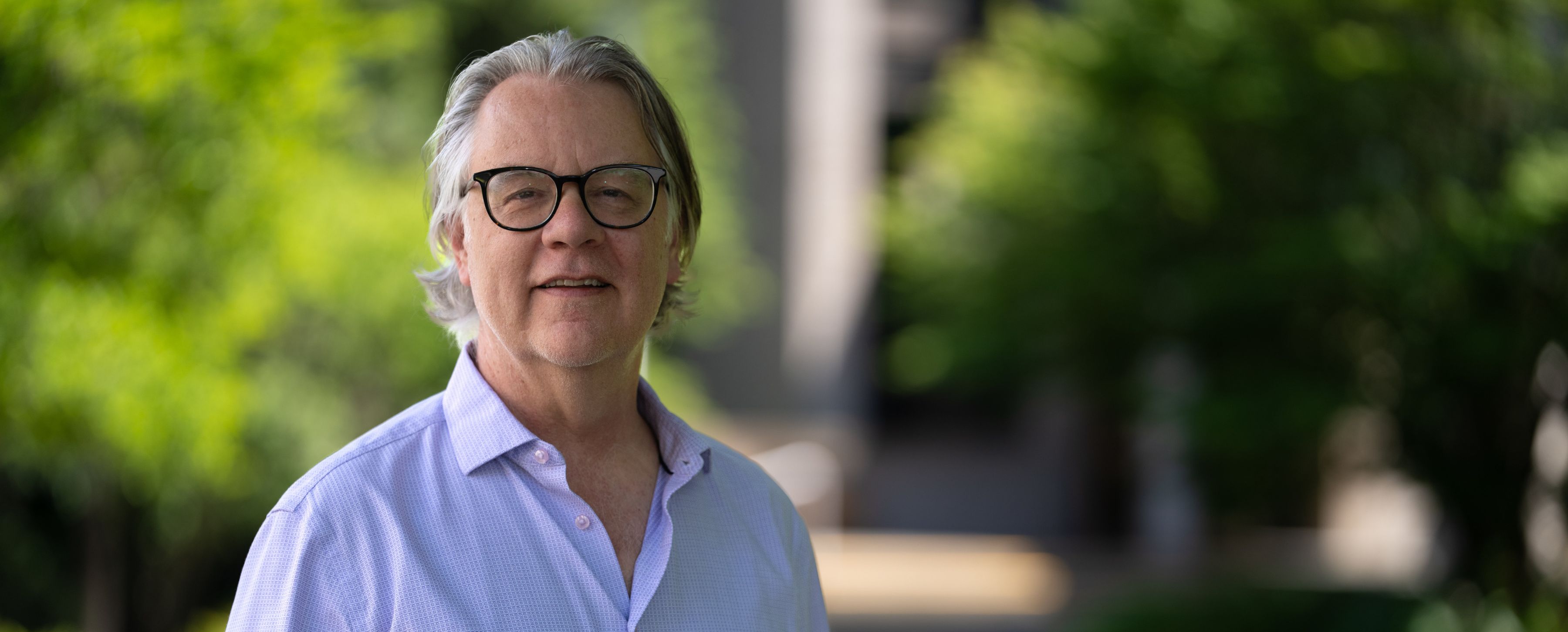
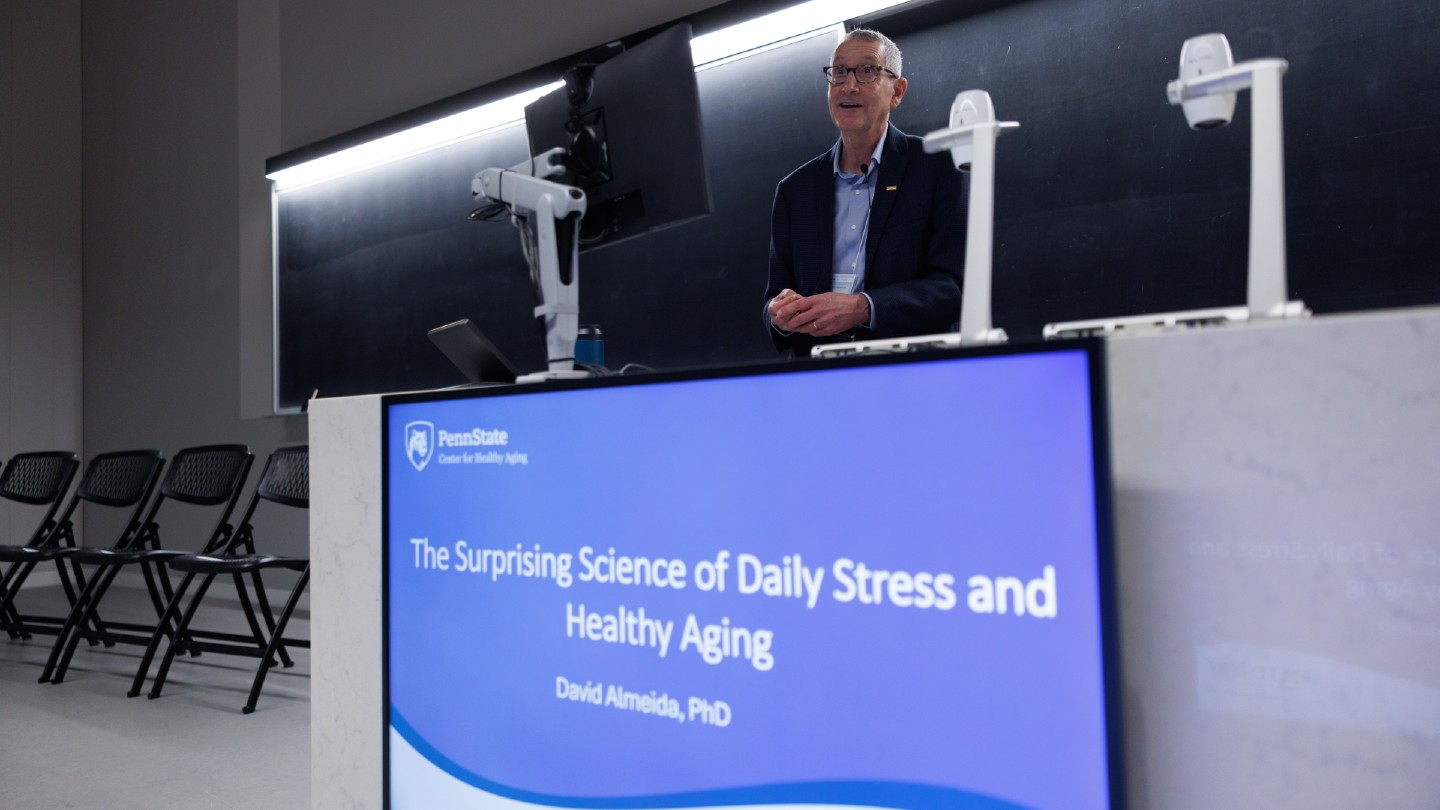
David Almeida, a professor from the Center for Healthy Aging at Penn State University, broke down the surprising science of daily stress and healthy aging at his plenary address at the University of Victoria’s Health Research Day.
The University of Victoria (UVic) Faculty of Health and Institute on Aging and Lifelong Health co-hosted the annual health research symposium on May 1. The sold-out event included more than 30 presenters who explored the conference theme, advancing health through community, culture and change.
The free, full-day symposium was open to students, faculty members, industry partners, and community members. Presenters explored pressing issues including health care access and inclusion; mental health interventions; and substance use, harm reduction and policy, while highlighting the impact of health research as the Faculty of Health celebrated an important milestone.
Reactivity main predictor of health
Drawing on 30 years of research from the National Study of Daily Experiences, which follows some 3,500 people over 42,243 days, Almeida presented a more nuanced understanding of the conventional assumption that stress is harmful to our health.
“Health does not live in a yearly checkup. Health does not live in the discovery of a diagnosis,” he says. “My contention is that health lives in daily life. Health lives in small moments.”
The key, Almeida says, is how we react to stressful events. Whether you are a highly reactive or low-reactive person to stress reveals a lot about how you age.
“It is the reactivity that is the main predictor of health and well-being, not the exposures,” he says.
Almeida’s research shows that highly reactive people have higher mortality, vascular dysfunction, chronic health conditions, psychological problems, inflammation and decreased cognitive performance as they age.
Changing health through moments
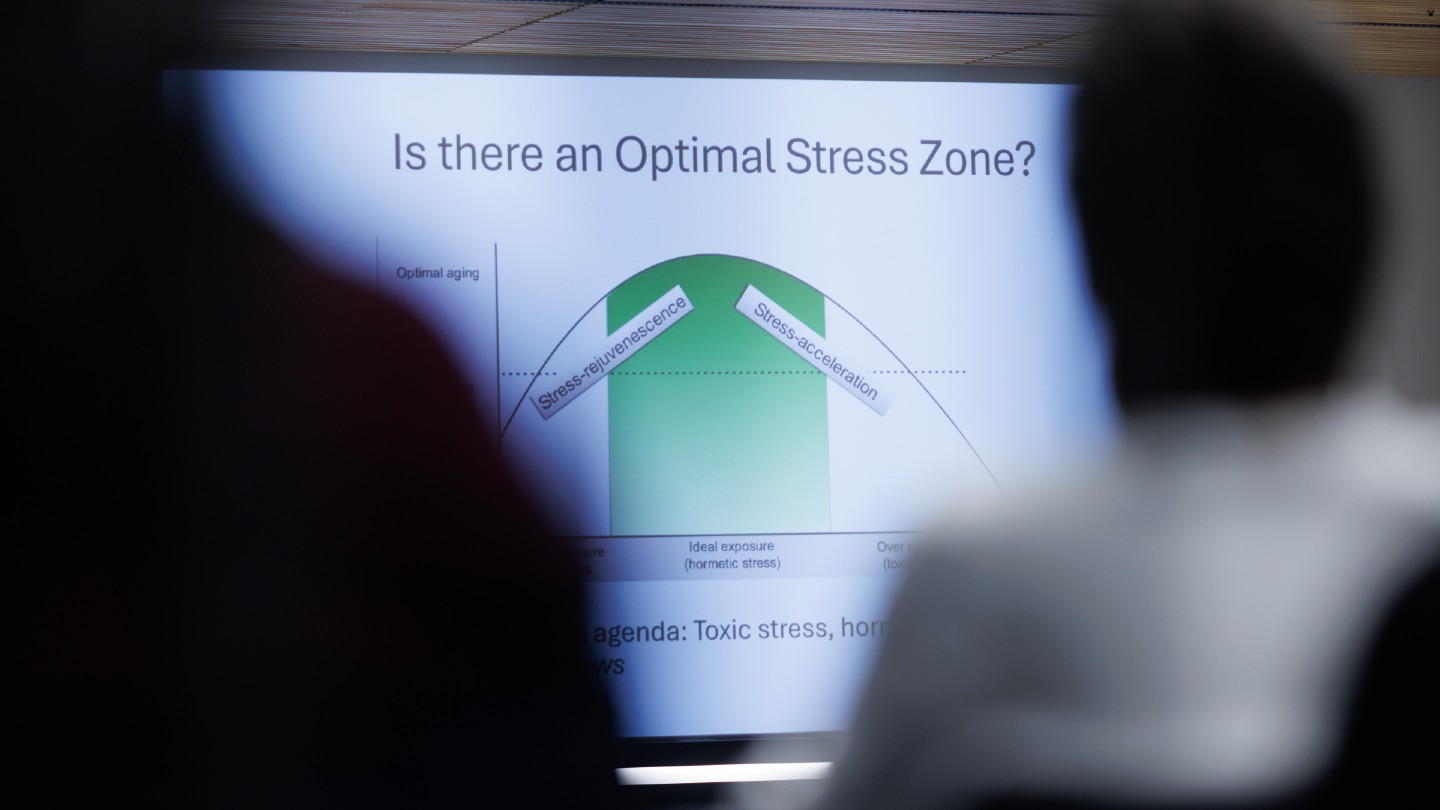
However, no stress is not the panacea for healthy aging either. About 10 per cent of Almeida’s study participants reported no stressors in their life. Surprisingly, this group reported fewer positive events in their life, lower productivity, performed worse in cognitive tasks, and engaged in less time getting and receiving social and emotional support.
The good news? Almeida says our management of daily stress gets better with age. And there are clear benefits of experiencing some daily challenges.
We need to change a moment. If we can change moments, I think we have a real chance to change health.”
—David Almeida, Center for Healthy Aging, Penn State University
He left the audience with a daily affirmation: “A little stress can be good for you, but how you handle it matters even more.”
Showcasing breadth of health research
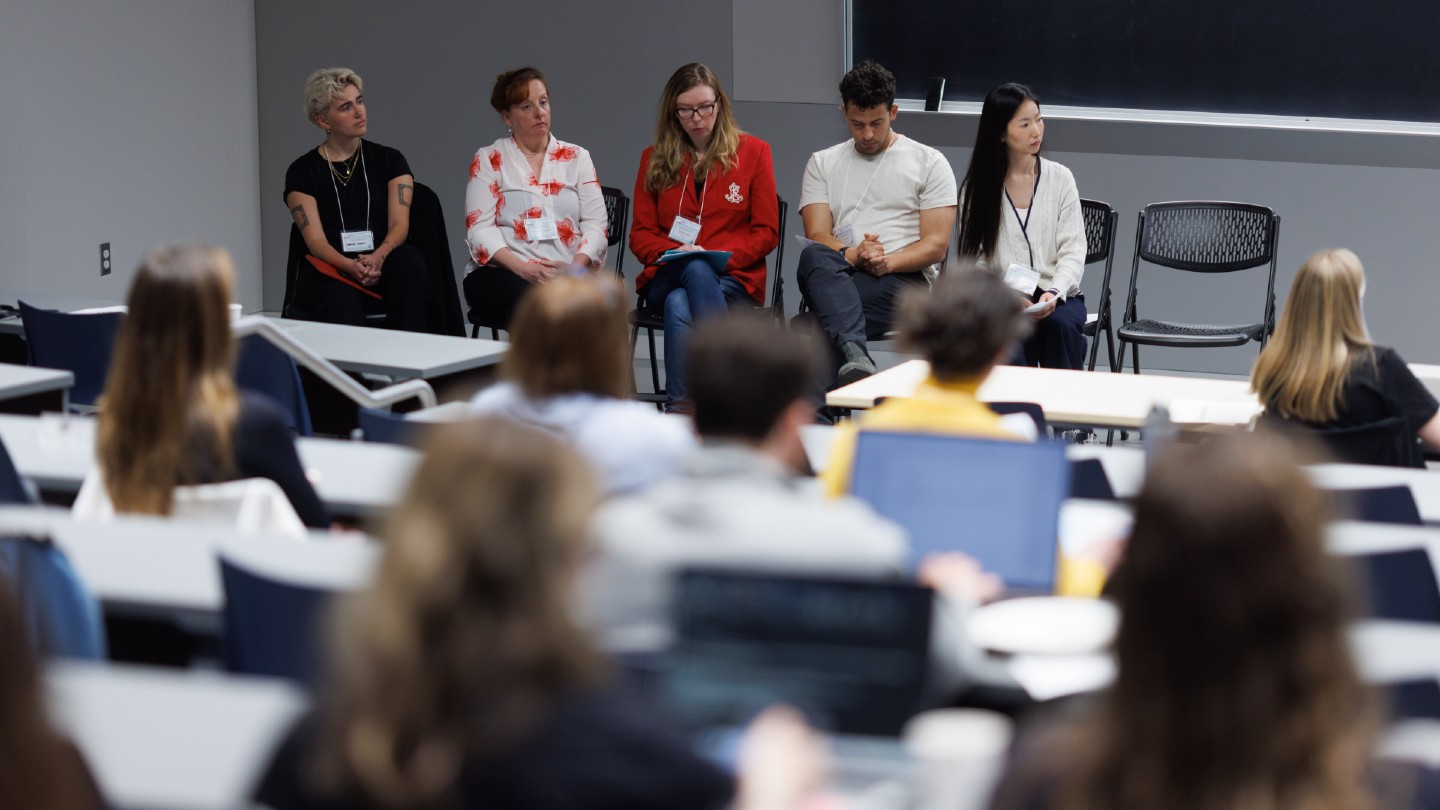
Stress wasn’t the only topic up for discussion at Health Research Day. Acting Associate Dean Research Sam Liu says the full-day symposium captured the breadth of world-class research being conducted at UVic.
“We have so many talented health researchers at UVic,” he says.
“Health Research Day was an opportunity to show, from graduate level students up to seasoned faculty members, the depth and impact of research at UVic.”
Presentations were grouped into six themes:
- Mental health interventions and art-based therapies
- Culture, identity and Indigenous health
- Community and social determinants of health
- Health care access and inclusion
- Substance use, harm reduction and policy
- Aging and basic science
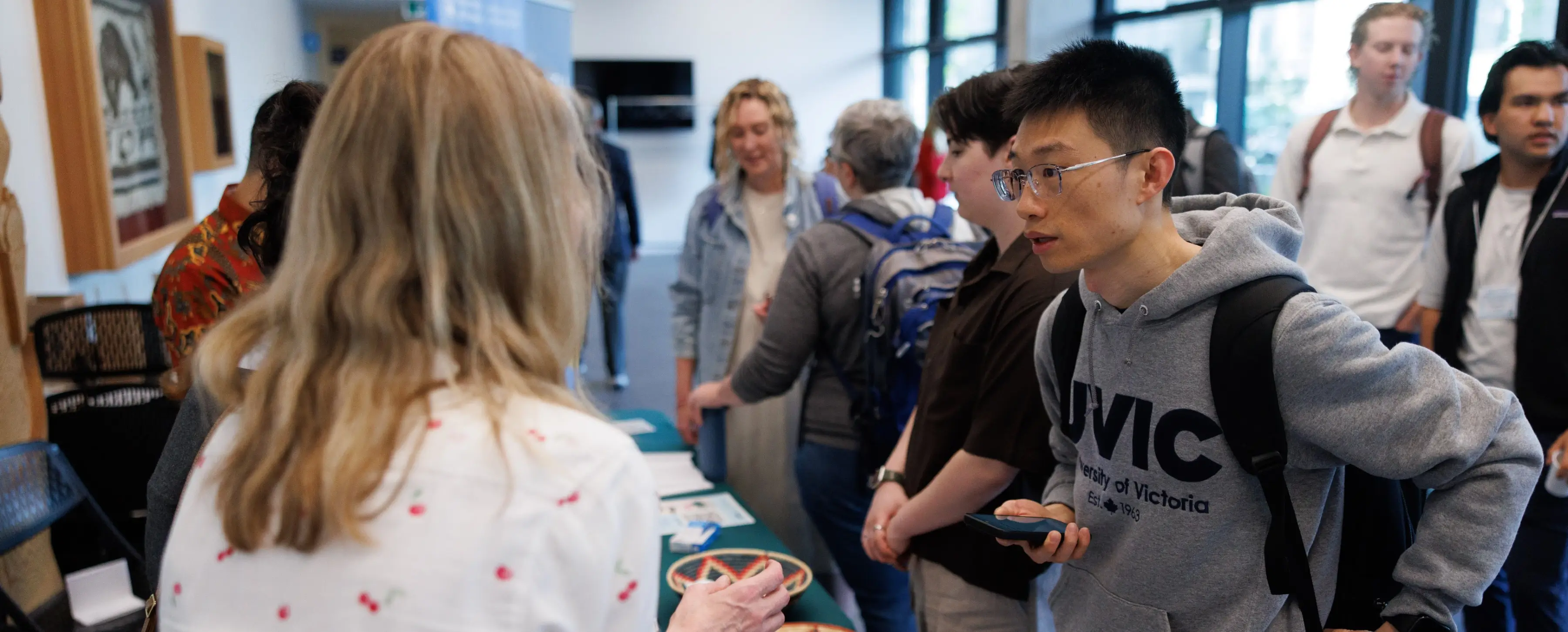
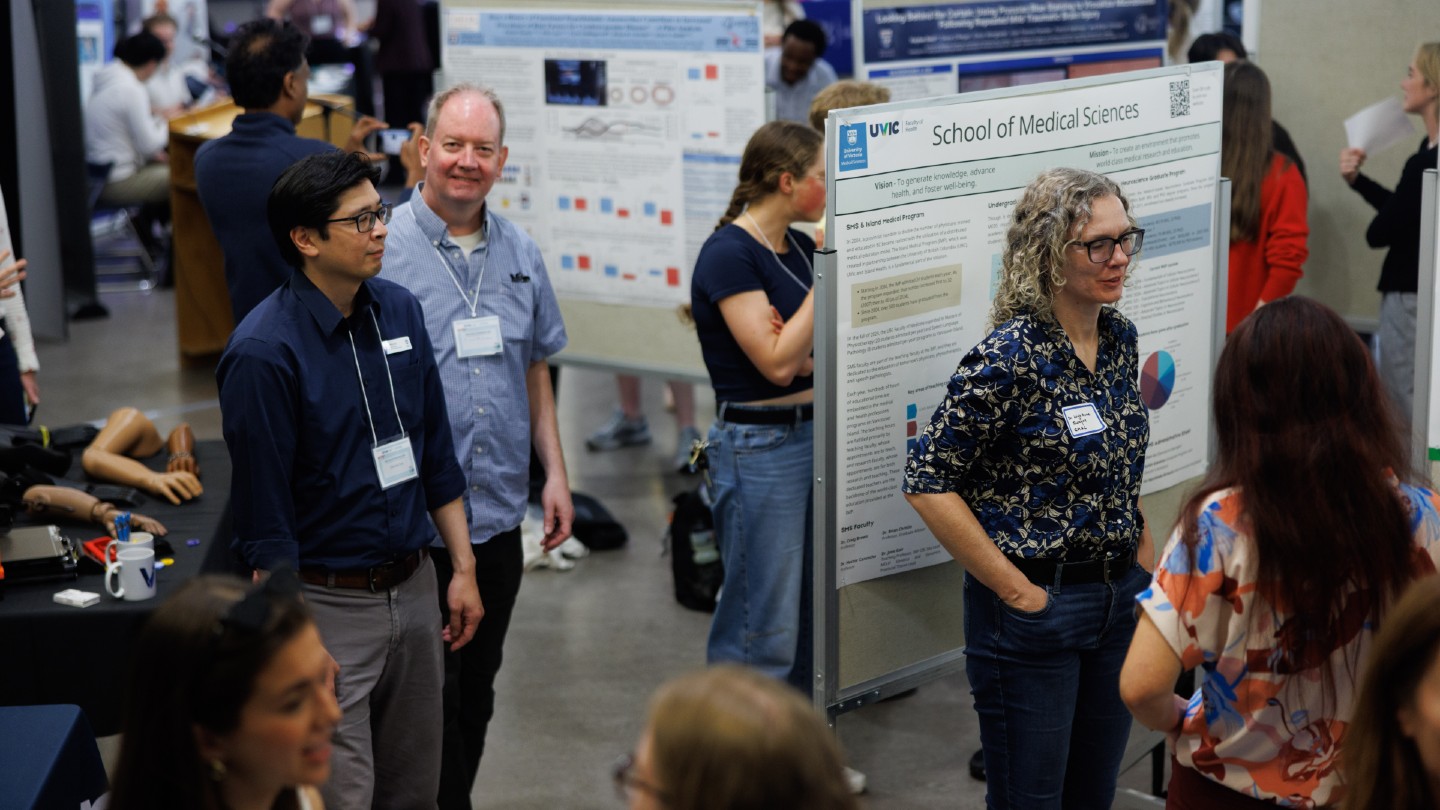
A research poster fair that included more than 50 research projects from student- and faculty-level researchers from across UVic, gave people the chance to interact with researchers and ask them questions.
Strong community partnerships
Health Research Day included students and faculty members from across campus, as well as community members and health industry research partners.
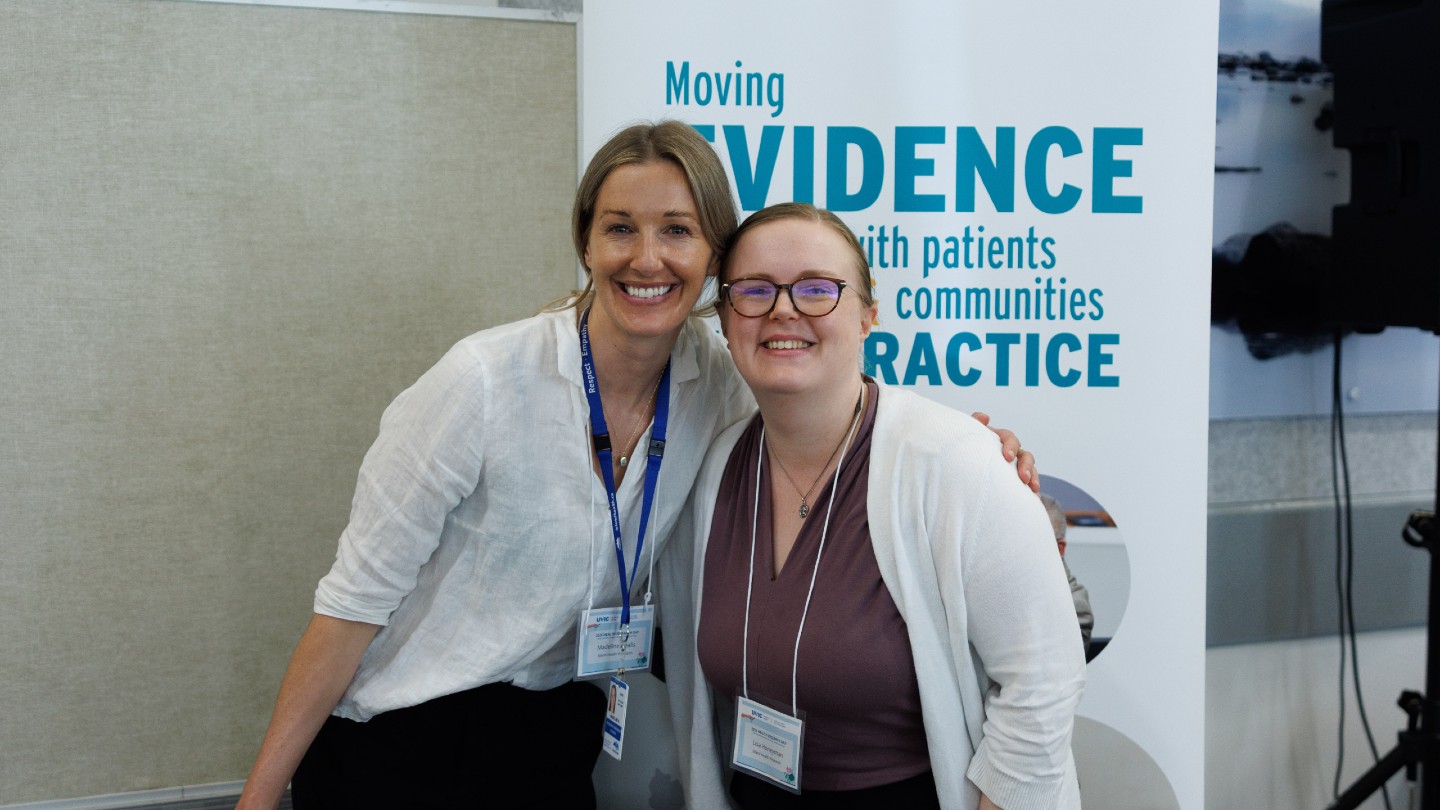
The Island Health Research and BC Support Unit attended Health Research Day as an exhibitor. Cindy Trytten, director, research partnerships and knowledge mobilization, says Island Health and UVic have been close collaborators for many years.
Island Health leaders, clinicians and the patients we care for are working on research teams with UVic researchers to produce and then mobilize evidence to improve health and healthcare.”
—Cindy Trytten, director, research partnerships & knowledge mobilization, Island Health
Trytten says she was thrilled that many presentations were relevant to health system priorities and patient experiences and outcomes.
Happy birthday, Faculty of Health
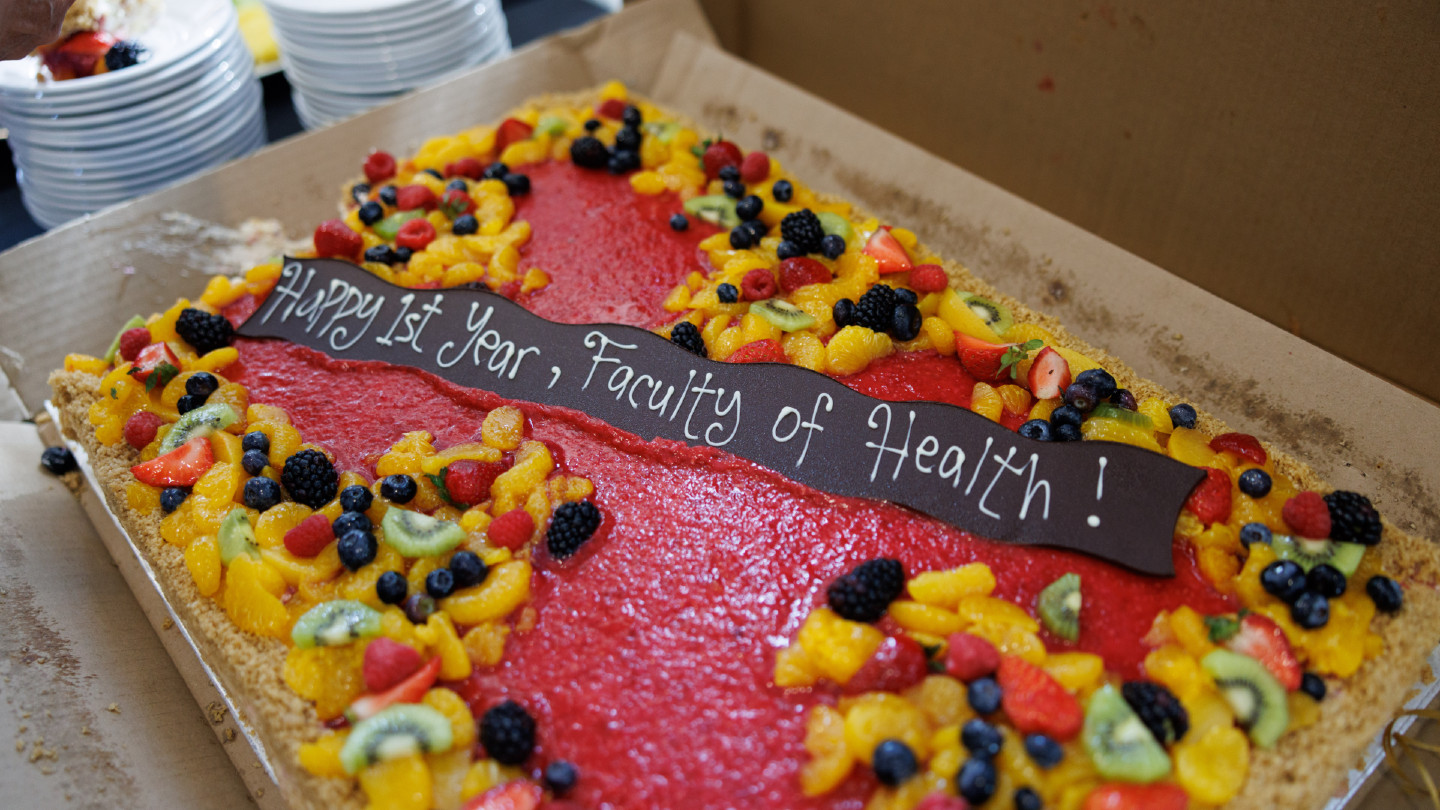
Health Research Day also marked the Faculty of Health’s one-year anniversary.
Dean Tammy Hopper says while everyone attending the symposium was there to learn and exchange knowledge, at its heart, Health Research Day was about connecting the around 200 people across UVic who work on health-related issues.
“Without those relationships and that sense of connection, it’s not possible to advance health through community, culture and change,” she says.
Hopper praised the 100 faculty members and nearly 1,900 students who make up the Faculty of Health’s community. Looking forward, Hopper said the faculty is expanding its offerings in health information science and nursing.
“Much of this year has involved discovery, relationship building, bringing people together to understand the needs, priorities and strengths of each academic unit,” she says.
“We have ambitious plans that take time, energy and resources. These plans would be impossible without your support.”