From watershed protection to Indigenous land rights, students help Greater Victoria community organizations tackle real-world challenges.
Community partnerships are the backbone of the Sustainability Scholars program (SSP) at the University of Victoria (UVic). Each year graduate students are matched with a community partner, Indigenous Nation or non-profit to work on projects that respond to real-world needs.
Together, scholars and community partners identify a sustainability-related challenge or opportunity that is suitable for applied research. Watershed stewardship, circular economy and food systems are just some of the projects taken on by the 17 scholars who worked across coastal BC this summer. The resulting work has included policy reports, background analyses, presentations, briefing materials, story maps and strategic recommendations.
The partnerships are making a difference on both sides: community organizations gain research capacity and fresh perspectives, while students gain hands-on experience applying their skills to challenges beyond the classroom.
Telling the Gorge Waterway story
For the Gorge Waterway Action Society (GWAS), the challenge was to tell its story in a way that would educate local residents and inspire them with the organization’s 36-year history. The society works to preserve and enhance the Gorge Waterway—the narrow tidal inlet in Victoria, BC, that connects Victoria Harbour and Portage inlet—through climate education, restoration, conservation and community involvement.
Caitlin Feeley, a second-year master’s student in sociology, helped the organization document its history and community impact.
Feeley used her research and storytelling skills to develop Tides of Change, a booklet that captures the organization’s history and the work of the people who have contributed to the Gorge Waterway over the past 36 years.
Caitlin brought strong collaboration skills, curiosity and diligence to our project; she used her skills as a researcher to develop a Tides of Change booklet that beautifully told the story of GWAS.”
—Andrea Kwok, GWAS programs manager
Fresh perspective for Reciprocity Trusts
For Reciprocity Trusts, the Sustainability Scholars program helped the organization identify and better understand some of the challenges it was facing in the community.
Reciprocity Trusts is a non-profit organization that collects voluntary payments from homeowners and businesses that recognize the Indigenous lands on which they operate. They have already established trusts for the South Island and Vancouver Coastal regions, and are looking to expand to future regions as relationships allow.
The organization was paired with Qwulipulwut, a member of Cowichan Tribes and master’s student in social work. Qwulipulwut explored community-led frameworks for the coexistence of land interests, helping inform Reciprocity Trust’s thinking on collaborative and reciprocal approaches to these relationships, whose experience and perspective brought a new lens to the organization’s work.
Our scholar, Qwulipulwut, has a wide array of experience and insight that provided a fresh set of eyes to the problems we faced as an organization.”
—Dorothy Hodgins, cultural researcher
Turning research into practical tools
Surfrider Foundation Regional Manager Lilly Woodbury agrees that bringing on a scholar gave Surfrider a boost in their approach to addressing single-use coffee cups and lids in the City of Victoria.
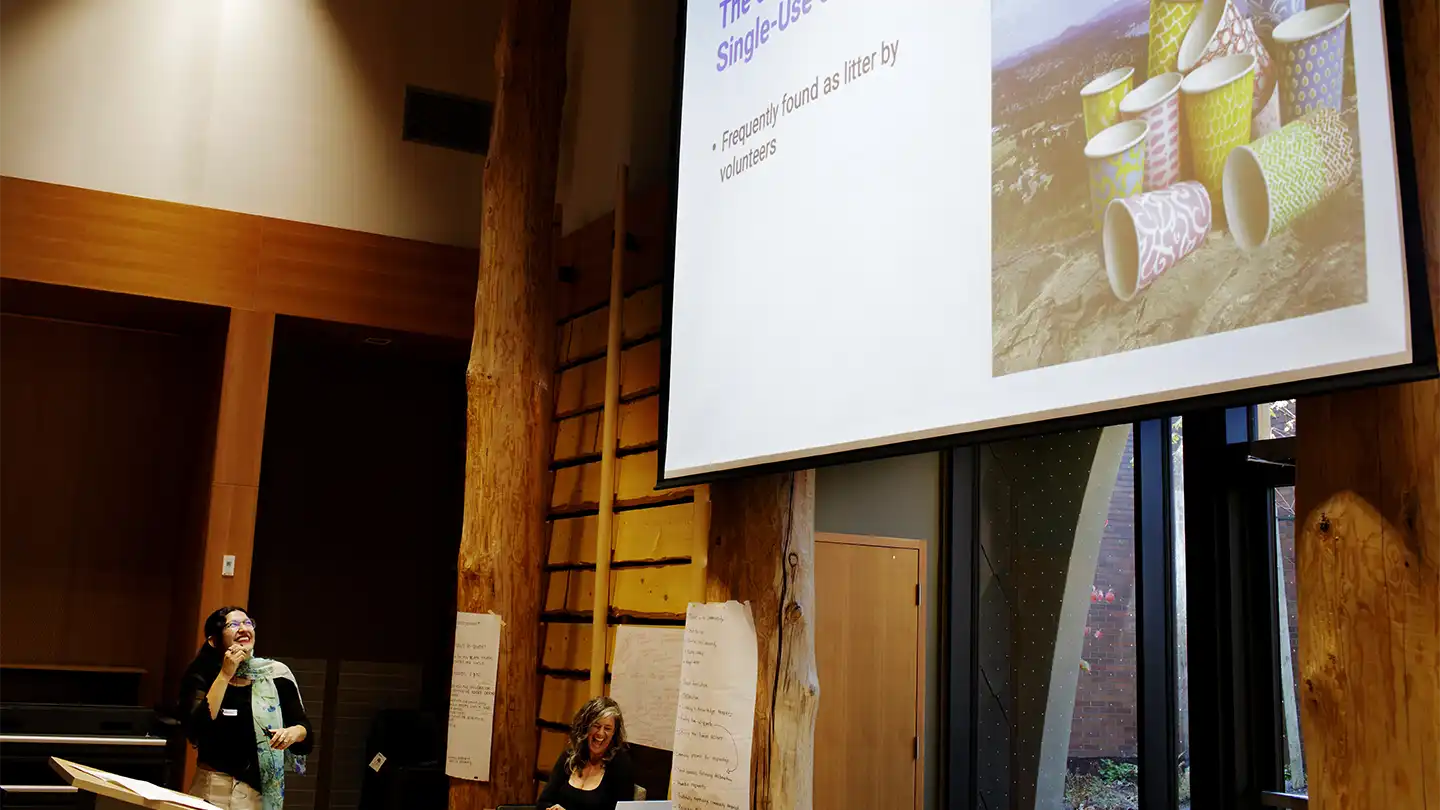
Ivana Medina mapped a pathway forward for solving the single-use coffee cup issue through a local campaign. She unearthed some incredible and rare insights through her research and also supported the creation of communication materials for our campaign.”
—Lilly Woodbury, Surfrider Foundation regional manager
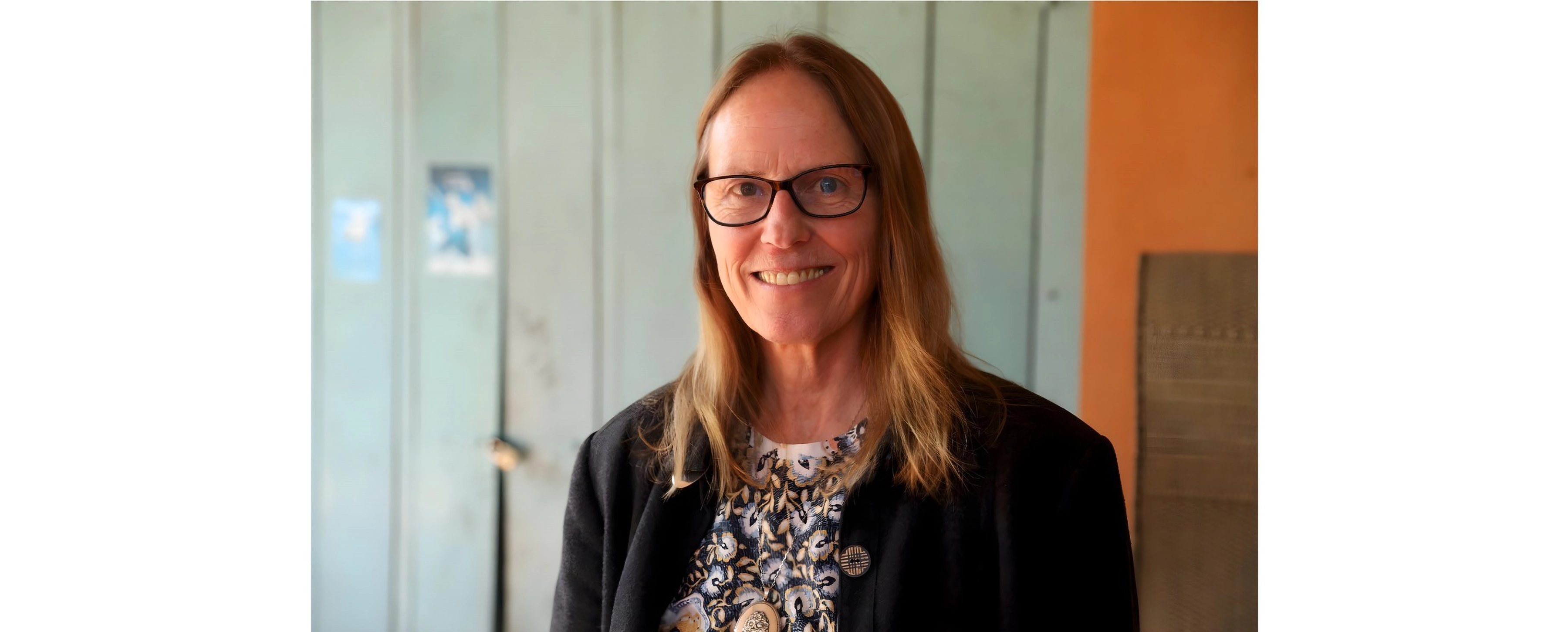
Jen Kostuchuk, a UVic Sustainability Scholar and PhD student in sociology, worked with the Synergy Foundation, a non-profit organization focused on sustainability practices in small businesses, such as, water conservation, low-carbon transportation and waste reduction practices. Her project was to help develop a training program curriculum for everyday trade workers to reduce waste on the job.
My project was to support the research, development and content creation for an online Green Trades course, I designed lessons on how trade workers could minimize their energy use in fuel, identify and divert their biggest waste streams, save water on site, etc.”
—Jen Kostuchuk
Kostuchuk focused on various trades in the construction industry, including landscaping, electrical and plumbing to understand how sustainable practices can be incorporated into the fields.
The result is a six-module course designed to help trade workers learn about practical approaches to sustainability. The course is expected to receive accreditation later this year.
Partnerships with local impact
For Synergy Foundation’s Director of Program Development Jarret Klim, the Sustainability Scholars program brought research expertise directly into his organization’s work.
Sustainability Scholars apply their lens to whatever problem an organization is facing–Jen is so bright and talented. She delivered on our goals and exceeded our expectations.”
—Jarret Klim, Synergy Foundation Director of Program Development
The program launched in 2024, thanks to a generous gift from an anonymous donor. For community organizations, working with Sustainability Scholars provides the additional research capacity needed to move sustainability ideas forward.
“Community organizations should consider partnering with UVic Sustainability Scholars if they are sitting on a dream project and they just need that little bit of extra support from a high-quality researcher to get it off the ground,” says Klim.
The University of Victoria is here for what matters—including tackling sustainable climate action. Explore how UVic is connecting with the South Island community.